


Malnutrition is common in hospitalized patients. Parenteral nutrition is a therapeutic alternative to meet the nutritional requirements of patients in whom the gastrointestinal tract is unavailable or non-functional. This therapy has been associated with a wide range of infectious, mechanical and metabolic complications. The aim of the study was to assess the incidence of these complications.
MethodA prospective multicenter observational study in hospitalized adult patients receiving parenteral nutrition ≥72 h was conducted. Follow-up was performed until one week after the discontinuation of parenteral nutrition.
Data were collected from electronic medical records and parenteral nutrition validation programs (Kabisoft and Clinus). Risk of malnutrition was determined according to MUST or CONUT criteria. The main variables were: incidence of catheter-related bacteriemia, catheter-tip colonization, phlebitis, thrombosis, catheter obstruction, catheter malposition, pneumothorax, hyperglycemia, hypertriglyceridemia, hypercholesterolemia, hepatobiliary disorders and refeeding syndrome. A descriptive analysis was performed using SPSS v23 software.
ResultsSixty patients were included, with a median age of 68 (28–90) years, 48.3% men and a body mass index of 26.2 ± 6.6 kg/m2. Of these, 61.7% were surgical patients and 46.7% were at low risk of malnutrition. Parenteral nutrition was administered for a median of 10 (3–40) days, 90.0% through central access. Patients received a mean of 18.4 ± 5.0 kcal/kg/day (74.7% of requirements), 1.1 ± 0.4 g/kg/day of protein, 2.4 ± 0.7 g/kg/day of glucose, and 0.5 ± 0.2 g/kg/day of lipids. Of them, 35% received concomitant enteral nutrition.
Overall, 80.0% experienced at least one complication: metabolic (71.7%), mechanical (18.3%), and infectious (10.0%). Incidences were: hepatobiliary alteration (61.7%), hyperglycemia (48.3%), phlebitis (13.3%), catheter occlusion (8.3%), catheter-related bacteriemia (8.3%), hypertriglyceridemia (1.7%), hypercholesterolemia (1.7%), and colonization (1.7%). Gram-positive microorganisms were the most frequently isolated.
ConclusionsAlthough complications associated with parenteral nutrition occur, the rate of serious complications, such as infections, is low. While most patients experienced at least one complication, metabolic events were the most common, and they are generally easy to detect and manage. The incidence of mechanical complications, mainly phlebitis and catheter occlusions, was moderate.
la desnutrición es frecuente en el medio hospitalario. La nutrición parenteral es una alternativa terapéutica para cubrir los requerimientos nutricionales de aquellos pacientes en los que la vía digestiva no está disponible o no es funcionante. Esta terapia se ha relacionado con un rango variable de complicaciones infecciosas, mecánicas o metabólicas. El objetivo del estudio fue determinar la incidencia de dichas complicaciones.
Métodoestudio observacional, prospectivo y multicéntrico en pacientes adultos hospitalizados que recibieron nutrición parenteral durante al menos 72 horas. El seguimiento se realizó hasta una semana después de finalizar la nutrición parenteral.
Los datos se obtuvieron de la historia clínica electrónica y de los programas de validación de nutrición parenteral Kabisoft y Clinus. El riesgo de desnutrición se determinó mediante los criterios MUST o CONUT. Las variables principales fueron la incidencia de bacteriemia relacionada con el catéter, colonización de la punta del catéter, flebitis, trombosis, obstrucción del catéter, malposición, neumotórax, hiperglucemia, hipertrigliceridemia, hipercolesterolemia, alteraciones hepatobiliares y síndrome de realimentación. Se realizó un análisis estadístico descriptivo con el programa SPSS v23.
Resultadosse incluyeron 60 pacientes, con una mediana de edad de 68 años (rango: 28–90); el 48,3% eran hombres y el índice de masa corporal fue de 26,2 ± 6,6 kg/m2. El 61,7% de los pacientes era quirúrgico y el 46,7% presentaba un riesgo bajo de desnutrición. La nutrición parenteral fue administrada durante una mediana de 10 días (rango: 3–40) y en el 90% de los casos, por vía central. Recibieron un promedio de 18,4 ± 5,0 kcal/kg/día (el 74,7% de los requerimientos); 1,1 ± 0,4 g/kg/día de proteínas; 2,4 ± 0,7 g/kg/día de glucosa y 0,5 ± 0,2 g/kg/día de lípidos. El 35% recibió nutrición enteral concomitante.
El 80,0% presentó alguna complicación: metabólica (71,7%), mecánica (18,3%) e infecciosa (10,0%). Las incidencias fueron las siguientes: alteración hepática (61,7%), hiperglucemia (48,3%), flebitis (13,3%), obstrucción del catéter (8,3%), bacteriemia relacionada con catéter (8,3%), hipertrigliceridemia (1,7%), hipercolesterolemia (1,7%) y colonización (1,7%). Los microorganismos más frecuentes fueron grampositivos.
Conclusionessi bien existen complicaciones asociadas con la nutrición parenteral, la tasa de complicaciones graves, como las infecciosas, es baja. Aunque la mayoría de los pacientes presenta alguna complicación, predominan las de tipo metabólico, que son fácilmente detectables y manejables. La incidencia de complicaciones mecánicas (principalmente flebitis y obstrucción del catéter) fue moderada.
Hospitalized patients frequently develop disease-related malnutrition, affecting one in four patients.1 This event is associated with longer length of hospital stay, increased morbidity and mortality, and higher healthcare costs.2 Nutritional therapy should be an integral part of treatments for hospitalized patients at increased risk of malnutrition.2–4
Parenteral nutrition (PN) is a solution of macronutrients and micronutrients prepared for intravenous administration in patients with a non-functional gastrointestinal system. These solutions are administered either via a central venous catheter (CVC) or peripheral intravenous catheter (PIVC)5 through continuous infusion.5–7 CVC is the method of choice for medium- and long-term nutritional therapy, meeting 100% of the patient's nutritional needs.5 However, osmolarity augments with increased nutrient delivery -with normal limits established at <900 mOsm/L- thereby hindering a complete nutritional supply via PIVC.8
Additionally, PN entails a variety of risks, including infectious, mechanical and metabolic complications.9,10 Infections are most frequently related to CVC, especially with femoral venous access.8 Conversely, mechanical complications (phlebitis, thromboembolism) are more common when PN is administered via a PIVC. These events are related to osmolarity and inappropriate device insertion or handling.2,8
Hyperglycemia is the most common metabolic complication (17–44%), owing to increased endogenous glucose production, insulin resistance, or medication use.11,12 Patients receiving PN often develop hypertriglyceridemia (6–38%) as a result of excess lipid supply or impaired activity of the lipoprotein lipase responsible for lipid clearance in plasma.2 Manifestations of hepatobiliary complications (7.4–84%) include steatosis (fat accumulation in the liver); cholestasis (abnormal bile production/flow); and cholelithiasis (formation of gallstones).2,7,13
During starvation, insulin levels decrease, leading to depletion of vitamins and intracellular electrolytes (magnesium [Mg], phosphorus [P], and potassium [K]).8 Reintroduction of feeding after a prolonged fasting period may cause a severe imbalance in fluids and electrolytes, known as refeeding syndrome (RS).6 Carbohydrate supplementation stimulates insulin release, favoring the intracellular influx of Mg, P, and K, leading to a sharp decline in their serum concentrations.14 RS may cause edema, encephalopathy, delirium, respiratory failure, arrhythmia, heart failure, and even death.6 Preventive measures include identifying high-risk patients, administering thiamin supplementation prior to initiation of nutritional therapy, gradually increasing nutrient supply, or restricting fluid use.14
Although PN in the hospital setting has been extensively studied, prospective or multicenter studies are limited. In addition, the available studies focus on specific populations or particular complications, making it difficult to obtain a comprehensive overview of this therapy. The purpose of this study was to determine the incidence of infectious, mechanical and metabolic complications associated with PN in hospitalized patients.
MethodsA prospective, observational study was conducted at two hospitals between 18 June and 1 September 2024. The study was approved by the Ethics Committee of Pontevedra, Vigo-Ourense (code 2024/149).
Inclusion criteria were age ≥18 years; hospitalization; PN for ≥72 h; informed consent to take part in this study. Pregnant women and patients receiving home-based PN were excluded. Data were extracted from medical records and PN prescription, validation and preparation systems (Kabisoft® and Clinus®). Demographic variables included anthropometric, clinical, nutritional, laboratory and pharmacotherapeutic data. The laboratory monitoring panel included blood glucose and electrolytes, measured 24 h after PN initiation and thereafter every 3–4 days in ward patients or daily in ICU patients. Basic biochemistry, including liver function tests, lipid profile, and prealbumin, was performed weekly.
Monitoring was maintained up to one week after PN withdrawal. Nutritional support was managed by a multidisciplinary team composed of consultants, pharmacists and nursing staff. For nutritional assessment, one of the sites used the MUST method, whereas the other used the CONUT index. Energy requirements were estimated using a simplified formula (25 kcal/kg/day) corrected by a stress factor in a hospital setting. The other site used the Harris-Benedict formula corrected by a stress factor (or 11–14 kcal/kg/day in obese patients) for ward patients, whereas ICU patients were managed by indirect calorimetry—the preferred method—or, alternatively, 20–30 kcal/kg/day. Macronutrient supply was established in accordance with clinical practice guidelines. Individualized formulations were prepared on a case-by-case basis.
The primary endpoints included the incidence of the following complications:
Infectious complications
- •
Catheter tip colonization: over 15 colony-forming units (CFUs) with or without local symptoms of infection (induration, erythema, warmth, pain, pus).
- •
Catheter-related bloodstream infection (CRBSI): positive blood culture and signs of systemic infection (fever, chills, hypotension) with no other probable origin of bloodstream infection, concurrently with catheter tip colonization by the same microorganism.
Mechanical complications
- •
Phlebitis: presence of signs of inflammation or purulent discharge.
- •
Vein thrombosis (confirmed by imaging studies).
- •
Pneumothorax secondary to central venous catheter (CVC) use confirmed radiologically.
- •
Catheter lumen occlusion: partial (blood flow is not restored but allows infusion) or total (no flow or perfusion).
- •
Inappropriate placement of the catheter tip in the CVC confirmed radiologically.
Metabolic complications
- •
Hyperglycemia: glucose >150 mg/dl (in three consecutive measurements) or >180 g/dL (on two measurements, regardless of the time points).
- •
Hypertriglyceridemia: triglycerides (TG) >350 mg/dL on two separate measurements.
- •
Hypercholesterolemia: cholesterol >200 mg/dL on two separate measurements.
- •
Hepatobiliary findings:
- o
Cholestasis: Bilirubin (BIL) >1.2 mg/dL, alkaline phosphatase (ALP) >280 IU/L, or gamma-glutamyltransferase (GGT) A 50 U/L on two separate laboratory measurements
- o
Cytolysis: aspartate aminotransferase (GOT) >40 IU/L, alanine aminotransferase (GPT) >42 IU/L, or INR >1.4.
- o
Mixed pattern: concurrence of the two types of complications.
- o
- •
Refeeding syndrome: clinical and laboratory diagnosis based on the presence—not explained by another clinical condition—of low P, K, or Mg levels on two measurements within the 5 days following PN initiation,14 in patients considered at risk of refeeding syndrome according to the criteria of the European Society for Clinical Nutrition and Metabolism (ESPEN).6
A descriptive statistical analysis was performed using the SPSS v23 software package. Categorical variables were presented as absolute and relative frequencies. Continuous quantitative variables with a normal distribution were expressed as mean and standard deviation, and non-normally distributed variables as median and range. The Kolmogorov–Smirnov test was used to assess the normality of data distribution.
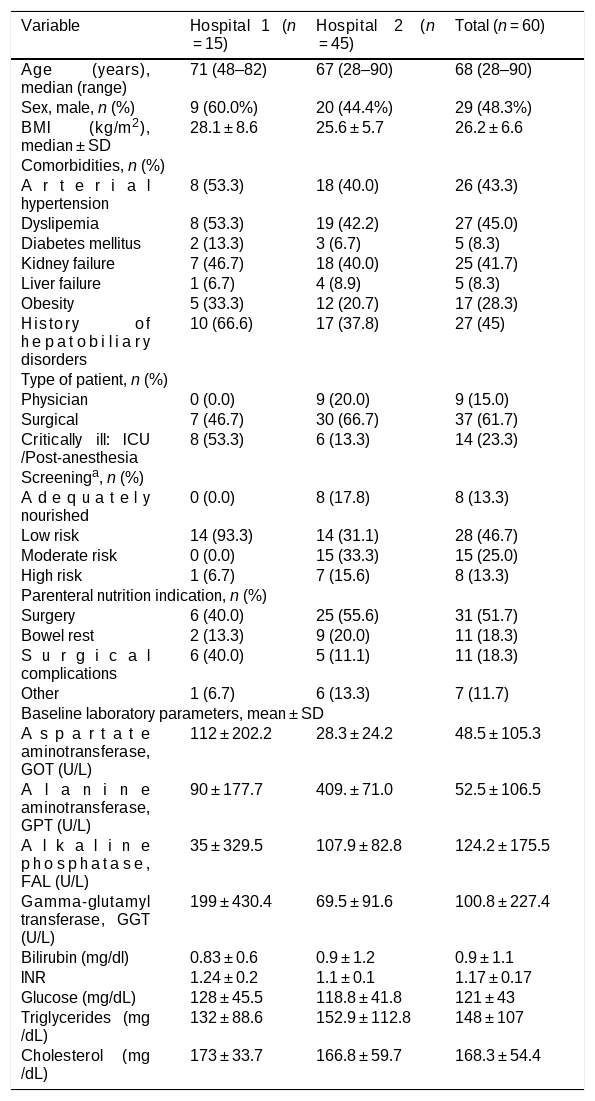
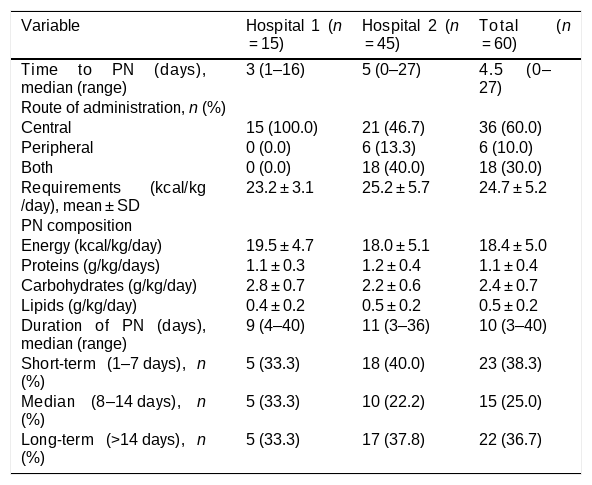
ResultsOf the 73 patients invited to take part in the study, 13 were excluded (10 declined to sign informed consent; two received home-based PN; and one received PN for less than 72 h). The final sample included 60 patients. The baseline characteristics of the population, along with details about PN, are provided in Tables 1 and 2. The initial cohort was prevailingly composed of surgical patients with advanced age and overweight. The primary indication for PN initiation was postoperative care following major surgery. PN was initiated after a median of 4.5 postoperative days (range: 0–27) following admission. A total of 38.3% of patients received early PN (<48 h).
Baseline characteristics of the study population.
| Variable | Hospital 1 (n = 15) | Hospital 2 (n = 45) | Total (n = 60) |
|---|---|---|---|
| Age (years), median (range) | 71 (48–82) | 67 (28–90) | 68 (28–90) |
| Sex, male, n (%) | 9 (60.0%) | 20 (44.4%) | 29 (48.3%) |
| BMI (kg/m2), median ± SD | 28.1 ± 8.6 | 25.6 ± 5.7 | 26.2 ± 6.6 |
| Comorbidities, n (%) | |||
| Arterial hypertension | 8 (53.3) | 18 (40.0) | 26 (43.3) |
| Dyslipemia | 8 (53.3) | 19 (42.2) | 27 (45.0) |
| Diabetes mellitus | 2 (13.3) | 3 (6.7) | 5 (8.3) |
| Kidney failure | 7 (46.7) | 18 (40.0) | 25 (41.7) |
| Liver failure | 1 (6.7) | 4 (8.9) | 5 (8.3) |
| Obesity | 5 (33.3) | 12 (20.7) | 17 (28.3) |
| History of hepatobiliary disorders | 10 (66.6) | 17 (37.8) | 27 (45) |
| Type of patient, n (%) | |||
| Physician | 0 (0.0) | 9 (20.0) | 9 (15.0) |
| Surgical | 7 (46.7) | 30 (66.7) | 37 (61.7) |
| Critically ill: ICU/Post-anesthesia | 8 (53.3) | 6 (13.3) | 14 (23.3) |
| Screeninga, n (%) | |||
| Adequately nourished | 0 (0.0) | 8 (17.8) | 8 (13.3) |
| Low risk | 14 (93.3) | 14 (31.1) | 28 (46.7) |
| Moderate risk | 0 (0.0) | 15 (33.3) | 15 (25.0) |
| High risk | 1 (6.7) | 7 (15.6) | 8 (13.3) |
| Parenteral nutrition indication, n (%) | |||
| Surgery | 6 (40.0) | 25 (55.6) | 31 (51.7) |
| Bowel rest | 2 (13.3) | 9 (20.0) | 11 (18.3) |
| Surgical complications | 6 (40.0) | 5 (11.1) | 11 (18.3) |
| Other | 1 (6.7) | 6 (13.3) | 7 (11.7) |
| Baseline laboratory parameters, mean ± SD | |||
| Aspartate aminotransferase, GOT (U/L) | 112 ± 202.2 | 28.3 ± 24.2 | 48.5 ± 105.3 |
| Alanine aminotransferase, GPT (U/L) | 90 ± 177.7 | 409. ± 71.0 | 52.5 ± 106.5 |
| Alkaline phosphatase, FAL (U/L) | 35 ± 329.5 | 107.9 ± 82.8 | 124.2 ± 175.5 |
| Gamma-glutamyl transferase, GGT (U/L) | 199 ± 430.4 | 69.5 ± 91.6 | 100.8 ± 227.4 |
| Bilirubin (mg/dl) | 0.83 ± 0.6 | 0.9 ± 1.2 | 0.9 ± 1.1 |
| INR | 1.24 ± 0.2 | 1.1 ± 0.1 | 1.17 ± 0.17 |
| Glucose (mg/dL) | 128 ± 45.5 | 118.8 ± 41.8 | 121 ± 43 |
| Triglycerides (mg/dL) | 132 ± 88.6 | 152.9 ± 112.8 | 148 ± 107 |
| Cholesterol (mg/dL) | 173 ± 33.7 | 166.8 ± 59.7 | 168.3 ± 54.4 |
SD: standard deviation; BMI: body mass index; ICU: intensive care unit.
Parenteral nutrition details.
| Variable | Hospital 1 (n = 15) | Hospital 2 (n = 45) | Total (n = 60) |
|---|---|---|---|
| Time to PN (days), median (range) | 3 (1–16) | 5 (0–27) | 4.5 (0–27) |
| Route of administration, n (%) | |||
| Central | 15 (100.0) | 21 (46.7) | 36 (60.0) |
| Peripheral | 0 (0.0) | 6 (13.3) | 6 (10.0) |
| Both | 0 (0.0) | 18 (40.0) | 18 (30.0) |
| Requirements (kcal/kg/day), mean ± SD | 23.2 ± 3.1 | 25.2 ± 5.7 | 24.7 ± 5.2 |
| PN composition | |||
| Energy (kcal/kg/day) | 19.5 ± 4.7 | 18.0 ± 5.1 | 18.4 ± 5.0 |
| Proteins (g/kg/days) | 1.1 ± 0.3 | 1.2 ± 0.4 | 1.1 ± 0.4 |
| Carbohydrates (g/kg/day) | 2.8 ± 0.7 | 2.2 ± 0.6 | 2.4 ± 0.7 |
| Lipids (g/kg/day) | 0.4 ± 0.2 | 0.5 ± 0.2 | 0.5 ± 0.2 |
| Duration of PN (days), median (range) | 9 (4–40) | 11 (3–36) | 10 (3–40) |
| Short-term (1–7 days), n (%) | 5 (33.3) | 18 (40.0) | 23 (38.3) |
| Median (8–14 days), n (%) | 5 (33.3) | 10 (22.2) | 15 (25.0) |
| Long-term (>14 days), n (%) | 5 (33.3) | 17 (37.8) | 22 (36.7) |
SD: standard deviation; PN: parenteral nutrition.
On study completion, 13 patients remained hospitalized, of whom five were still receiving PN. The median duration of PN was 26 days (range: 4–91). The length of stay exceeded 30 days in 21 cases (35%). The reason for ending hospitalization was discharge (89.4%) or death (10.6%).
Patients received a mean of 18.4 ± 5.0 kcal/kg/day (covering 74.7% of energy needs), for a median of 10 days (range: 3–40). In total, 23.3% of patients received nutritional supplementation or enteral nutrition (EN) prior to PN initiation, whereas 35.0% received both concurrently. Energy supply was not estimated for EN.
As many as 90.0% of patients received PN via a CVC, with peripherally inserted CVC (PICC) being the most frequent access device (45.0%), followed by jugular (38.3%) and subclavian access (13.3%). Femoral access was used in only one case (1.7%), since other access sites were not feasible. The totality of patients received continuous infusion, except for one case (1.7%) that received infusion cycles at 16–20 h/day intervals. Mean osmolarity of PN administered via PIVC was 779.6 ± 35.3 mOsm/L.
Patients received a mean of 20.2 ± 8.9 concomitant drugs. The most frequently prescribed drugs belonged to the ATC therapeutic groups N (26.7%), B (21.7%) and A (19.2%). According to their summaries of product characteristics (SmPC), these drugs were associated with changes in liver enzymes (39.2%), glucose (31.7%), potassium (24.9%), cholesterol (11.6%), triglycerides (11.1%), magnesium (8.5%) or phosphorus (4.8%).
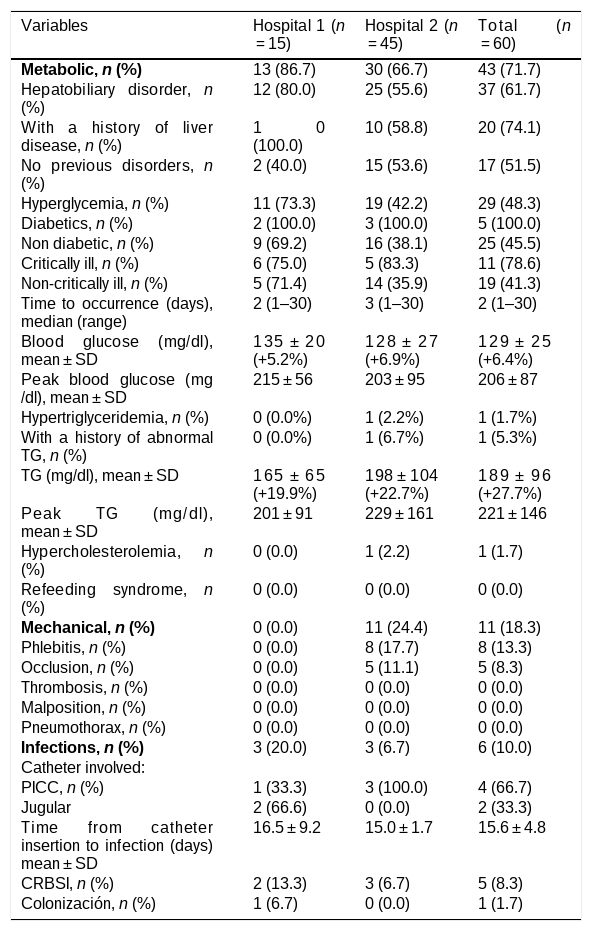
Table 3 summarizes complications associated with PN. As many as 80.0% of patients developed complications, of which 71.7% were metabolic (48.3% of patients developed more than one metabolic complication); 18.3% were mechanical and 18.3% infectious.
Complications associated with parenteral nutrition.
| Variables | Hospital 1 (n = 15) | Hospital 2 (n = 45) | Total (n = 60) |
|---|---|---|---|
| Metabolic, n (%) | 13 (86.7) | 30 (66.7) | 43 (71.7) |
| Hepatobiliary disorder, n (%) | 12 (80.0) | 25 (55.6) | 37 (61.7) |
| With a history of liver disease, n (%) | 10 (100.0) | 10 (58.8) | 20 (74.1) |
| No previous disorders, n (%) | 2 (40.0) | 15 (53.6) | 17 (51.5) |
| Hyperglycemia, n (%) | 11 (73.3) | 19 (42.2) | 29 (48.3) |
| Diabetics, n (%) | 2 (100.0) | 3 (100.0) | 5 (100.0) |
| Non diabetic, n (%) | 9 (69.2) | 16 (38.1) | 25 (45.5) |
| Critically ill, n (%) | 6 (75.0) | 5 (83.3) | 11 (78.6) |
| Non-critically ill, n (%) | 5 (71.4) | 14 (35.9) | 19 (41.3) |
| Time to occurrence (days), median (range) | 2 (1–30) | 3 (1–30) | 2 (1–30) |
| Blood glucose (mg/dl), mean ± SD | 135 ± 20 (+5.2%) | 128 ± 27 (+6.9%) | 129 ± 25 (+6.4%) |
| Peak blood glucose (mg/dl), mean ± SD | 215 ± 56 | 203 ± 95 | 206 ± 87 |
| Hypertriglyceridemia, n (%) | 0 (0.0%) | 1 (2.2%) | 1 (1.7%) |
| With a history of abnormal TG, n (%) | 0 (0.0%) | 1 (6.7%) | 1 (5.3%) |
| TG (mg/dl), mean ± SD | 165 ± 65 (+19.9%) | 198 ± 104 (+22.7%) | 189 ± 96 (+27.7%) |
| Peak TG (mg/dl), mean ± SD | 201 ± 91 | 229 ± 161 | 221 ± 146 |
| Hypercholesterolemia, n (%) | 0 (0.0) | 1 (2.2) | 1 (1.7) |
| Refeeding syndrome, n (%) | 0 (0.0) | 0 (0.0) | 0 (0.0) |
| Mechanical, n (%) | 0 (0.0) | 11 (24.4) | 11 (18.3) |
| Phlebitis, n (%) | 0 (0.0) | 8 (17.7) | 8 (13.3) |
| Occlusion, n (%) | 0 (0.0) | 5 (11.1) | 5 (8.3) |
| Thrombosis, n (%) | 0 (0.0) | 0 (0.0) | 0 (0.0) |
| Malposition, n (%) | 0 (0.0) | 0 (0.0) | 0 (0.0) |
| Pneumothorax, n (%) | 0 (0.0) | 0 (0.0) | 0 (0.0) |
| Infections, n (%) | 3 (20.0) | 3 (6.7) | 6 (10.0) |
| Catheter involved: | |||
| PICC, n (%) | 1 (33.3) | 3 (100.0) | 4 (66.7) |
| Jugular | 2 (66.6) | 0 (0.0) | 2 (33.3) |
| Time from catheter insertion to infection (days) mean ± SD | 16.5 ± 9.2 | 15.0 ± 1.7 | 15.6 ± 4.8 |
| CRBSI, n (%) | 2 (13.3) | 3 (6.7) | 5 (8.3) |
| Colonización, n (%) | 1 (6.7) | 0 (0.0) | 1 (1.7) |
CRBSI: catheter-related bloodstream infection; HOSP: hospital; PICC: peripherally inserted central catheter; TG: triglycerides.
During PN, the most common metabolic complication was hepatobiliary dysfunction (61.7% of patients), with a mixed pattern predominating (31.7%), followed by a cholestatic pattern (21.7%) and a cytolytic pattern (8.3%). The second most common complication was hyperglycemia (48.3% of patients), with mean blood glucose levels of 129 ± 25 mg/dL (126 ± 23 mg/dL in non-diabetic patients and 164 ± 17 mg/dL in diabetic patients) during PN, accounting for a 6.4% increase from baseline. In total, 48% of cases (n = 29) were considered to be at risk of developing RS prior to PN initiation. Six cases (10.0% of the total and 20.7% of high-risk patients) developed electrolyte imbalance consistent with RS. However, all episodes of electrolyte imbalance were associated with other conditions of the patients and were not considered cases of RS.
Metabolic complications included phlebitis (13.3%; n = 8) and occluded catheter (8.3%; n = 5). Ten percent of cases developed infectious complications, with 8.3% of CRBSI. No cases of CRBSI were reported in the post-anesthesia/ICU units. The incidence of CRBSI was 9.1 per 1000 days of CVC. Gram-positive microorganisms were isolated in 87.5% of cases, with 50% of infections being polymicrobial. The most common causative agent was Staphylococcus epidermidis (50% of cases). Only one case developed CRBSI secondary to Candida albicans infection.
DiscussionMost cases developed complications. Complications were most commonly metabolic- generally mild and transient- predominantly hepatic disorders and hyperglycemia. The incidence of hepatobiliary complications (51.5% of cases with no pre-existing disorders) is consistent with that reported in a prospective study (57.5%).15 However, the incidence found in our study exceeds that informed in a retrospective series (14.5%)2 that used more restrictive criteria (elevations ≥2 times above the upper limit of normality in ≥2 parameters). In a third of cases, the high incidence of hepatobiliary complications may be influenced by concurrent administration of hepatotoxic drugs. The severity of hepatobiliary complications may have been limited by the choice of lipid formulation (mixed emulsions containing medium- and long-chain triglycerides and fish oil, associated with a lower risk of cholestasis due to their lower phytosterol content) and carbohydrate intake (below 1 g/kg/day). This approach was established by a multidisciplinary team involving a clinical pharmacist. As in previous publications, cholestasis was predominant (25.8% vs.21.7%),16 probably due to GGT and FAL2,10 being the first parameters to rise, though one third of cases received concomitant EN. EN was administered in cycles in only one case, owing to the presence of cholestasis and cytolysis with grade-3 hypertransaminasemia of multifactorial origin that improved, not requiring EN suspension.
The incidence of hyperglycemia (48.3%) was consistent with that reported in a study (44%) that used the same definition,17 but differs from that found in another series.2,11,18 These findings could have been affected by advanced age, the critical clinical status of the patient, and the use of hyperglycemic agents (corticosteroids, vasopressors, immunosuppressants, diuretics, somatostatin and octreotide). Even though carbohydrate supply was maintained within the current recommended limit of <5–7 mg/kg/min,17 continuous glucose infusion may exceed insulin response capacity.10
Hypertriglyceridemia was a rare complication (1.7%), with incidence remaining below that documented for other series of critically ill patients (5.1 and 8.6%) that established the same cut-off value (>350 mg/dL).3,16 Although 12.5% of patients had pre-existing dyslipidemia and received drugs that could affect the lipid profile (such as propofol), the low incidence of hypertriglyceridemia may be explained by a cautious lipid and carbohydrate supply. In this series, no cases of RS were detected, as opposed to the incidence rates reported in the literature (25.4–43.3%).19,20 Several cases were identified as at high risk of RS (48%); however, the progressive introduction of nutritional therapy (18.4 kcal/kg/day), added to close clinical monitoring, could have contributed to preventing RS.
The incidence of mechanical complications such as phlebitis and catheter occlusion was moderate. Appropriate management and handling of vein access devices are essential to reducing these complications. The incidence of phlebitis (13.3%) was lower than the one reported in previous studies in Spain (32.2 and 25.3%).21 This inconsistency could be due to the osmolarity of the PN administered via PIVC (779.6 mOsm/L) and remained within the recommended limits (<800–850 mOsm/L).7 The incidence of occlusion events (8.3%) was similar to that reported in the scientific literature (5.4–9.6%).21,22 Occlusions were most commonly associated with the use of PICCs, inserted either by the Interventional Radiology or the Vascular Access Unit. The optimized use of fibrinolytic agents containing heparin or urokinase allowed catheter removal to be avoided in all but one case, underscoring the efficacy of close management and monitoring protocols.
No catheter-related venous thrombosis was detected in our series. This finding is in agreement with the incidence of thrombosis (0.6%) documented in a systematic review of cancer patients.22 However, our results are inconsistent with those reported in a series of home-based PN cases (11.4%).23 Despite the frequent use of PICC—a recognized risk factor for thromboembolism8—only one case of superficial thrombosis at the catheter insertion site was observed, and catheter removal was not required. This episode was probably related to mechanical factors rather than PN, since PN was administered through in-line filters, which reduce particle and microprecipitate infusion. No cases of pneumothorax or malpositioned catheter were reported, since appropriate tip position of all central venous catheters was verified prior to PN initiation.
Infectious complications affected 10% of patients, with an incidence of CRBSI of 8.3%, consistent with other series (6.8–8.7%).2,4,16,24 The isolated microorganisms were Gram-positive, primarily Staphylococcus.25 Time from placement of the catheter to infection (15.6 days) was lower than the one reported in a previous study (78 days), with a higher incidence of infection (19%).25 Femoral access has been associated with an increased risk of infectious complications26; however, in our study, the only case in which this approach was used did not develop infection. The reported CRBSIs were associated with a PICC (4/5) and with a jugular catheter (1/5). The catheter was removed in all cases, except for one that was managed conservatively until subsequent replacement could be performed. The absence of CRBSI in ICUs highlights the efficacy of clinical practice guidelines and protocols such as ‘Bacteriemia Zero’ (‘Zero bloodstream infection’).
The involvement of a specialist pharmacist in nutrition in multidisciplinary teams is essential for preventing PN-related complications. The nutrition specialist pharmacist contributes to improving the safety of parenteral nutrition by selecting the components of the solution, adjusting nutrients to each patient's clinical situation, verifying its physicochemical stability, performing clinical and laboratory monitoring, and controlling drug interactions.27–29
The study was not designed to compare the two hospitals and therefore lacks sufficient statistical power to establish differences, owing to the small sample size. The observed variations could be due to heterogeneity in patient population, nutritional assessment tools, and clinical practice across sites. The population of one of the sites included a higher proportion of critically ill patients, more advanced age, and a slightly higher energy supply, which may explain the higher incidence of metabolic complications in this hospital. Notably, no mechanical complications were observed at this site. This finding should be taken with caution, since all patients received PN via a CL, whereas peripheral vein access devices were used at the other hospital.
A limitation of this study is that the sample size was not calculated, given the observational nature of the study. Other limitations include population heterogeneity (critically ill and non-critically ill patients) and concomitant administration of EN, which hinder establishing an unequivocal association between PN and complications, particularly metabolic complications. Of special note is the lack of standardized definitions for complications, which limits the comparability of results. Given the small sample size, the incidence of rare events could have been underestimated.
In conclusion, in this cohort, the incidence of PN-related complications was low. Only 1 in 10 patients developed infection, which was minimized through a careful selection of venous access and appropriate line handling. Complications were most frequently metabolic—primarily hepatobiliary disorders and hyperglycemia— easily detected through close monitoring, thereby enabling early intervention. Larger multicenter studies are needed to confirm the validity of these results.
Contribution to the scientific literatureThis study provides an updated description of the incidence of complications associated with parenteral nutrition in hospitalized patients through routine, real-world screening for metabolic, mechanical, and infectious events. This study provides information for two hospitals and documents the outcomes of nutritional therapy in a heterogeneous population of patients.
The results obtained underscore the efficacy of close monitoring in identifying metabolic complications early and highlight the need for catheter management protocols to prevent mechanical and infectious events. An initial assessment of the baseline situation at the hospital may guide future improvements in clinical practice. Furthermore, it is essential to promote the standardization of definitions and diagnostic criteria in order to improve comparability across studies in future research.
Artificial intelligence use statementThe authors used ChatGPT to improve the style and clarity of the draft. After using this AI tool, the authors revised and edited, where appropriate, the contents of the manuscript and assume full responsibility.
Authorship responsibility and copyright transferAll authors accept full responsibility as defined by the International Committee of Medical Journal Editors (available at http://www.icmje.org/). In the event of publication, the authors hereby exclusively transfer the rights of reproduction, distribution, translation, and public communication (by any means or through any sound, audiovisual, or electronic medium) of our work to Farmacia Hospitalaria and the SEFH. To this end, a copyright assignment agreement will be signed at the time of submission through the online manuscript management system.
Presentation in conferencesThis article has not been previously published and is not under consideration for publication elsewhere.
CRediT authorship contribution statementMaría Susana Fortes González: Writing – original draft, Methodology, Investigation, Formal analysis, Data curation, Conceptualization. Eva María Menor Fernández: Writing – original draft, Methodology, Investigation, Formal analysis, Data curation, Conceptualization. Silvia Vázquez Blanco: Writing – review & editing, Writing – original draft, Investigation, Formal analysis, Data curation. Susana Castro Luaces: Writing – review & editing, Writing – original draft, Investigation, Formal analysis, Data curation. Claudia Barca Díez: Writing – review & editing, Writing – original draft, Investigation, Formal analysis, Data curation. Leticia Herrero Poch: Writing – review & editing, Writing – original draft, Investigation, Formal analysis, Data curation. Natividad Lago Rivero: Writing – review & editing, Writing – original draft, Investigation, Formal analysis, Data curation. Lara Martínez Domínguez: Writing – review & editing, Writing – original draft, Investigation, Formal analysis, Data curation. Ruth Boente Varela: Writing – review & editing, Validation, Supervision, Formal analysis, Conceptualization. Noemí Martínez López de Castro: Writing – review & editing, Validation, Supervision, Formal analysis, Conceptualization.
FundingNo funding was received for conducting this study.
The authors declare no conflict of interest.