


To describe the level of adherence to pharmacological treatment and explore, using a bivariate analysis, its unadjusted association with mental health variables (depression and stress) in patients with type 2.
MethodA cross-sectional study was conducted with 326 patients with T2D and beneficiaries of a multidisciplinary center of a social security institution in Morelos, Mexico. Sociodemographic, clinical, and mental health variables such as stress and depression were evaluated, in addition to adherence to pharmacological treatment in patients with T2D, using instruments with evidence of validity and reliability. Bivariate statistical analysis was used to evaluate the association between the variables of interest and pharmacological adherence.
ResultsA statistically significant association was found between pharmacological adherence with depression (χ2 = 7.3, p = 0.01; OR = 0.28, p = 0.01), and with depression and stress as concomitance (OR = 0.18, p = 0.02). No statistically significant associations were found with sociodemographic factors.
ConclusionsIn this cross-sectional study, a bivariate association was observed between depression—and its co-occurrence with stress—and pharmacological adherence. These findings should be interpreted with caution and require confirmation through studies with adjusted analyses.
describir el nivel de adherencia al tratamiento farmacológico y explorar, mediante un análisis bivariado, su asociación no ajustada con variables de salud mental (depresión y estrés) en pacientes con diabetes tipo 2 (DM2).
Métodose realizó un estudio transversal con 326 pacientes con DM2, adscritos a un centro de atención multidisciplinario de una institución de seguridad social en Morelos, México. Se evaluaron variables sociodemográficas, clínicas y de salud mental, como estrés y depresión, además de la adherencia al tratamiento farmacológico, utilizando instrumentos con evidencia de validez y confiabilidad. Se utilizó un análisis estadístico bivariado para evaluar la asociación entre las variables de interés y la adherencia farmacológica.
Resultadosse encontró asociación estadísticamente significativa entre la adherencia farmacológica y la depresión (χ2 = 7,3; p = 0,01; OR = 0,28; p = 0,01), así como con la concomitancia de depresión y estrés (OR = 0,18; p = 0,02). No se encontraron asociaciones estadísticamente significativas con factores sociodemográficos.
Conclusionesen este estudio transversal se observó una asociación bivariada entre la depresión —y su concomitancia con estrés— y la adherencia farmacológica. Estos hallazgos deben interpretarse con cautela y requieren confirmación mediante estudios con análisis ajustados.
The sustained rise of diabetes mellitus has significantly impacted the global burden of disease.1 In 2022, according to the World Health Organisation (WHO), it was the second leading cause of death in Mexico, second only to cardiovascular diseases. That same year, the prevalence of diabetes among adults aged 20 and over was estimated at 18.3%, based on biochemical testing.2
Although appropriate treatment can prevent the complications of diabetes, adherence to drug therapy remains a challenge. The WHO has highlighted that poor adherence can lead to a higher number of hospitalisations, increased healthcare costs, a reduction in healthy life years, and personal impacts such as out-of-pocket expenses, absenteeism from work and changes in family dynamics.3
Traditionally, the medical approach to diabetes has not fully taken into account mental health and the psychosocial factors that impact its management, even though these factors have a significant impact on patients' well-being.4 In this regard, mental health has been defined as a state of psychosocial and emotional well-being that implies not only the absence of mental illness but also the ability to cope with life stressors and develop skills to engage with the community.5
Living with type 2 diabetes (T2D) gives rise to a range of emotional responses, including depression, anger and stress, all of which can affect adherence to treatment. The American Psychiatric Association (APA) defines depression as ‘a mood disorder characterised by an individual's loss of the ability to take an interest in and enjoy everyday things, expressed as sadness, loss of interest or pleasure, feelings of guilt or low self-esteem, sleep or appetite disturbances, fatigue and lack of concentration’.6
Stress is a psychological and physiological phenomenon, and its impact on health is significant in patients with chronic conditions such as T2D, as it has been identified as a risk factor that affects quality of life and can compromise patients' self-care and adherence to treatment.7–9 Furthermore, chronic stress can affect the hormonal mechanisms involved in glucose regulation, which further exacerbates the challenges experienced by patients living with T2D.10
In Mexico, public health institutions have developed specialised care programmes for patients with T2D and other chronic conditions. The Mexican Social Security Institute (IMSS) has established Diabetes Care Centres (CADIMSS) within primary and secondary care facilities, which provide comprehensive and multidisciplinary care to patients living with T2D and their families. Under this programme, patients receive educational training delivered by an interdisciplinary healthcare team (doctors, nurses, psychologists, social workers, physical educators, pharmacists) over a period of 6 months.11
However, despite these programmes, issues regarding patient adherence to pharmacological treatments have been documented.12 The aim of this study was to explore the association between mental health, sociodemographic and clinical variables, and adherence to pharmacological treatment in patients with T2D receiving care at a CADIMSS centre.
MethodsWe conducted a cross-sectional study, with a sample comprising 326 patients with T2D of both sexes, aged over 18 years and receiving care through the CADIMSS programme at the Family Medicine Unit (UMF) No. 20 in Cuernavaca, Morelos, Mexico.
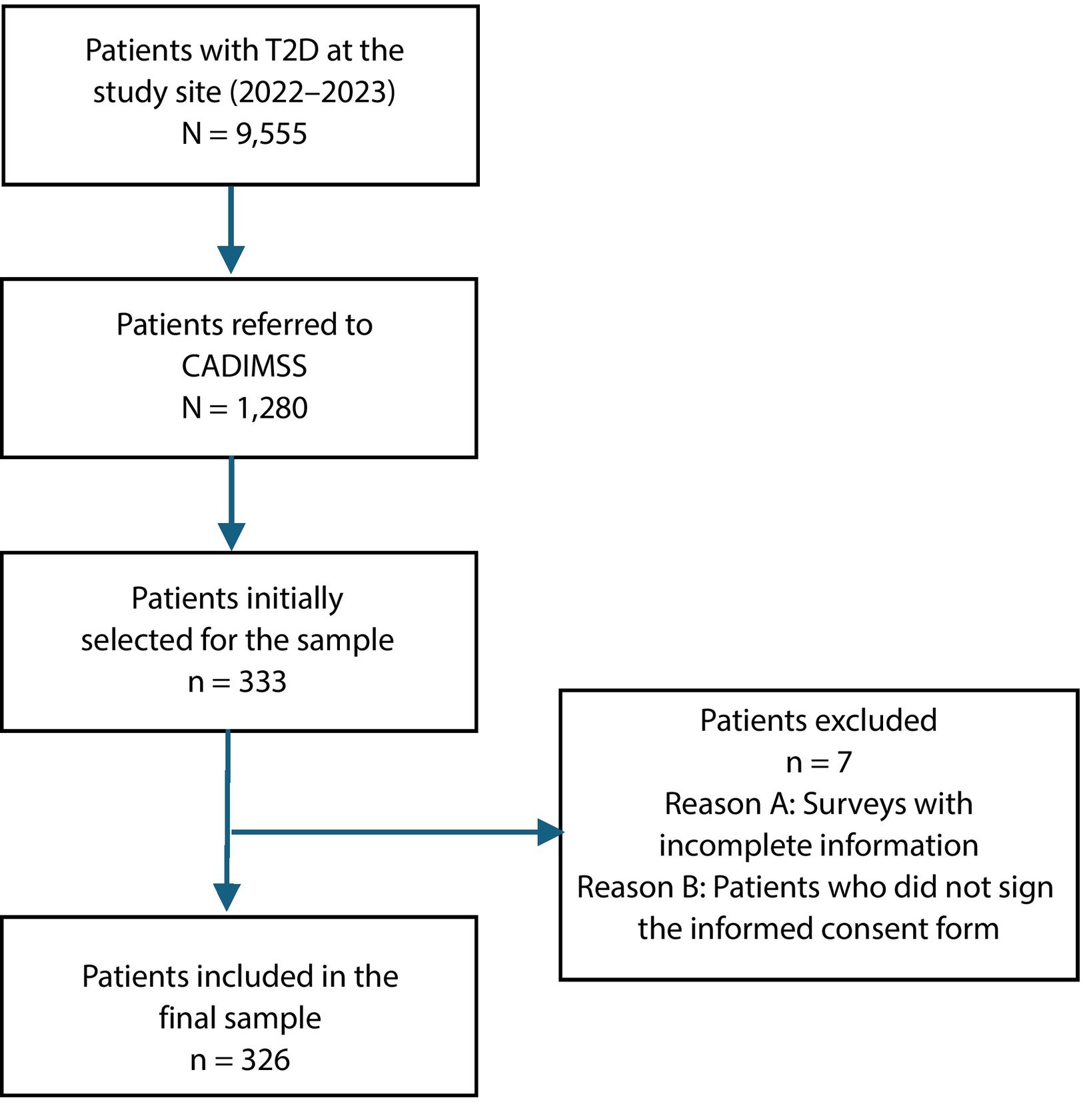
Fig. 1 illustrates the screening process of participants. Following approval by the ethics and research committees at the study site (R-2023-1701-025), patients attending appointments at the CADIMSS between March and June 2023 were selected by quota sampling. They were invited in the facility's waiting room, and the objectives and scope of the study were explained to them. Those interested were taken to a private area, where they reviewed and signed the informed consent form.
A structured questionnaire was developed and administered by a previously trained facilitator to collect sociodemographic variables. Participants were also asked about their physical activity levels. Data were also collected from clinical records, including the date of diagnosis of T2D, weight, height, presence of comorbidities, glycated haemoglobin (HbA1c), fasting serum glucose levels from the last 3 months on record, and pharmacotherapy.
Adherence to pharmacological treatment was assessed using the 8-item Morisky-Green-Levine test (MMAS-8).13,14 The first 7 questions presented dichotomous answers (0–1 coding), while the 8th used a 5-level Likert scale (fractional coding in the 0 to 1 range); therefore, the final score is obtained within a range of 0 to 8. Patients who scored 8 were considered ‘adherent’.
To assess depression, the Beck Depression Inventory (BDI-II), a self-report instrument validated in Mexico, was used.15 The BDI-II consists of 21 items with 4 response levels (coded 0–3), yielding a scale score range of 0 to 63. For the descriptive analysis, the results were categorised into 4 levels: minimal depression or no risk (0–13 points), mild depression or low risk (14–19 points), moderate depression or moderate risk (20–28 points) and severe depression or critical risk (29–63 points).
Stress was measured using the Holmes-Rahe Life Stress Inventory version validated in Mexico.16,17 This instrument comprises 43 items that assess significant life events (such as bereavement following the loss of loved ones, whether through separation or death) with dichotomous responses; the scale yields scores ranging from 0 to 1442 points. Scores were classified into three categories: low risk (<150 points), moderate risk (151–299 points) and high risk (>300 points).
The data collected were entered into Excel and analysed using STATA. Univariate analysis was used to describe the participants' sociodemographic, clinical and mental health characteristics. Subsequently, a bivariate analysis examined the relationship between adherence and the variables of interest using group comparisons (t-test or ANOVA) or association tests (χ2 test), with participants classified as adherent or non-adherent to pharmacological treatment serving as the comparison groups. Statistical significance was set at p < 0.05. Given the exploratory nature of the study, no multivariate logistic regression models were performed; the estimated associations correspond to unadjusted analyses.
In addition, χ2 statistical tests were performed on 2 × 2 contingency tables to assess the association between medication adherence and other variables such as depression, stress or both. The strength of association was assessed by odds ratio (OR), with the corresponding test for statistical significance. Co-occurrence of depression and stress was determined when patients were classified as having ‘medium’ or ‘high’ levels of stress and ‘mild’, ‘moderate’ or ‘severe’ levels of depression.
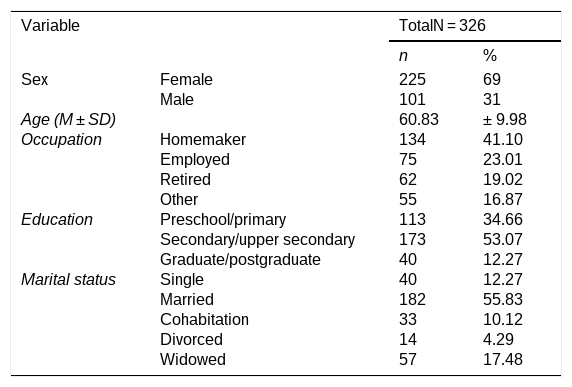
ResultsTable 1 shows the characteristics of the participants. Mean population age was 60.83 years (SD = 9.98), and 69% were women. By occupation, 41.10% of the participants were homemakers. The most commonly reported level of education was secondary or upper secondary (53.07%). Married participants formed the largest group by marital status (55.83%).
Sociodemographic characteristics of the population.
| Variable | TotalN = 326 | ||
|---|---|---|---|
| n | % | ||
| Sex | Female | 225 | 69 |
| Male | 101 | 31 | |
| Age (M ± SD) | 60.83 | ± 9.98 | |
| Occupation | Homemaker | 134 | 41.10 |
| Employed | 75 | 23.01 | |
| Retired | 62 | 19.02 | |
| Other | 55 | 16.87 | |
| Education | Preschool/primary | 113 | 34.66 |
| Secondary/upper secondary | 173 | 53.07 | |
| Graduate/postgraduate | 40 | 12.27 | |
| Marital status | Single | 40 | 12.27 |
| Married | 182 | 55.83 | |
| Cohabitation | 33 | 10.12 | |
| Divorced | 14 | 4.29 | |
| Widowed | 57 | 17.48 | |
SD, standard deviation; M, mean.
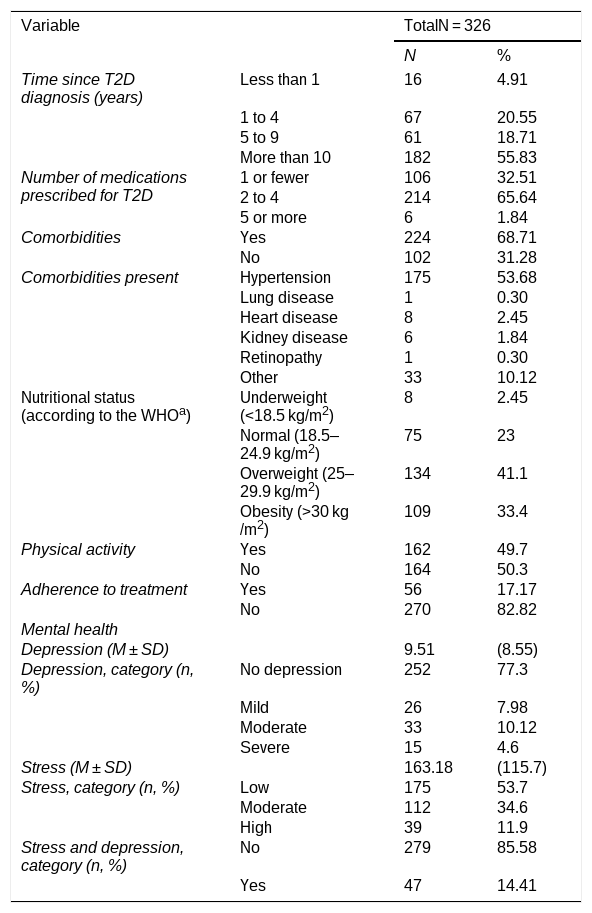
Table 2 shows the results by clinical characteristics. A total of 55.83% of participants reported having a T2D diagnosis for over 10 years. Most participants (65.6%) reported taking between 2 and 4 medications. At least one additional comorbid condition was present in 68.71% of the cohort, the most common being hypertension (53.68%). The average body mass index (BMI), according to the WHO, was 28.23 kg/m2 (SD = 3.16).18 Almost half (49.7%) of the participants reported engaging in some form of physical activity, defined as walking for at least 30 min a day, 5 days a week. The average fasting blood glucose levels were 154.71 mg/dl (SD = 68.6), whilst HbA1c had a mean value of 8.11% (SD = 2.12). Only 17.18% of participants were classified as adherent to their medication regimen.
Clinical and mental health characteristics of the participants.
| Variable | TotalN = 326 | ||
|---|---|---|---|
| N | % | ||
| Time since T2D diagnosis (years) | Less than 1 | 16 | 4.91 |
| 1 to 4 | 67 | 20.55 | |
| 5 to 9 | 61 | 18.71 | |
| More than 10 | 182 | 55.83 | |
| Number of medications prescribed for T2D | 1 or fewer | 106 | 32.51 |
| 2 to 4 | 214 | 65.64 | |
| 5 or more | 6 | 1.84 | |
| Comorbidities | Yes | 224 | 68.71 |
| No | 102 | 31.28 | |
| Comorbidities present | Hypertension | 175 | 53.68 |
| Lung disease | 1 | 0.30 | |
| Heart disease | 8 | 2.45 | |
| Kidney disease | 6 | 1.84 | |
| Retinopathy | 1 | 0.30 | |
| Other | 33 | 10.12 | |
| Nutritional status (according to the WHOa) | Underweight (<18.5 kg/m2) | 8 | 2.45 |
| Normal (18.5–24.9 kg/m2) | 75 | 23 | |
| Overweight (25–29.9 kg/m2) | 134 | 41.1 | |
| Obesity (>30 kg/m2) | 109 | 33.4 | |
| Physical activity | Yes | 162 | 49.7 |
| No | 164 | 50.3 | |
| Adherence to treatment | Yes | 56 | 17.17 |
| No | 270 | 82.82 | |
| Mental health | |||
| Depression (M ± SD) | 9.51 | (8.55) | |
| Depression, category (n, %) | No depression | 252 | 77.3 |
| Mild | 26 | 7.98 | |
| Moderate | 33 | 10.12 | |
| Severe | 15 | 4.6 | |
| Stress (M ± SD) | 163.18 | (115.7) | |
| Stress, category (n, %) | Low | 175 | 53.7 |
| Moderate | 112 | 34.6 | |
| High | 39 | 11.9 | |
| Stress and depression, category (n, %) | No | 279 | 85.58 |
| Yes | 47 | 14.41 | |
Physical activity, defined as more than 30 min a day; SD, standard deviation; T2D, type 2 diabetes; M, mean.
The BDI-II mental health assessment resulted in a mean score of 9.51 (SD = 8.55), corresponding to 22.69% of participants with depression, of whom 4.6% presented symptoms of severe depression. The Life Stress Inventory yielded high stress in 46.32% of cases. Co-occurrence of stress and depression was identified in 14.41% of all participants.
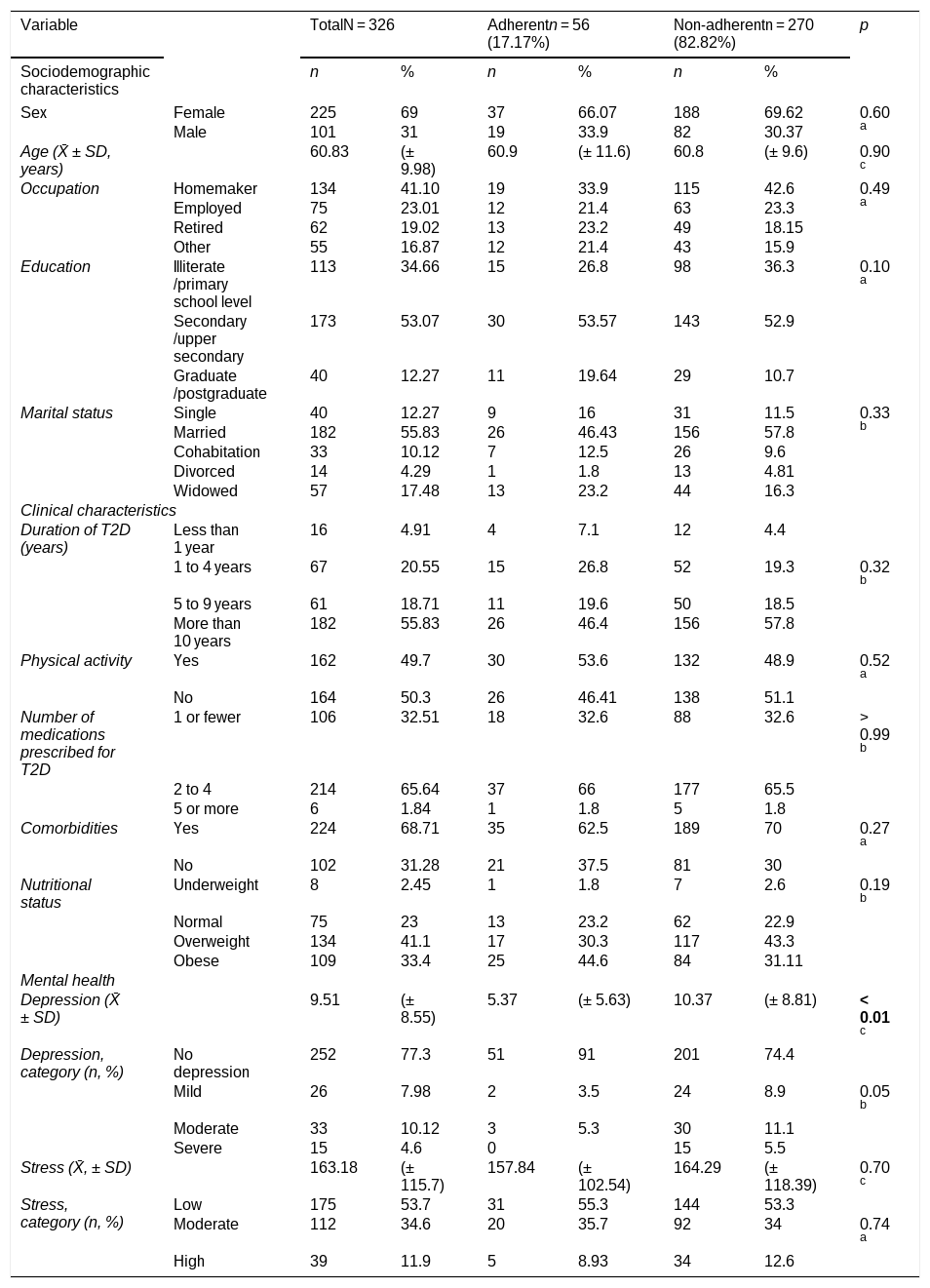
We analysed relation between adherence to pharmacological treatment and sociodemographic, clinical and mental health variables. No statistically significant associations were found between adherence and the participants' sociodemographic and clinical variables. A statistically significant association was found between adherence and depression only in the t-test (p < 0.01), and the chi-squared test yielded p = 0.05. No association was identified between adherence and stress, as neither of the two statistical tests indicated significance. The results of the bivariate analysis are shown in Table 3.
Association between adherence and sociodemographic, clinical and mental health characteristics.
| Variable | TotalN = 326 | Adherentn = 56 (17.17%) | Non-adherentn = 270 (82.82%) | p | ||||
|---|---|---|---|---|---|---|---|---|
| Sociodemographic characteristics | n | % | n | % | n | % | ||
| Sex | Female | 225 | 69 | 37 | 66.07 | 188 | 69.62 | 0.60a |
| Male | 101 | 31 | 19 | 33.9 | 82 | 30.37 | ||
| Age (X̄ ± SD, years) | 60.83 | (± 9.98) | 60.9 | (± 11.6) | 60.8 | (± 9.6) | 0.90c | |
| Occupation | Homemaker | 134 | 41.10 | 19 | 33.9 | 115 | 42.6 | 0.49a |
| Employed | 75 | 23.01 | 12 | 21.4 | 63 | 23.3 | ||
| Retired | 62 | 19.02 | 13 | 23.2 | 49 | 18.15 | ||
| Other | 55 | 16.87 | 12 | 21.4 | 43 | 15.9 | ||
| Education | Illiterate/primary school level | 113 | 34.66 | 15 | 26.8 | 98 | 36.3 | 0.10a |
| Secondary/upper secondary | 173 | 53.07 | 30 | 53.57 | 143 | 52.9 | ||
| Graduate/postgraduate | 40 | 12.27 | 11 | 19.64 | 29 | 10.7 | ||
| Marital status | Single | 40 | 12.27 | 9 | 16 | 31 | 11.5 | 0.33b |
| Married | 182 | 55.83 | 26 | 46.43 | 156 | 57.8 | ||
| Cohabitation | 33 | 10.12 | 7 | 12.5 | 26 | 9.6 | ||
| Divorced | 14 | 4.29 | 1 | 1.8 | 13 | 4.81 | ||
| Widowed | 57 | 17.48 | 13 | 23.2 | 44 | 16.3 | ||
| Clinical characteristics | ||||||||
| Duration of T2D (years) | Less than 1 year | 16 | 4.91 | 4 | 7.1 | 12 | 4.4 | |
| 1 to 4 years | 67 | 20.55 | 15 | 26.8 | 52 | 19.3 | 0.32b | |
| 5 to 9 years | 61 | 18.71 | 11 | 19.6 | 50 | 18.5 | ||
| More than 10 years | 182 | 55.83 | 26 | 46.4 | 156 | 57.8 | ||
| Physical activity | Yes | 162 | 49.7 | 30 | 53.6 | 132 | 48.9 | 0.52a |
| No | 164 | 50.3 | 26 | 46.41 | 138 | 51.1 | ||
| Number of medications prescribed for T2D | 1 or fewer | 106 | 32.51 | 18 | 32.6 | 88 | 32.6 | >0.99b |
| 2 to 4 | 214 | 65.64 | 37 | 66 | 177 | 65.5 | ||
| 5 or more | 6 | 1.84 | 1 | 1.8 | 5 | 1.8 | ||
| Comorbidities | Yes | 224 | 68.71 | 35 | 62.5 | 189 | 70 | 0.27a |
| No | 102 | 31.28 | 21 | 37.5 | 81 | 30 | ||
| Nutritional status | Underweight | 8 | 2.45 | 1 | 1.8 | 7 | 2.6 | 0.19b |
| Normal | 75 | 23 | 13 | 23.2 | 62 | 22.9 | ||
| Overweight | 134 | 41.1 | 17 | 30.3 | 117 | 43.3 | ||
| Obese | 109 | 33.4 | 25 | 44.6 | 84 | 31.11 | ||
| Mental health | ||||||||
| Depression (X̄ ± SD) | 9.51 | (± 8.55) | 5.37 | (± 5.63) | 10.37 | (± 8.81) | <0.01c | |
| Depression, category (n, %) | No depression | 252 | 77.3 | 51 | 91 | 201 | 74.4 | |
| Mild | 26 | 7.98 | 2 | 3.5 | 24 | 8.9 | 0.05b | |
| Moderate | 33 | 10.12 | 3 | 5.3 | 30 | 11.1 | ||
| Severe | 15 | 4.6 | 0 | 15 | 5.5 | |||
| Stress (X̄, ± SD) | 163.18 | (± 115.7) | 157.84 | (± 102.54) | 164.29 | (± 118.39) | 0.70c | |
| Stress, category (n, %) | Low | 175 | 53.7 | 31 | 55.3 | 144 | 53.3 | |
| Moderate | 112 | 34.6 | 20 | 35.7 | 92 | 34 | 0.74a | |
| High | 39 | 11.9 | 5 | 8.93 | 34 | 12.6 | ||
M, Mean; SD, Standard deviation; T2D, Type 2 diabetes. Statistical significance was set at p < 0.05.
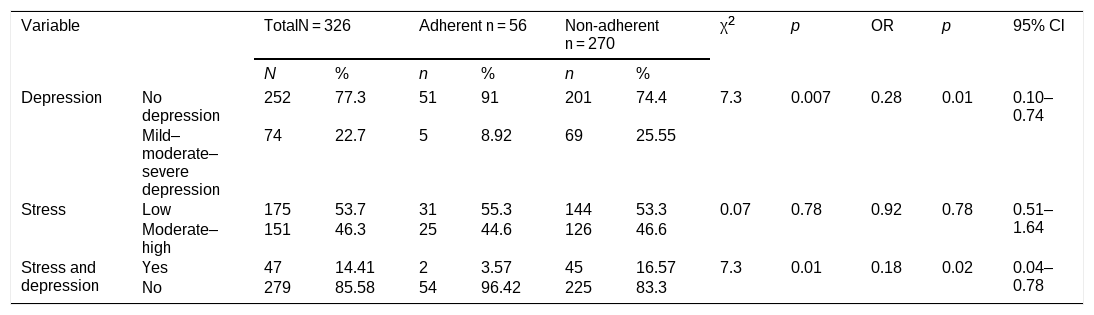
Table 4 shows the associations between pharmacological adherence and mental health variables using 2 x 2 contingency tables, with some mental health categories collapsed. The association analysis using the χ2 test yielded results similar to those shown in Table 3, as a statistically significant association was found only in depression. The OR calculation showed an association between the presence of depression and lower treatment adherence (OR = 0.28, p = 0.01, 95% CI: 0.10–0.74). It showed that participants who reported stress were 8% less likely to adhere to treatment, although this result did not reach statistical significance (OR = 0.92, p = 0.78, 95% CI: 0.51–1.64).
Association between medication adherence and the mental health variables ‘depression’, ‘stress’ and the co-occurrence of ‘stress and depression’.
| Variable | TotalN = 326 | Adherent n = 56 | Non-adherent n = 270 | χ2 | p | OR | p | 95% CI | ||||
|---|---|---|---|---|---|---|---|---|---|---|---|---|
| N | % | n | % | n | % | |||||||
| Depression | No depression | 252 | 77.3 | 51 | 91 | 201 | 74.4 | 7.3 | 0.007 | 0.28 | 0.01 | 0.10–0.74 |
| Mild–moderate–severe depression | 74 | 22.7 | 5 | 8.92 | 69 | 25.55 | ||||||
| Stress | Low | 175 | 53.7 | 31 | 55.3 | 144 | 53.3 | 0.07 | 0.78 | 0.92 | 0.78 | 0.51–1.64 |
| Moderate–high | 151 | 46.3 | 25 | 44.6 | 126 | 46.6 | ||||||
| Stress and depression | Yes | 47 | 14.41 | 2 | 3.57 | 45 | 16.57 | 7.3 | 0.01 | 0.18 | 0.02 | 0.04–0.78 |
| No | 279 | 85.58 | 54 | 96.42 | 225 | 83.3 | ||||||
CI, confidence interval; OR, odds ratio. Statistical significance was set at p < 0.05.
The presence of concomitant stress and depression was associated with lower adherence (OR = 0.18, p = 0.02, 95% CI: 0.04–0.78). This indicates that stress concomitant with any degree of depression further reduced the likelihood of adherence to treatment.
DiscussionThis study shows low medication adherence among people with T2D and demonstrates a bivariate association between adherence and depressive symptoms.
Regarding clinical characteristics, more than half of the participants had lived with T2D for over 10 years, and 68.71% had at least one comorbidity. This finding aligns with a previous study conducted in Querétaro.19 Nearly half of the participants engaged in physical activity, whilst the most prevalent BMI category was overweight (41.1%), which aligns with observations in another study conducted in Guanajuato.20 Total adherence to treatment was low (17.18%), a finding also reported in other studies.9,21 This highlights the potential problem posed by low adherence to treatment for T2D, even in multidisciplinary care centres such as the one referred to in this study.
The mental health assessment revealed that 22.7% of participants presented with depression, which is consistent with findings from a study in Querétaro (26%).9 Almost half of the study population (46.32%) experienced some level of stress, a prevalence similar to that reported in a study conducted in Spain (50%).22 The co-occurrence of stress and depression was notably observed in 14.41% of the patients evaluated.
The primary finding was a statistically significant association between the presence of depression and lower adherence in the bivariate analysis. Other studies conducted under similar conditions have also found a statistically significant inverse association between adherence to treatment for T2D and the presence of depression or stress; however, previous evidence is limited regarding the co-occurrence of depression and stress8,23,24 as a factor that could affect medication adherence.
The inverse association between medication adherence and depressive symptoms has been documented both in antidepressant therapy and in treatments for other medical conditions.25,26 This finding likely reflects core depressive symptoms, such as anhedonia, cognitive impairment, and hopelessness, which can reduce patient motivation to engage in daily self-care and disease management.
As noted, combined stress and depression were associated with reduced adherence to pharmacological therapy. Stress and depression have been described as interrelated mental conditions that can exacerbate one another.27,28 People who experience chronic stress or have difficulty managing stressful situations are at greater risk of developing depression, and various factors, including biological mechanisms, may be involved.29
In patients with T2D, stress impairs disease management by compromising physical, emotional, and psychological well-being.7,8 In these patients, the use of inappropriate strategies to manage stress may be linked to unhealthy behaviours, such as avoidance, poor dietary habits, the use of harmful substances (e.g. alcohol and tobacco), and reduced adherence to drug treatment. Together, these can lead to difficulties in achieving glycaemic control. 7,8 It has been observed that stress management can help improve glycaemic control in patients with T2D.30
These findings highlight the need to integrate mental health into comprehensive T2D care, given that depression and stress impair patients' capacity to effectively follow treatment guidelines and develop and sustain self-care routines.
Given that adherence to treatment is a multifactorial process, these findings provide a knowledge base for comprehensive strategies that promote the well-being of people living with T2D. In this regard, it is essential to implement interventions that not only address the physical and clinical aspects of the condition but also incorporate mental health management. Collaboration among healthcare professionals—including endocrinologists, psychologists, pharmacists, and social workers—within a multidisciplinary care centre such as the one proposed in this study could be enhanced by designing personalised strategies to improve patient adherence while simultaneously addressing mental health aspects, which could lead to better health outcomes in this population. The study's strengths include the inclusion of various sociodemographic, clinical and mental health variables that may relate to medication adherence in patients with T2D.
Among the main limitations of the study are the cross-sectional design, which prevents the establishment of causal relationships, and the exclusive use of unadjusted bivariate analyses; consequently, the influence of confounding factors cannot be ruled out. Furthermore, the selection of patients from a single specialist centre and the use of self-report instruments may limit the generalisability of the results.
In conclusion, this cross-sectional study identified a bivariate association between the presence of depression —and its co-occurrence with stress— and lower medication adherence in people with T2D. These findings require confirmation through longitudinal studies using multivariate analyses.
Contribution to scientific literatureA bivariate association was observed between the co-occurrence of stress and depression and lower medication adherence in patients with T2D. The need to strengthen mental health care within multidisciplinary care programmes for patients with T2D is highlighted.
Ethical responsibilitiesThis study was conducted in accordance with the STROBE guidelines for cross-sectional studies. Respect for the principles of autonomy, beneficence and justice was ensured for all study participants. Those with high stress scores or severe depression were referred to the psychology service. Furthermore, the research protocol was approved by the Ethics and Research Committee of the IMSS Morelos (No. R-2023-1701-025), ensuring that the study adhered to the basic principles of the World Medical Association's Declaration of Helsinki.
Statement on the use of artificial intelligenceNone declared.
Liability and assignment of rightsAll authors accept the responsibilities defined by the International Committee of Medical Journal Editors (available at http://www.icmje.org/).
In the event of publication, the authors grant exclusive rights of reproduction, distribution, translation, and public communication (by any media or sound, audio-visual, or electronic support) of their work to Farmacia Hospitalaria and, by extension, to the SEFH. To this end, a copyright transfer agreement will be signed upon submission of the manuscript through the online submission system.
Conference presentations1st National Congress on Family Medicine. Organised by: Association of Specialist Doctors and Residents in Family Medicine of the State of Morelos AC. Venue: Cuernavaca, Morelos, México Date: 26 September 2025.
CRediT authorship contribution statementFátima del Carmen Portillo-Robledo: Writing – review & editing, Writing – original draft, Visualisation, Validation, Supervision, Software, Project administration, Methodology, Investigation, Formal analysis, Data curation, Conceptualization. Marco Antonio León-Mazón: Writing – review & editing, Writing – original draft, Visualisation, Validation, Software, Project administration, Investigation, Formal analysis, Conceptualization. Laura Ávila-Jiménez: Writing – review & editing, Writing – original draft, Validation, Project administration, Methodology, Investigation, Formal analysis, Data curation, Conceptualization. Christian Díaz de León-Castañeda: Writing – review & editing, Writing – original draft, Visualisation, Validation, Supervision, Software, Methodology, Investigation, Formal analysis, Data curation, Conceptualization. Cairo David Toledano-Jaimes: Writing – review & editing, Writing – original draft, Visualisation, Validation, Supervision, Software, Project administration, Methodology, Investigation, Formal analysis, Data curation, Conceptualization.
FundingNone declared.
None declared.