Adherence to combined calcium and vitamin D supplements is often suboptimal, yet the independent role of formulation attributes (pharmaceutical form, organoleptic profile, acceptability) remains understudied. The aim was to estimate Calcium/Vitamin D adherence in real-world practice and to identify associated factors, with particular emphasis on formulation characteristics and patient-perceived acceptability.
MethodsPopulation-based analytical cross-sectional study (STROBE guidelines). Random telephone interviews were conducted with 360 participants from a tertiary hospital catchment area in Madrid, with active prescriptions for over 6 months, complementing the data with electronic dispensing records. Global adherence was defined as the simultaneous fulfillment of: self-reported adherence >90%, a Morisky–Green result compatible with adherence, and ≥90% of expected dispensations in the previous 6 months. Formulations were classified a priori into five organoleptic groups based on their sweetener and flavor profile. Acceptability was assessed using 1–5 Likert scales for taste, texture, and overall rating. Univariate and multivariable logistic regression were used to identify factors associated with adherence.
ResultsTwenty-two different formulations were identified. Global adherence was 34.7% (95% CI: 30.0–39.8). Agreement between measures was moderate (κ = 0.38–0.60). Self-reporting (70.8%) significantly overestimated adherence compared to dispensing records (40.3%). Chewable tablets showed higher adherence than orodispersible and effervescent forms. In the multivariable model, adherence was independently associated with female sex (aOR 2.69; 95% CI: 1.59–4.59), polypharmacy (>10 drugs) (aOR 2.32; 95% CI: 1.32–4.07), polyol-based organoleptic group (aOR 2.43; 95% CI: 1.26–4.77) and overall rating of 5/5 (aOR 6.17; 95% CI: 3.16–12.50). Adverse reactions (reported by 15.3% of participants) reduced the probability of adherence (aOR 0.24; 95% CI: 0.08–0.58). Forgetfulness was the main reason for non-adherence (63.8%), followed by organoleptic problems and intolerance. The model showed good discrimination (Area under the curve 0.83).
ConclusionsStrict adherence to calcium/vitamin D is low, and self-reporting substantially overestimates actual compliance. Beyond classical patient-level factors, formulation tolerability and acceptability emerge as independent, potentially modifiable determinants of adherence. A simple screening strategy based on patient overall rating, adverse reactions and formulation organoleptic profile could guide early, pragmatic interventions such as adherence support and timely formulation switching.
la adherencia a los suplementos de calcio/vitamina D es frecuentemente subóptima, pero la influencia de los atributos de la formulación como determinante independiente de la adherencia ha sido escasamente estudiada. El objetivo fue estimar la adherencia a los suplementos de calcio/vitamina D en la práctica real e identificar los factores asociados, con énfasis en las características de la formulación y en la aceptabilidad percibida.
Métodoestudio transversal analítico de base poblacional. Se realizaron entrevistas telefónicas aleatorias (n = 360) a pacientes con prescripciones activas de más de 6 meses de calcio/vitamina D de un hospital terciario de Madrid, complementando la información con registros electrónicos de dispensación. La adherencia global se definió como el cumplimiento simultáneo de los siguientes criterios: autorreporte superior al 90%, adherencia en el cuestionario de Morisky-Green y al menos el 90% de las dispensaciones esperadas en los 6 meses previos. Las formulaciones se clasificaron a priori en 5 grupos organolépticos. La aceptabilidad se evaluó mediante escalas de tipo Likert (1–5) para el sabor, la textura y la valoración global. Se empleó regresión logística univariante y multivariante para identificar los factores de adherencia.
Resultadosse identificaron 22 formulaciones diferentes. La adherencia global fue del 34,7% (IC 95%: 30,0–39,8). La concordancia entre las medidas fue moderada (κ = 0,38–0,60). El autorreporte (70,8%) sobreestimó la adherencia frente a las dispensaciones (40,3%). En el modelo multivariante, la adherencia se asoció independientemente con el sexo femenino (ORa 2,69; IC 95%: 1,59–4,59), polifarmacia de más de 10 fármacos (ORa 2,32; IC 95%: 1,32–4,07), formulaciones edulcoradas con polioles (ORa 2,43; IC 95%: 1,26–4,77) y una valoración global de 5/5 (ORa 6,17; IC 95%: 3,16–12,50). Las reacciones adversas redujeron la probabilidad de adherencia (ORa 0,24; IC 95%: 0,08–0,58). El olvido fue el principal motivo de no adherencia (63,8%). El modelo mostró una buena discriminación (área bajo la curva = 0,83).
Conclusionesla adherencia estricta a los suplementos de calcio/vitamina D es baja y el autorreporte la sobreestima sustancialmente. Más allá de los factores clásicos del paciente, la tolerabilidad y la aceptabilidad de la formulación emergen como determinantes independientes y potencialmente modificables del cumplimiento. Una estrategia de cribado basada en la valoración global, la presencia de reacciones adversas y el perfil organoléptico podría orientar intervenciones tempranas, como el refuerzo de la adherencia y la reconsideración de la presentación farmacéutica.
Calcium and vitamin D supplementation (Ca/VitD) is often prescribed in adults at risk of bone mass loss or fracture, including osteoporosis, frailty, institutionalization, hypoparathyroidism, malabsorption, long-term use of corticosteroids or hormone replacement therapy in breast cancer patients, among other clinical scenarios. In patients treated with antiresorptive drugs, supplementation plays a major role in maintaining an appropriate mineral balance and reducing the risk for secondary hypocalcemia.1–3 However, the real-world effectiveness of these strategies largely relies on treatment adherence in the long term.4–6
Despite its generalized use, adherence to Ca/VitD supplementation in real practice is often poor, with large variability according to the patient population, care setting, and assessment tool used. In a Spanish series of postmenopausal women with osteoporosis, suboptimal levels of self-reported adherence have been identified, along with their determinants.7 The literature underscores a significant loss of long-term adherence in patients treated with a combination of Ca and VitD8 and in elderly patients on follow-up in Primary Care.9 At nursing homes and care homes-where more structured administration is expected- organizational barriers and limitations related to polypharmacy, acceptability, and swallowing difficulty limit adherence to dosage instructions.10 A large Italian multicenter study pointed to Ca/VitD supplementation as one of the therapies with the lowest adherence rates, as compared to other osteoprotective approaches. Common causes of discontinuance included lack of motivation and a low self-perceived benefit.11
Low adherence has been demonstrated to be clinically relevant. There is an indirect relationship between the risk of fracture attributable to Ca/VitD and the level of adherence. Patients persistent with their medication benefit more from the treatment, as compared to non-adherent patients.12 In the case of Vitamin D, the effectiveness of supplementation in reducing the impact of falls and frailty reportedly depends on a consistent and adequate intake.13 Consequently, the available evidence suggests that poor adherence compromises the expected effectiveness of the intervention and limits its impact on the population. As a result, the burden of preventable events persists in high-risk groups.
The literature has identified determinants of non-adherence related to the patient (beliefs, expectations, home support, functional or cognitive impairment); the overall treatment (polypharmacy and dosage complexity); and tolerability of calcium (constipation, flatulence and gastrointestinal complaints). In addition, studies consistently demonstrate that adherence is overestimated when assessed using self-reported tools alone.7,11 Studies based on remote monitoring reveal recurrent missed dose patterns and “drug holidays” even in patients with good adherence, suggesting that these patterns may persist over time.14,15 However, studies predominantly focus on patient-related determinants of non-adherence, whereas evidence on the role of formulation-a highly modifiable factor-is limited. The organoleptic acceptability (flavor, texture); usability (size, dosage form, effervescent form); administration requirements (fasting, separate administration from other medications) or cost may influence acceptability and, consequently, treatment continuity. The crossover study carried out by Uyl et al. revealed a significantly higher preference among patients for chewable forms, as compared to effervescent tablets.16
In Spain, a large number of Ca/VitD dosage forms are available, with significant variability regarding dose, regimen, dosage form, and organoleptic characteristics.17 Real-world, population-based studies spanning diverse indications and adherence-support interventions are needed to systematically weigh formulation attributes and acceptability against classical determinants of adherence.8 In the context of CaVitD supplementation, a study was warranted to estimate treatment adherence and explore determinants related to patients, therapeutic schemes, and dosage forms. Such findings would contribute to identifying warning signs and potentially modifiable factors to guide the selection- or early switching- of dosage form.
This study primarily aimed to characterize real-world adherence to combined Ca/VitD supplementation in adult patients and identify associated determinants, with special attention paid to dosage form characteristics and acceptability. Secondary objectives included (i) assessing the level of agreement between adherence measured through self-report, the Morisky-Green questionnaire, and dispensing records; (ii) comparing adherence across different dosage forms and pre-defined organoleptic groups; and (iii) identifying factors associated with non-adherence.
MethodsA randomized, population-based, analytical, cross-sectional study was conducted in the health district of a third-level hospital in Madrid according to the STROBE (Strengthening the Reporting of Observational Studies in Epidemiology) guidelines. The source population was drawn from the health district's electronic prescribing system by identifying patients with an active prescription for combined Ca/VitD supplements. Formulations were required to have their summary of product characteristics (SmPC) registered at the online medicines information center (Centro de Información Online de Medicamentos, CIMA) of the Spanish Agency for Medicines and Medical Devices (AEMPS). Prescriptions were required to cover a minimum period of six months and have been dispensed more than once in the last six months. Patients were excluded when adherence could not be estimated from available data, therapy duration was short, or treatment was discontinued on medical grounds which precluded interpretation as non-adherence. A maximum of two telephone contact attempts were made. If attempts were unsuccessful, the patient was considered unavailable and was replaced with another randomly selected patient to preserve the sample size.
A minimum target sample size of 350 participants was established based on precision criteria for estimating an adherence proportion close to 50% and to ensure the feasibility of multivariate modeling. Assuming a 15% of loss to follow-up/no-response rate, 405 patients were selected.
Information was obtained through two methods: (i) a structured telephone interview (informed consent granted by telephone) to collect patient-related variables and to assess adherence through self-report and the Morisky-Green tool18; and (ii) the electronic prescription system to trace dispensing events and objectively assess adherence in the six months prior to the interview. Variables were categorized into domains, namely, patient characteristics, full course of treatment, and Ca/VitD dosage form. Tables 1 and 2 contain a detailed list of the study variables.
Total baseline values by adherence.
| Characteristics | Total n = 360 (%) | Non-adherentn = 235 (%) | Adherentn = 125 (%) | p |
|---|---|---|---|---|
| Age, years (median, IQR) | 72 (59–83) | 71 (58–85) | 72 (59–79) | 0.8 |
| <75 | 210 (58) | 140 (60) | 70 (56) | 0.6 |
| ≥75 | 150 (42) | 95 (40) | 55 (44) | |
| Sex | <0.001 | |||
| Male | 125 (35) | 101 (43) | 24 (19) | |
| Female | 235 (65) | 134 (57) | 101 (81) | |
| Cohabitation | <0.001 | |||
| Alone | 55 (15) | 40 (17) | 15 (12) | |
| Family | 240 (67) | 170 (72) | 70 (56) | |
| Caregiver | 55 (15) | 20 (8,5) | 35 (28) | |
| Care center | 10 (3) | 5 (2,1) | 5 (4) | |
| Person responsible for medication | 0.9 | |||
| Self-managed | 260 (72) | 170 (72) | 90 (72) | |
| Other persons | 100 (28) | 65 (28) | 35 (28) | |
| Functional dependence | 0.8 | |||
| Autonomous | 255 (71) | 165 (70) | 90 (72) | |
| Dependent | 105 (29) | 70 (30) | 35 (28) | |
| Number of medications (median, IQR) | 8.5 (4.0–13.0) | 7.0 (3.0–10.0) | 10.0 (7.0–14.0) | <0.001 |
| Polypharmacy | <0.001 | |||
| <10 medications | 245 (68) | 180 (77) | 65 (52) | |
| ≥10 medications | 115 (32) | 55 (23) | 60 (48) | |
| Duration of prescription, months (median, IQR) | 19 (9–30) | 19 (12–36) | 15 (8–27) | 0.005 |
| Indication | <0.001 | |||
| Osteoporosis without fracture | 90 (25) | 60 (26) | 30 (24) | |
| History of fracture | 100 (28) | 65 (28) | 35 (28) | |
| Long-term corticosteroids | 20 (5.6) | 10 (4.3) | 10 (8.0) | |
| Hypoparathyroidism | 40 (11) | 25 (11) | 15 (12) | |
| Malabsorption | 70 (19) | 60 (26) | 10 (8.0) | |
| Other | 40 (11) | 15 (6.4) | 25 (20) | |
| Concomitant bone therapy (antiresorptive and bone-forming agents) | 0.024 | |||
| No | 245 (68) | 150 (64) | 95 (76) | |
| Yes | 115 (32) | 85 (36) | 30 (24) |
IQR: interquartile range. p values were calculated by χ2 or Fisher's exact test for categorical variables, and by the Mann-Whitney U test for non-normally distributed variables (median [IQR]).
Form-related variables by adherence.
| Characteristics | Totaln = 360 (%) | Non-adherentn = 235 (%) | Adherentn = 125 (%) | p |
|---|---|---|---|---|
| Dosage form | <0.001 | |||
| Chewable | 180 (50) | 100 (43) | 80 (64) | |
| Orodispersible | 140 (39) | 105 (45) | 35 (28) | |
| Effervescent | 40 (11) | 30 (13) | 10 (8.0) | |
| Organoleptic group | <0.001 | |||
| G1 (sucralose) | 15 (4.2) | 15 (6.4) | 0 (0) | |
| G2 (polyols) | 65 (18) | 20 (8.5) | 45 (36) | |
| G3 (aspartame) | 140 (39) | 105 (45) | 35 (28) | |
| G4 (acesulfame) | 65 (18) | 40 (17) | 25 (20) | |
| G5 (saccharin) | 75 (21) | 55 (23) | 20 (16) | |
| Amount of calcium | <0.001 | |||
| 500 mg | 105 (29) | 45 (19) | 60 (48) | |
| >500 mg | 255 (71) | 190 (81) | 65 (52) | |
| Amount of Vitamin D | 0.063 | |||
| <1000 IU | 235 (65) | 145 (62) | 90 (72) | |
| ≥1000 IU | 125 (35) | 90 (38) | 35 (28) | |
| Dosing frequency | 0.017 | |||
| Once daily | 310 (86) | 210 (89) | 100 (80) | |
| >1/day | 50 (14) | 25 (11) | 25 (20) | |
| Fasting intake | 0.066 | |||
| No | 315 (88) | 200 (85) | 115 (92) | |
| Yes | 45 (13) | 35 (15) | 10 (8.0) | |
| Retail price, euros (median, IQR) | 7.9 (3.6–9.0) | 7.9 (3.6–9.0) | 7.6 (3.6–9.0) | 0.75 |
| Flavor score, Likert 1–5 (median [IQR]) | 4 (3–4) | 4 (3–4) | 4 (3–4) | 0.05 |
| Texture score, Likert 1–5 (median [IQR]) | 4 (3–5) | 4 (3–4) | 4 (3–5) | 0.011 |
| Overall score, Likert 1–5 (median [IQR]) | 4 (3–4) | 4 (3–4) | 4 (3–5) | <0.001 |
| ADR | <0.001 | |||
| No | 305 (85) | 185 (79) | 120 (96) | |
| Yes | 55 (15) | 50 (21) | 5 (4.0) |
Retail price + VAT: retail price including value-added tax (VAT); ADR: adverse drug reaction; IQR: interquartile range; IUs: international units. P values were calculated using the χ2 test or Fisher's exact test for categorical variables, and using the Mann–Whitney U test for non-normally distributed continuous variables (presented as median [IQR]).
The primary endpoint was overall adherence, defined as concurrent compliance with the following criteria: (i) self-reported adherence >90%; (ii) a Morisky-Green Test result consistent with adherence; and (iii) dispensing-based adherence >90% of the expected dispensing events over the preceding six months. Additionally, analysis was conducted of the three components of adherence and their level of agreement. A sensitivity analysis applying an alternative 80% threshold was planned.
A classification of CAVitD supplement formulations with their SmPC registered at CIMA was performed according to the presence of excipients with organoleptic properties (sweeteners and flavoring agents). In addition to classification by dosage form (chewable, orodispersible, and effervescent), five theoretical organoleptic groups were defined according to the predominant sweetness and flavor profile: G1 (sucralose ± polyols), G2 (polyols), G3 (aspartame± polyols), G4 (acesulfame-K ± polyols), and G5 (saccharin o presence of dominant, potentially polarizing flavoring agents such as mint, anise, vanilla/milk). Prior to the adherence analysis, each dosage form was assigned to an organoleptic group. The choice of these axes was grounded in the sensory literature, which describes distinct profiles across sweetener families. Polyols show a characteristic cooling effect; sucralose has a sweetness profile closer to sucrose; aspartame produces longer-lasting sweetness; and acesulfame— and especially saccharin— are more prone to a bitter or metallic aftertaste.19–21
Patient acceptability of the formulation was assessed using a 5-point Likert scale for taste, texture, and overall rating, with anchors defined a priori. For taste, anchors ranged from 1 (“complete rejection”) to 5 (“I love it”). Texture anchors were adapted separately for chewable/orodispersible tablets and for effervescent formulations. For the overall rating, anchors ranged from 1 (“would not choose under any circumstances”) to 5 (“would choose without trying alternatives”). Tolerance was defined as the presence of adverse reactions attributed by the patient (prevailingly constipation and flatulence). Reasons for switching the formulation and for non-adherence were collected, where available.
All statistical analyses were performed with Stata, v19. Continuous variables were described as mean (standard deviation [SD]) or median (interquartile range [IQR]) and categorical variables, as n (%) with their 95% CIs. The level of agreement among adherence measures was assessed using Cohen's κ, according to the interpretation by Landis and Koch22. To identify factors associated with overall adherence, univariable logistic regression was performed. Plausible clinical confounding was assessed using the 10% change-in-estimate criterion for the odds ratio (OR). The multivariable model was built using a parsimonious, clinically guided approach. A core set of patient covariates (age, sex, polypharmacy, duration of Ca/vitamin D treatment, adverse drug reactions [ADRs] attributed to the supplement, and overall rating) was defined a priori and included in the initial model based on clinical plausibility. Building on this initial model, additional candidate variables (mainly formulation-related) were considered if they showed a signal in the univariable analysis. Final selection was performed through AIC-based parsimony reduction, retaining variables that remained associated with the outcome. Collinearity was assessed using the variance inflation factor (VIF < 5). Model performance was summarized in terms of discrimination (area under the curve [AUC]) and accuracy (Brier score). Results were expressed as adjusted ORs with their 95% CIs. A complete-case analysis was performed, with no imputation. Each analysis included only participants with available data.
Direct economic burden was estimated from the retail price, including value-added tax for a standard dose for a 30-day treatment with a daily dose of calcium of 1000 mg by dosage form (October 2025).
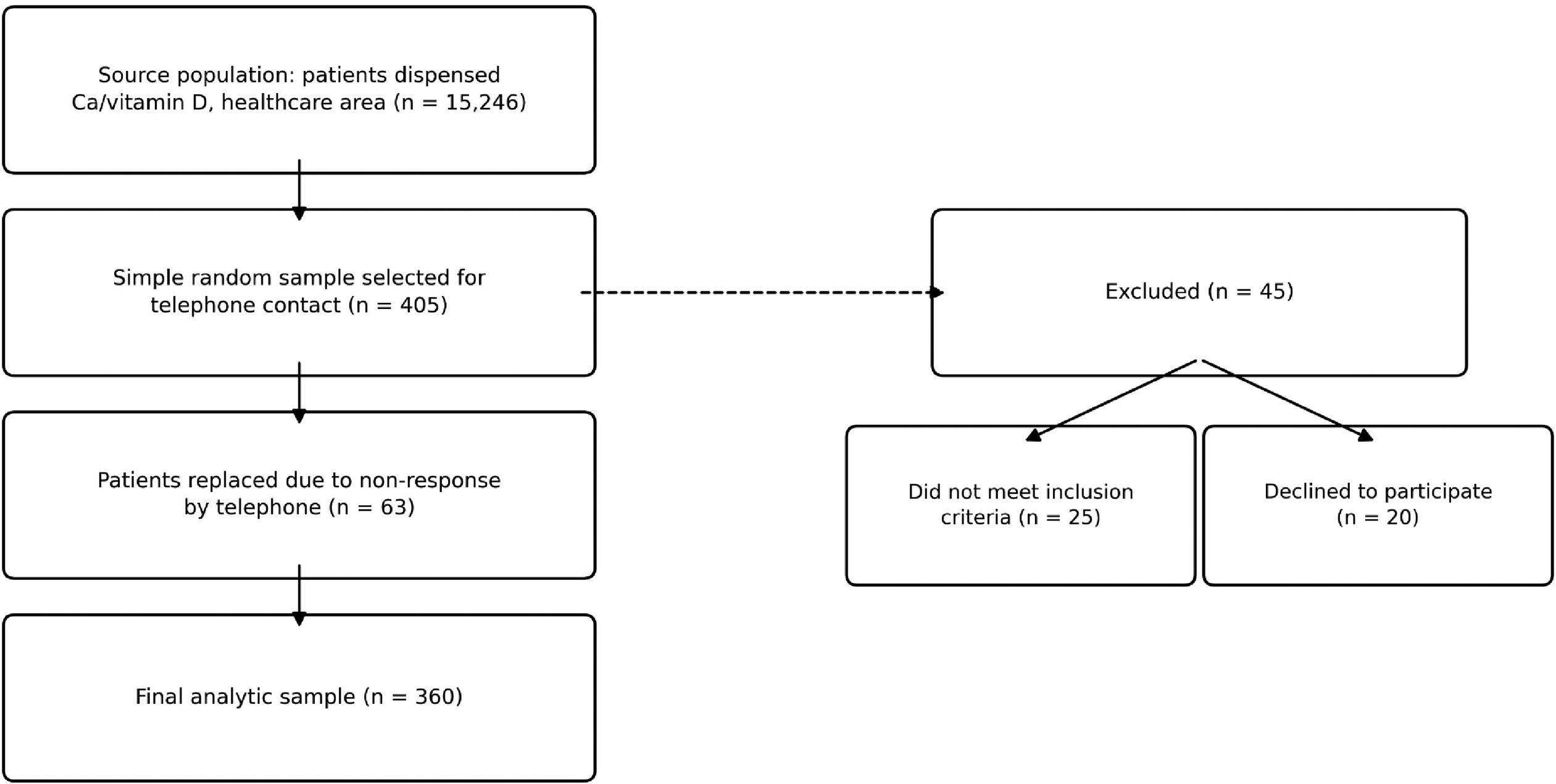
ResultsFrom a source population of 15,246 patients with Ca/VitD supplement dispensing, 405 candidates were randomly selected for telephone contact. A total of 45 patients were excluded (20 declined to participate, and 25 failed to meet eligibility criteria). The final sample was composed of 360 participants (Fig. 1).
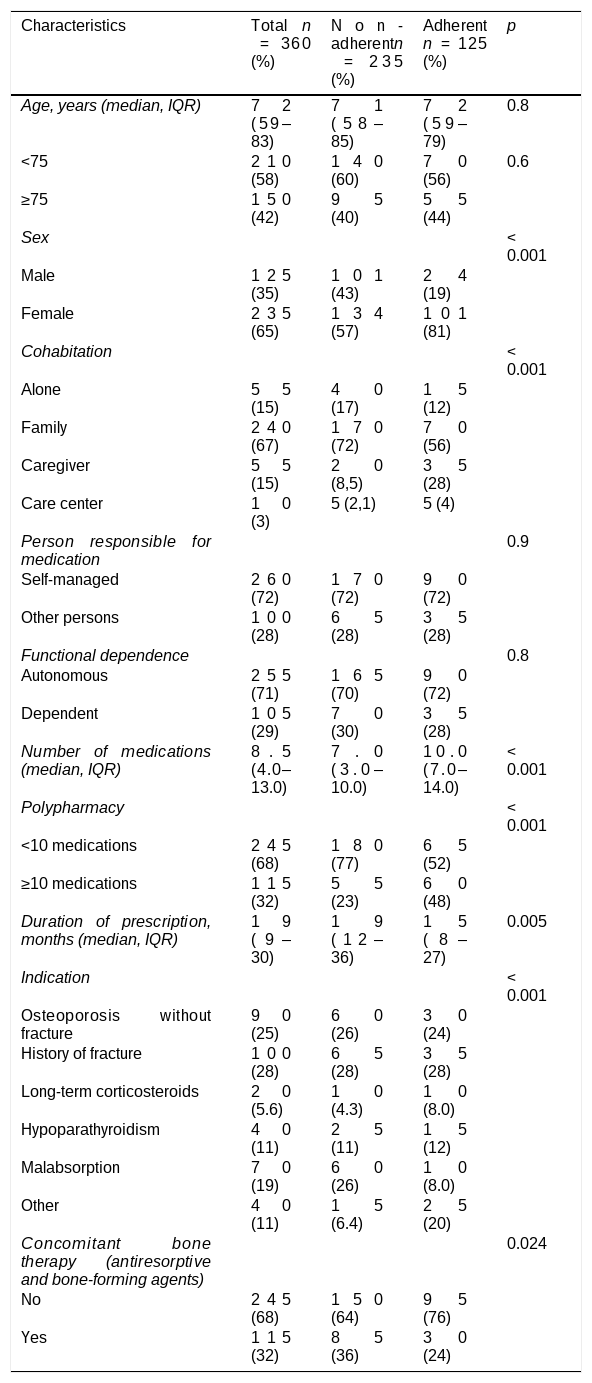
Baseline global and group-based characteristics (adherent/non-adherent) are detailed in Table 1. In total, 30.6% of patients had previously used a different dosage form. Dosage form was most commonly modified on non-specified medical grounds (75; 68.2%), followed by ADR (15; 13.6%); organoleptic issues (10; 9.1%), and dosage regimen (10; 9.1%).
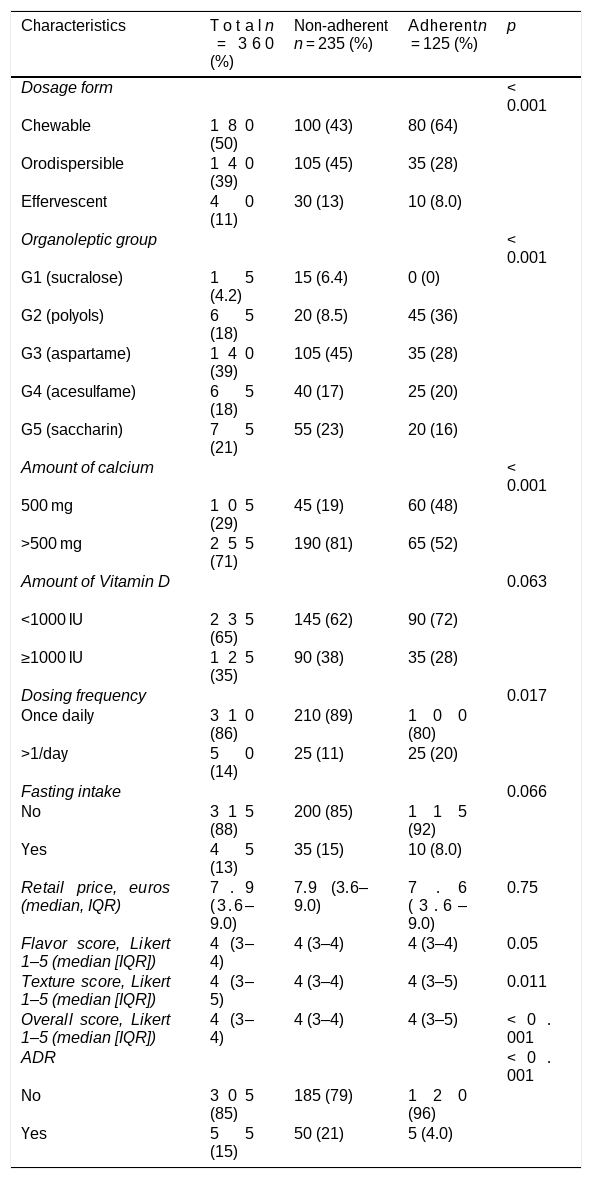
A total of 22 different dosage forms of CaVitD supplements were identified in Spain. The distribution by dosage form, organoleptic group, and dosage characteristics is summarized in Table 2. A total of 55.6% of patients rated their current dosage form on the overall rating scale, and 60 (16.7%) gave the maximum score of 5. Adverse reactions attributed to supplement use were reported in 55 cases (15.3%; 95% CI: 11.9–19.4), prevailingly constipation (n = 20), flatulence (n = 15) or both (n = 15). Among non-adherent patients (n = 141/235), the most common reason was forgetfulness (90; 63.8%). Poor tolerance (10; 7.1%), organoleptic problems (21; 14.9%) and the concurrence of both explained the rest (20; 14.2%).
Overall adherence was 34.7% (125/360; 95% CI: 30.0–39.8). By individual measure, adherence reached 70.8% when self-reported, 54.2% when measured using the Morisky-Green test; and 40.3% according to dispensing records. A moderate level of agreement was observed between self-report and dispensing (κ = 0.38); and moderate to good between self-report and the Morisky-Green test (κ = 0.60) and between the Morisky-Green test and dispensing records (κ = 0.56). Findings remained consistent when alternative adherence definitions were applied (80% threshold), with no change in the direction of effects.
Variations in adherence by patient-related variables and by dosage form-related variables are detailed in Tables 1 and 2, respectively.
In variables unrelated to the dosage form, male sex (OR 0.32; 95% CI: 0.20–0.50); concomitant bone treatment (OR 0.56; 95% CI: 0.56; 95% CI:0.34–0.91); and longer Ca/VitD supplement use (OR 0.99 per month; 95% CI: 0.98–0.99) were associated with poorer adherence. Conversely, living with a caregiver, as compared to living alone (OR 4.00; 95% CI: 1.76–9.09) and polymarphacy involving over 10 medications (OR 3.02; 95% CI:1.90–4.80) were associated with improved adherence. Differences were observed in adherence according to the indication. However, the lack of statistical power precludes identifying the indication associated with the highest adherence.
Regarding dosage form-related variables, taking chewable forms as a reference, the lowest adherence rates were associated with orodispersible and effervescent formulations (OR = 0.42; 95% CI: 0.26–0.68 and OR = 0.42; 95% CI: 0.19–0.90, respectively). By organoleptic group, group G2 (polyols) demonstrated higher adherence rates, as compared to the other groups, both separately and aggregately (OR = 6.05; 95% CI: 3.36–10.87. Doses exceeding 500 mg per tablet were associated with poor adherence (OR = 0.31; 95% CI: 0.17–0.57). No differences were found according to the Vitamin D dose. Adherence decreased substantially after the occurrence of an ADR related to the active formulation (OR = 0.15; 95% CI: 0.06–0.40). Acceptability scores showed a direct relationship with adherence for each 1-point increase on the Likert scale: flavor (OR = 1.26; 95% CI: 1.07–1.49); texture (OR = 1.22; 95% CI: 1.02–1.45) and overall rating (OR = 1.43; IC 95%: 1.17–1.76). An overall rating of 5 was associated with substantially improved adherence (OR = 5.05; 95% CI: 2.80–9.16). The effects of the model were consistent after exploring confounding factors and collinearity. Only adjustment for polyols partially reduced the association between overall rating and adherence. The dosing frequency lost statistical significance after adjusting for calcium content per dosage form, whereas OR did not change after adjusting for dosing frequency.
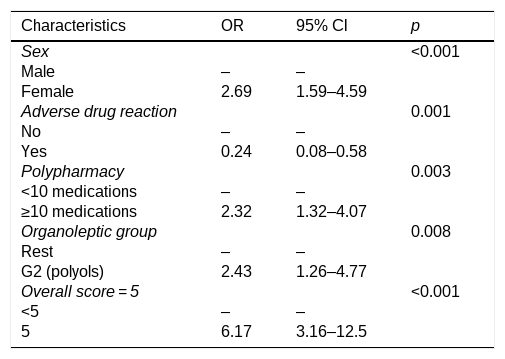
In the final multivariate model (Table 3), adherence was independently associated with female sex; non-occurrence of ADRs; polypharmacy (>10 long-term medications); organoleptic group G2 (plyols); and an overall organoleptic rating of 5. The model demonstrated good discrimination (AUC = 0.83; 95% CI 0.78–0.87) and an adequate overall precision (Brier = 0.17).
Multivariate logistic regression model for overall adherence.
| Characteristics | OR | 95% CI | p |
|---|---|---|---|
| Sex | <0.001 | ||
| Male | – | – | |
| Female | 2.69 | 1.59–4.59 | |
| Adverse drug reaction | 0.001 | ||
| No | – | – | |
| Yes | 0.24 | 0.08–0.58 | |
| Polypharmacy | 0.003 | ||
| <10 medications | – | – | |
| ≥10 medications | 2.32 | 1.32–4.07 | |
| Organoleptic group | 0.008 | ||
| Rest | – | – | |
| G2 (polyols) | 2.43 | 1.26–4.77 | |
| Overall score = 5 | <0.001 | ||
| <5 | – | – | |
| 5 | 6.17 | 3.16–12.5 |
Dependent variable: yes/no adherence according to the definition in this manuscript. 95CI: 95% confidence interval; OR: odds ratio. Patients with complete data on all model covariates were included in the analysis (n = 360). Covariates were selected a priori as a function of the clinical relevance and results of univariable analysis, avoiding collinearity between related variables. Model discrimination: area under the curve (AUC) 0.83; Brier index 0.17.
In this real-world population cohort, overall adherence to Ca/VitD supplementation was low (34.7%) when a good level of agreement was required between self-report, the Morisky-Green test and number of dispensing events. This strict criterion probably mirrors actual adherence more precisely than any of the measures separately. A substantial level of disagreement was observed between sources: adherence was overestimated when self-reported as compared to the number of dispensing events (70.8% versus 40.3%), showing a moderate level of agreement. This finding is consistent with previous studies assessing treatment adherence. The literature shows a tendency toward overestimation in self-report due to recall and social desirability bias, along with variability in the interpretation of medication instructions. In contrast, the number of dispensing events offers a more objective measure, albeit not equivalent to actual intake.23,24 Therefore, decision-making based on self-reporting alone-where adherence is often overestimated-may hinder early detection and timely intervention. This may be especially relevant in treatments perceived as low priority, as it is the case with nutritional supplements, which are repeatedly missed even among patients who consider themselves adherent.14
In the context of Ca/VitD supplementation, the literature provides inconsistent results according to the population, measurement method, and threshold used. Sanfélix-Genovés et al. reported good self-reported adherence in one in two postmenopausal women with osteoporosis, whereas other authors have documented substantially lower adherence rates.7,8,11 In a cohort of patients with rheumatological diseases treated with glucocorticoids, forgetfulness was the reason for non-adherence to Ca/VitD supplementation.25 Our study is consistent with this finding, which supports the idea that patients perceive this supplementation as “low priority”. The analysis of sensitivity, with a threshold of 80%, supports these findings, underscoring the consistency of the main observation.
One of our findings entailing direct implications was the frequency of previous form switching (30.6%), primarily indicated by “non-specified medical decision”. This finding suggests that, in real-world practice, switching Ca/VitD forms may occur due to care pathway requirements (availability, prescribing habits, and others) rather than to tolerance or organoleptic issues. The availability of a simple, reproducible criterion to guide form switching emerges as especially relevant.
This study highlights the role of modifiable factors related to dosage forms and organoleptic properties of medication, beyond classic patient-related factors. The influence of formulation on acceptance and adherence has been extensively studied in pediatric and geriatric populations, though it has not been characterized in Ca/VitD supplementation. A systematic review of solid oral dosage forms in elderly patients identified the size, palatability and appearance of the medication as relevant factors in acceptance and tolerability.26 In the case of calcium, these factors may be of special relevance due to the high content of elemental calcium and Vitamin D and difficulty masking sensations such as grittiness, stickiness and chalkiness, properties previously assessed by other authors in Ca/VitD formulations.16
In this study, chewable forms were associated with higher adherence rates, as compared to orodispersible or effervescent forms. This finding is inconsistent with the study by Liu et al. in elderly patients, showing good acceptance of effervescent and orodispersible forms.27 In contrast, the crossover study by Uyl et al. on Ca/VitD supplementation revealed a significant preference for chewable tablets as compared to effervescent forms.16 A plausible explanation is that higher elemental calcium loads intensify sensory exposure to chalkiness in formulations requiring oral disintegration or dissolution, offsetting their theoretical acceptability advantage. In elderly patients with dry mouth, disintegration may be slower or incomplete, thereby reducing acceptability and, potentially, adherence.
Calcium content exceeding 500 mg per unit was associated with lower adherence rates, regardless of the dosing frequency. The organoleptic group G2, which corresponds to sweetener-containing formulations (prevailingly polyols), was associated with higher adherence rates, as compared to different formulations containing other excipients. This finding contradicts the assumption that acceptance improves in the real world with the use of specific sweeteners with a better theoretical sweetness profile, such as sucralose.19,20
In this study, patients’ overall rating emerges as a stronger predictor; an overall rating of 5/5 was associated with a higher probability of adherence (adjusted OR: 6.17). Half of patients rated their formulation 4 or more (55.6%); however, only 16.7% rated it 5/5. This implies that lower rates would warrant early intervention. In real-world practice, a brief question at community pharmacies or primary care visits—such as “How would you rate your treatment on a 5-point scale?”—could help detect poor adherence. In patients scoring below 5, particularly when other model covariates (ADRs, sex, formulation type) also point to poor adherence, reinforcing the adherence plan or switching formulation early should be considered. Regarding tolerance, 15.3% attributed ADRs to the supplement, primarily constipation and flatulence. The multivariate model associated the presence of ADR with poor adherence (adjusted OR 0.24). This finding is in agreement with the study by Rondanelli et al. on calcium citrate, which associated poor tolerance with reduced adherence.28 Consequently, an approach based solely on reminders will be insufficient in a subset of cases. It seems reasonable to combine adherence-support interventions with tolerability-focused measures, such as proactively addressing constipation risk in patients taking constipating medications or following a low-fiber diet, together with education on managing gastrointestinal symptoms. A second, simple question to patients about tolerability could likewise facilitate early intervention to prevent loss of adherence. In contrast, no association was found between treatment cost and adherence, shifting the focus away from price and toward more actionable determinants: tolerability, acceptability, and the practical suitability of the formulation.
Regarding the patient and their environment, several variables (female sex and the presence of a caregiver) showed strong associations with adherence in the univariable analysis, consistent with previous studies.29 Home-based support emerges as a determining factor of adherence, which means that the person responsible for administering the medication-apart from the patient-should be included in adherence support plans. This interpretation also helps explain a counterintuitive finding: polypharmacy (10 or more medications) emerged as protective in the multivariable model, which is plausible if understood as a marker of organizational structure—established routines, greater healthcare contact, or reliance on organizational aids—rather than a genuinely beneficial causal effect of medication count.
Along these lines, the lower adherence observed in patients on concomitant bone-active treatment is particularly relevant from a prioritization standpoint: this subgroup carries a heightened risk of hypocalcaemia and, consequently, stands to gain the most from improved Ca/vitamin D adherence. A plausible explanation lies in treatment prioritization (the primary therapy is perceived as essential, the supplement as secondary) compounded by treatment fatigue. This would support targeting screening and intervention strategies toward patients on active bone treatment. Furthermore, the progressive decline in adherence over time observed in our study, also reported by other authors, supports the need for periodic reassessment rather than initial education alone.9
Taken together, the final multivariable model—comprising five readily obtainable variables (sex, ADRs, polypharmacy, G2 [polyols], and a maximum overall rating of 5/5)—synthesizes these findings into a rapid stratification tool with good discrimination (AUC: 0.83), without claiming definitive individual prediction, as external validation is lacking. These results open a line of research to validate the model in other populations and to assess whether interventions guided by simple acceptability and tolerability signals translate into sustainable improvements in adherence.
This study should be interpreted in light of certain limitations. Its observational design precludes causal inference and allows for residual confounding, although this was addressed through confounder exploration and presentation of a multivariable model. Formulation assignment was not randomized, and previous switches may have depended on tolerability or patient preference, introducing channeling bias. Dispensing records do not equate to actual intake, and self-report/Morisky-Green scores may be affected by recall and social desirability bias. This justifies the triangulated approach adopted here, although each component carries its own limitations. Finally, some mediators of the effect of polypharmacy or home support, such as personalized dosing systems/pill organizers, were not captured, so these results should be interpreted with caution.
In conclusion, in a heterogeneous adult population under real-world conditions, our findings suggest that —beyond classical determinants— Ca/vitamin D formulation characteristics and patient-perceived acceptability are meaningfully associated with adherence. A simple screening strategy could be based on five readily available indicators: overall formulation rating, presence of attributable ADRs, formulation organoleptic group, sex, and polypharmacy. Such a strategy could facilitate early, pragmatic interventions, such as brief adherence support or formulation reconsideration when warranted, particularly in contexts where multiple distinct formulations are available. These findings require external validation and impact evaluation to confirm their clinical utility.
Contribution to the scientific literature. Implications for hospital pharmacyThis study identifies the characteristics of calcium/vitamin D formulations as determining factors of adherence and provides guidance for early switching of formulation based on the patient's tolerance and overall rating.
Declaration of generative AI and AI-assisted technologies in the drafting processThe authors used ChatGPT to improve the style and clarity of the draft. After use, the authors revised and edited its content and took full responsibility for the accuracy and integrity of the manuscript.
CRediT authorship contribution statementDaniel Gómez-Costas: Writing – original draft, Project administration, Methodology, Investigation, Formal analysis, Data curation, Conceptualization. Ana de Lorenzo-Pinto: Validation, Supervision, Conceptualization. Covadonga Iznaola-Muñoz: Data curation, Conceptualization. Anaís Carrillo-Burdallo: Validation. Yeray Rioja-Díez: Conceptualization. María Marín-Bartolomé: Conceptualization. Ana Herranz-Alonso: Supervision. María Sanjurjo-Sáez: Validation.
Informed consentOral informed consent was obtained from patients during telephone interviews. Appropriate measures were taken to ensure the confidentiality of data in accordance with applicable laws and the tenets of the Declaration of Helsinki.
Ethical considerationsThis study was approved by the Ethics Committee for Research on Medicines for Human use of Gregorio Marañón University Hospital of Madrid. Protocol registration code: CaVitD-HGUGM-2025-01. Approved on 3 June 2025.
FundingThis research did not receive any specific grant from funding agencies.
The authors confirm that they have no known competing financial interests that could have influenced this work.
To the Hospital Pharmacy Department of Gregorio Marañón Hospital for their investigational support.