

The loss of high-cost hospital medicines due to expiration represents a structural problem affecting the efficiency and sustainability of the public healthcare system. This loss is not solely the result of management inefficiencies; it is frequently driven by unpredictable changes in patient clinical evolution that lead to the suspension of previously planned treatments, particularly in oncological, haematological, and immunological conditions.
ObjectiveTo describe the economic and operational impact of the Farmastock web-based tool for the inter-hospital redistribution of high-economic impact medicines nearing expiration within the Public Health System of Andalusia (SSPA), and to analyse its evolution, its behaviour by hospital type and the perception of professional users.
MethodsA retrospective observational descriptive study was conducted on transfers registered in Farmastock between July 2019 and June 2025. Descriptive indicators (volume of transfers, cost avoided, most redistributed medicines) and comparative indicators (hospital type, province, efficiency per transfer) were analysed. An anonymous structured survey of professional users was included (Annex 1).
ResultsA total of 1,462 transfers were registered, avoiding €5,055,822.98 in spending and redistributing 93,741 units. The most frequently transferred ATC group was antineoplastic agents. The average value per transfer was €3,458.16. District hospitals led in volume, while specialised hospitals demonstrated greater efficiency per transfer. The tool was highly valued by users and its use expanded to 27 hospitals.
ConclusionsThe descriptive findings suggest that Farmastock is a useful and well-valued tool associated with a positive trend in health system sustainability. Beyond the estimated economic impact, it has enabled the utilisation of medicines in exceptional clinical situations, such as palivizumab administration in paediatric patients. Future integration with artificial intelligence and corporate platforms could further amplify its impact.
la pérdida de medicamentos hospitalarios de alto coste por caducidad representa un problema estructural que afecta a la eficiencia y la sostenibilidad del sistema sanitario público. Esta pérdida no obedece exclusivamente a ineficiencias en la gestión, sino que con frecuencia es consecuencia de cambios no previsibles en la evolución clínica de los pacientes que provocan la suspensión de tratamientos previamente planificados, especialmente en enfermedades oncológicas, hematológicas e inmunológicas.
Objetivodescribir el impacto económico y operativo de la herramienta web Farmastock para la redistribución interhospitalaria de medicamentos de alto impacto económico próximos a caducar en el Sistema Sanitario Público de Andalucía (SSPA), analizar su evolución, su comportamiento según el tipo de hospital y la percepción de los profesionales usuarios.
Métodosestudio observacional descriptivo y retrospectivo de los traslados registrados en Farmastock entre julio de 2019 y junio de 2025. Se analizaron indicadores descriptivos (volumen de traslados, gasto evitado, medicamentos más redistribuidos) y comparativos (tipo de hospital, provincia y eficiencia por traslado). Se incorporó una encuesta anónima estructurada dirigida a profesionales usuarios.
Resultadosse registraron 1.462 traslados que evitaron un gasto de 5.055.822,98 € y se redistribuyeron 93.741 unidades. El grupo ATC más frecuentemente trasladado fue el de los agentes antineoplásicos. El valor medio por traslado fue de 3.458,16 €. Los hospitales comarcales lideraron en volumen, mientras que los hospitales especializados mostraron una mayor eficiencia por traslado. La herramienta fue bien valorada por los usuarios y su uso se extendió a 27 hospitales.
Conclusioneslos datos descriptivos sugieren que Farmastock es una herramienta útil y bien valorada que se asocia a una tendencia positiva en la sostenibilidad del sistema. Más allá del impacto económico estimado, ha permitido aprovechar medicamentos en situaciones clínicas excepcionales, como la administración de palivizumab en pacientes pediátricos. Su futura integración con inteligencia artificial y plataformas corporativas podría ampliar aún más su impacto.
Ensuring the financial sustainability of public healthcare systems is a global priority. However, the high cost of innovative therapies, the increasing burden of complex long-term diseases, and sustained pressure on public spending are placing growing strain on the financial viability of healthcare systems. Inefficiencies often occur due to wastage of near-expiry hospital medicines, particularly in hospitals with low stock turnover, where a surplus of specific medicines may occur. In Europe, expired medicines may account for 3–5% of healthcare expenditure1.
Notably, the expiry of high-cost hospital medicines is not solely the result of management inefficiencies, avoidable overstock, or planning errors. This wastage is frequently driven by unpredictable changes in patient clinical evolution—such as disease progression, toxicity, suspension of previously planned treatments, updates to therapeutic protocols—particularly in oncological, haematological, and immunological conditions, which require the use of high-cost, low turnover medicines. The single-visit healthcare model requires planned medicine availability for treatments to be promptly initiated. Hence, when a treatment is suspended, medicine wastage is not due to poor planning, but to clinical uncertainty. Other common causes include medicine withdrawal or replacement in clinical protocols during the ongoing campaign and the low frequency of use of specific medicines in small hospitals.
Beyond their economic impact, expired medicine wastage raises both ethical and environmental concerns. In ethical terms, it involves a suboptimal use of public resources that could be allocated to other healthcare needs. In environmental terms, medicine disposal generates chemicals with a negative environmental impact. Therefore, institutions should make an effort to control and minimise medicine wastage to ensure system equity, since each unit used prevents potential delays or medicine shortage events.
Many countries have implemented strategies aimed at optimising the use of high-cost medicines through electronic medicine exchange platforms. In the United Kingdom, the NHS Redistribute system has demonstrated to be efficient in reducing medicine wastage across hospitals through a structured network1. In the Netherlands, under the successful ROAD, antineoplastic medicines dispensed to outpatients were reused by integrating a quality-assurance system to ensure safe medicine redistribution.2 In the United States, initiatives such as SIRUM have scaled up their medicine redistribution model nationwide, redistributing unused medicines worth millions of dollars through dedicated legislation and digital platforms.3 In Spain, platforms such as Farmatrueque in Castilla La Mancha and InterMEd in Madrid confirmed the viability of collaborative medicine exchange across hospitals, though some limitations exist in terms of scale and technological integration.4,5
These experiences demonstrate that redistributing unused medicines is technically viable, clinically safe, and cost-effective. However, a high proportion of these schedules lack scalability or integration with public health services.
In this context, the Andalusian Public Health System (SSPA) launched Farmastock, a collaborative digital tool designed to facilitate the reuse of near-expiry, high-cost medicines across hospitals.6,7 The system pairs a web-based interface with integrated alerts and logistics support. Artificial Intelligence (AI) has recently been integrated to forecast demand and prioritise medicine exchanges. In contrast with previous experiences, hospital pharmacy departments have been actively involved in the development and implementation of Farmastock within the SSPA to ensure that this solution is adapted to real public healthcare demand and scalable nationwide.
This article presents an overview of Farmastock's performance by hospital type and province, focusing on efficiency and operational impact. A comparative analysis was carried out against earlier national and international initiatives, as well as against health technology assessment (HTA) and circular economy frameworks. The objective of this study was to explore Farmastock's potential as a replicable model for the sustainable management of hospital medicines.
Materials and methodsA descriptive, observational, retrospective study was conducted based on transfer data recorded on Farmastock from July 2019 to June 2025. By this design, the system's performance in a real-world clinical setting could be assessed without any experimental manipulation. The study included all near-expiry medicines transferred between SSPA hospitals.
Inclusion criteria and shelf-lifeThe sample included any medicine registered on the platform as “available stock” and not planned to be used at the hospital of origin within the expiry period. Farmastock does not a priori impose a fixed threshold for the time remaining until expiry for a medicine to be offered for exchange. Instead, the decision rests with the pharmacist at the originating hospital, who takes into account the medicine's usual turnover, usage pattern and expected demand. In practice, medicines are typically offered with 1–6 months of remaining shelf life, most commonly 2–4 months. Within routine SSPA operations, this window is long enough for validation, logistics and delivery of the medicine to the recipient hospital before expiry. No exclusion criteria were applied.
Study variablesThe variables analysed included the number of transfers; number of units reused; cost avoidance; ATC therapeutic subgroup (level 2); type of hospital (district; specialist or regional); province; originating and recipient hospitals; mean value per transfer; and mean price per unit. Data were analysed both globally and stratified by type of hospital and province. Descriptive statistics were used for quantitative indicators, whereas relative frequencies were applied for categorical variables. Estimations were performed using Microsoft Excel and R version 4.2.2.
Definition of specific indicatorsTo ensure the interpretability of results, the indicators used for analysis by hospital are detailed below:
- •
Cost-effectiveness index (CEI): The total economic value optimised by a hospital divided by the number of transfers it has made. It indicates the average cost savings achieved by each completed transfer. This indicator mirrors participation and the economic value of any medication exchange. A high CEI indicates that the hospital transfers high-cost medicines.
- •
Return Index (RI): The ratio of the economic value of the medicines received by a hospital to the economic value of the medicines sent by that same hospital, expressed as a percentage. An RI >100% identifies the hospital as a net recipient within the network, whereas an RI <100% identifies a net originating hospital. RI reflects the relative role of the hospital within the redistribution network.
- •
Medicine Offer Optimisation Index (MOOI): The proportion of the economic value of the medicines offered by a hospital that are ultimately accepted and transferred to another hospital, expressed as a percentage. A high MOOI indicates that the hospital identifies near-expiry or surplus medicines at an early stage and demonstrates that their proposals are relevant in clinical terms for other hospitals in the network.
An anonymous, structured questionnaire including 25 items was designed to assess professionals' perception of the tool in terms of perceived usefulness, ease of use, potential improvements, and expectations. The instrument was designed in accordance with the Nominal Group Technique (NGT) developed by a multidisciplinary team of hospital pharmacists and experts in survey methodology and statistics. SSPA hospital pharmacists using Farmastock were invited to take part in the study. The questionnaire was available for completion over a 14-day period. A total of 24 questionnaires were returned. The full questionnaire is available in Appendix 1.
This combined approach (quantitative-operational analysis combined with a qualitative analysis of users’ perception) provides an overview of the operational performance and institutional acceptability of Farmastock.
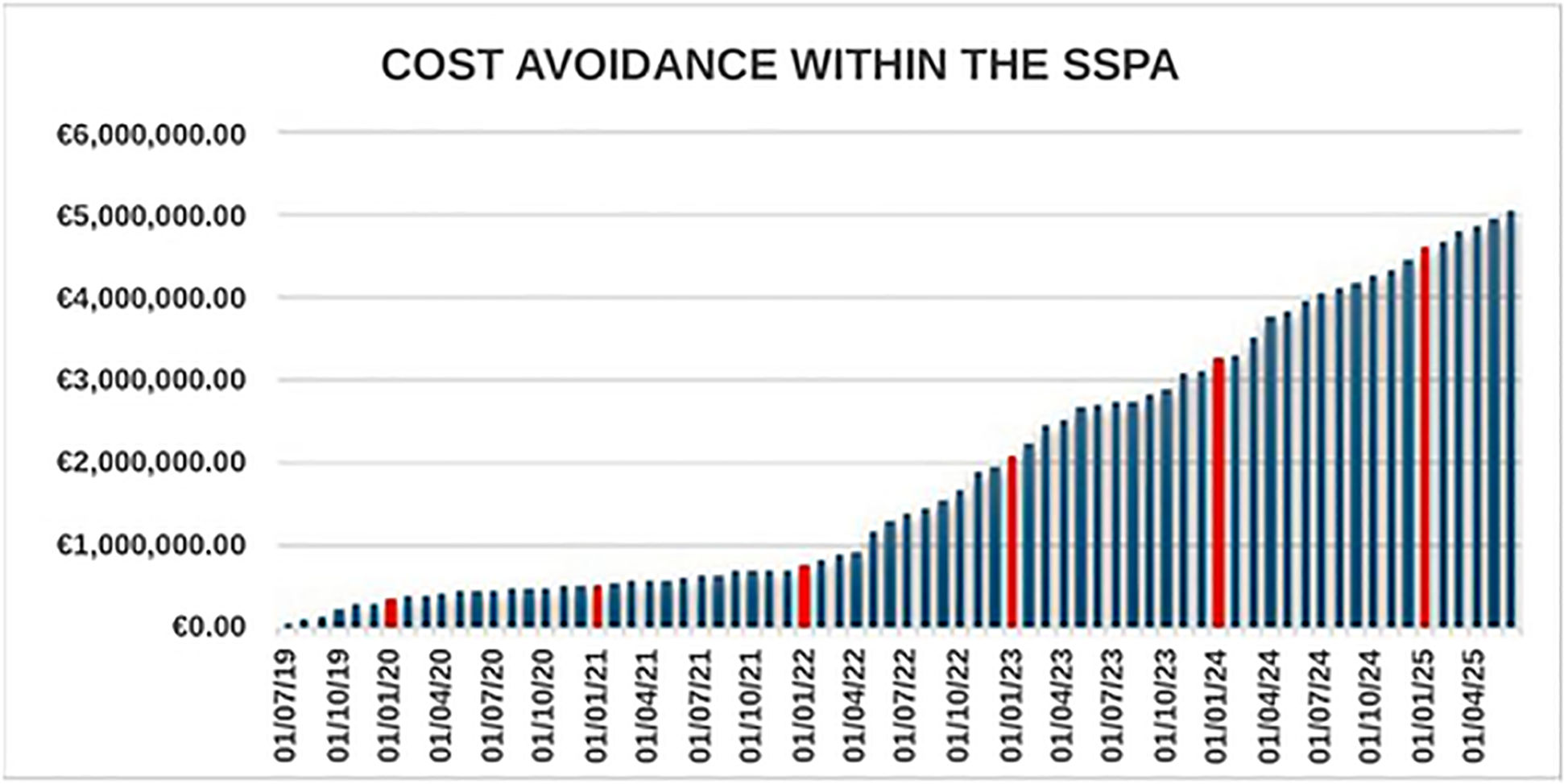
ResultsDuring the study period, which extended from July 2019 to June 2025, a total of 1462 transfers were performed across hospitals via Farmastock, involving the redistribution of 93,741 medicine units, with an estimated cost avoidance of EUR 5,055,822.98. This corresponds to 20 monthly transfers and an average cost avoidance of EUR 3458.16.
The average cost per unit was EUR 53.93, indicating that hospitals offer high-cost medicines. The transferred medicines with the highest cost were eptacog alfa (EUR 127,861.41; crizotinib (EUR 124,840.36) and ibrutinib (EUR 115,161.52). The prevalent therapeutic subgroup was L01 (antineoplastic agents).
Farmastock was used by 27 SSPA hospitals, with more intensive activity observed in Cadiz, Seville and Almeria. The highest volume of transfers was identified among district hospitals, suggesting a significant surplus stock in hospitals with a low turnover or limited demand for specialist care.
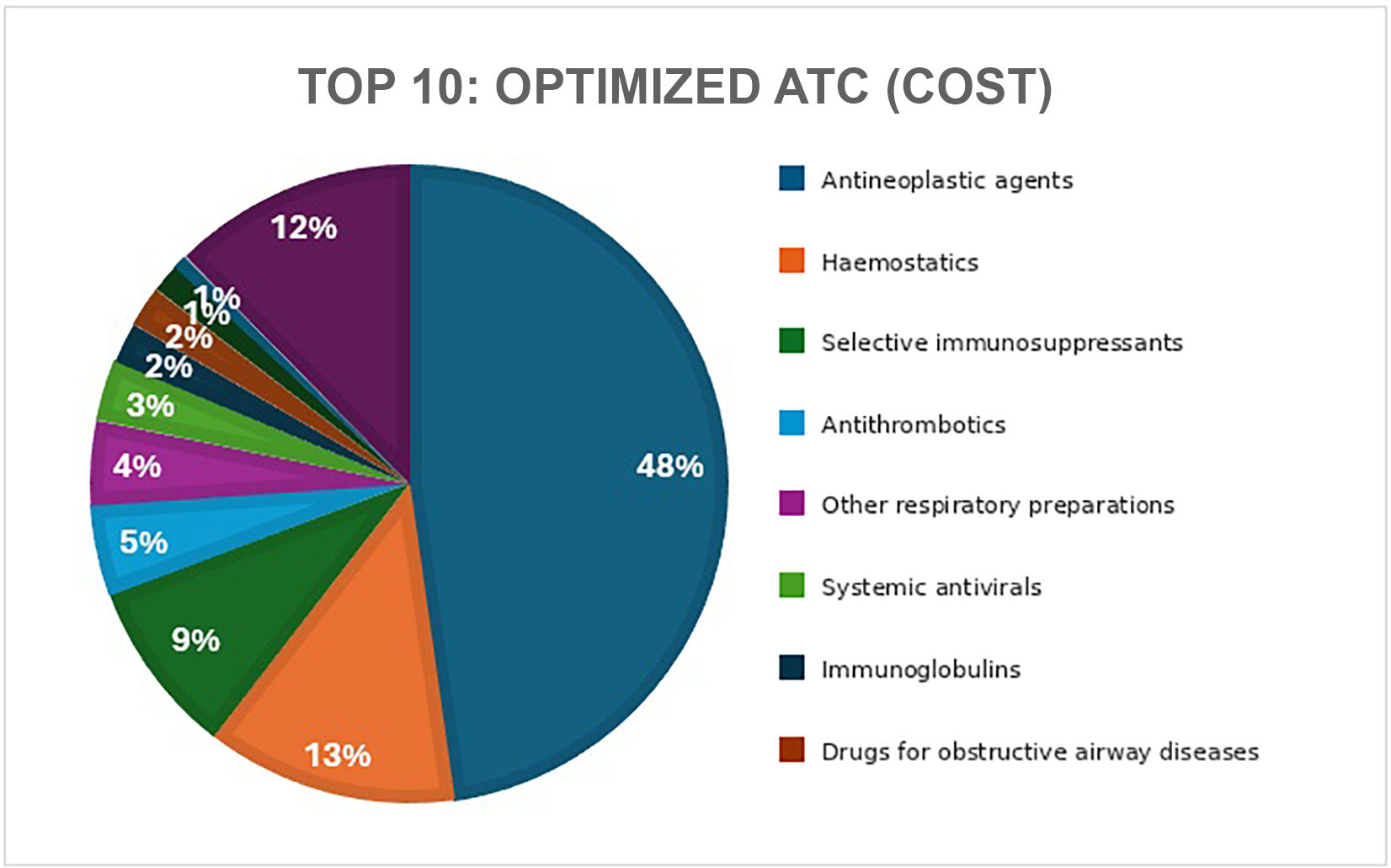
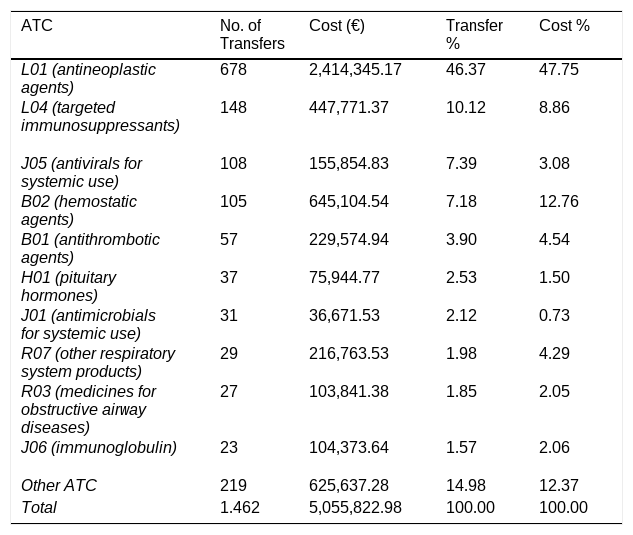
Analysis by ATC therapeutic subgroupAs shown in Table 1, data stratification by level-2 ATC subgroup demonstrated that the L01 subgroup (antineoplastic agents) accounted for 46.37% of units, representing 47.75% of total cost avoidance (EUR 2,414,345.17). Other groups with a significant economic impact included B02 (hemostatics), accounting for 12.76% of cost avoidance (EUR 645,104.54); and L04 (selective immunosuppressive agents), representing 8.86% (EUR 447,771.37).
Distribution of transferred medicines by ATC therapeutic subgroup via Farmastock, amount of transfers and cost savings (July 2019–June 2025).
| ATC | No. of Transfers | Cost (€) | Transfer % | Cost % |
|---|---|---|---|---|
| L01 (antineoplastic agents) | 678 | 2,414,345.17 | 46.37 | 47.75 |
| L04 (targeted immunosuppressants) | 148 | 447,771.37 | 10.12 | 8.86 |
| J05 (antivirals for systemic use) | 108 | 155,854.83 | 7.39 | 3.08 |
| B02 (hemostatic agents) | 105 | 645,104.54 | 7.18 | 12.76 |
| B01 (antithrombotic agents) | 57 | 229,574.94 | 3.90 | 4.54 |
| H01 (pituitary hormones) | 37 | 75,944.77 | 2.53 | 1.50 |
| J01 (antimicrobials for systemic use) | 31 | 36,671.53 | 2.12 | 0.73 |
| R07 (other respiratory system products) | 29 | 216,763.53 | 1.98 | 4.29 |
| R03 (medicines for obstructive airway diseases) | 27 | 103,841.38 | 1.85 | 2.05 |
| J06 (immunoglobulin) | 23 | 104,373.64 | 1.57 | 2.06 |
| Other ATC | 219 | 625,637.28 | 14.98 | 12.37 |
| Total | 1.462 | 5,055,822.98 | 100.00 | 100.00 |
ATC: Anatomical Therapeutic Chemical Classification System of the World Health Organisation (WHO).
This distribution mirrors the high concentration of high-cost medicines used for complex diseases characterised by uncertain progress and clinical variability, including oncological, haematological and immunological diseases. Frequent switching between treatments, discontinuation due to adverse reactions, or infrequent use at some hospitals can all contribute to surplus accumulation within these subgroups (Fig. 1).
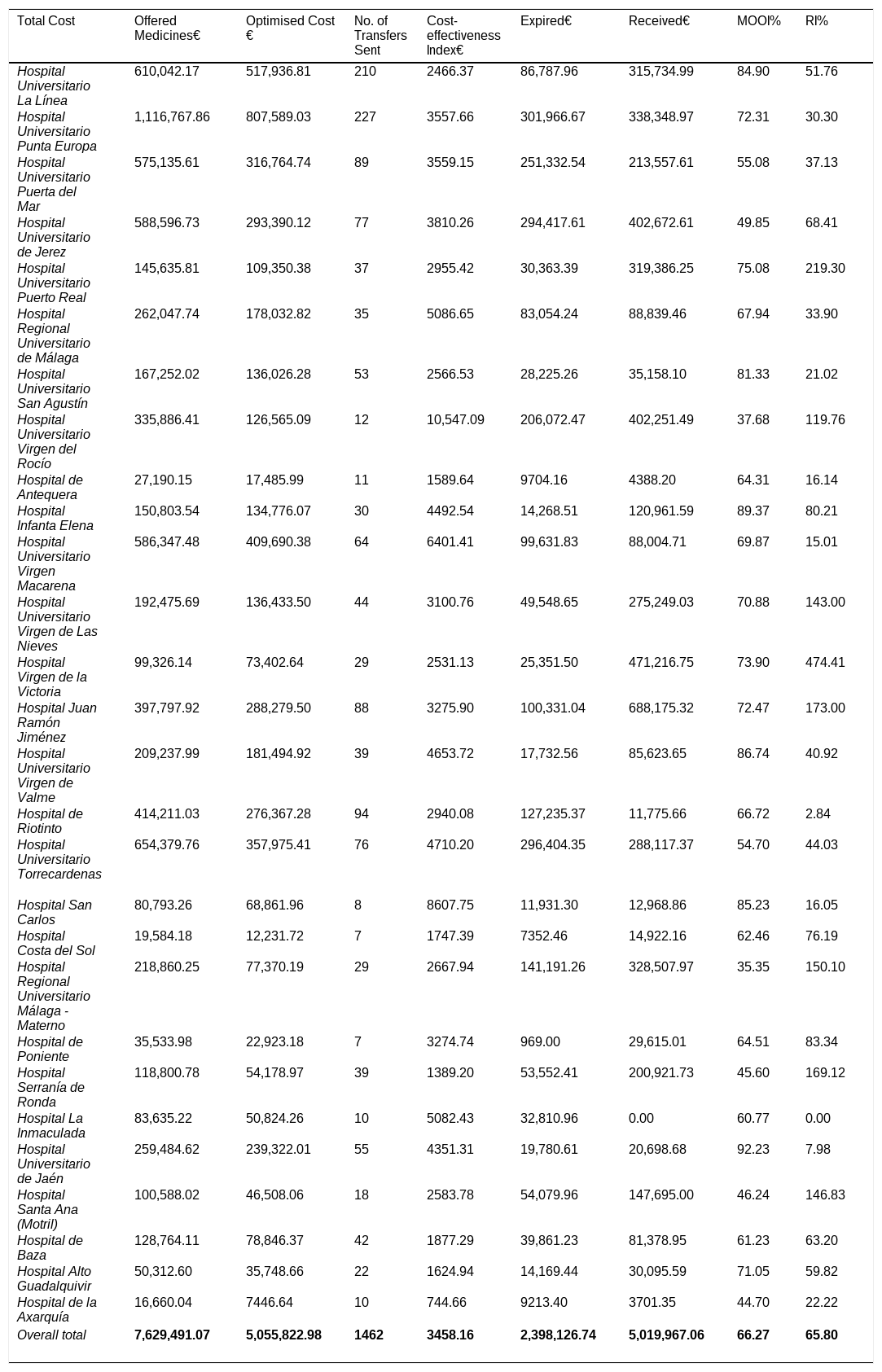
Cost-effectiveness hospitalCost-efficiency was individually estimated per hospital (Table 2). Hospital Universitario Punta Europa benefited from the highest optimised cost (EUR 807,589.03), followed by Hospital Universitario La Línea (EUR 517,936.81). The two hospitals completed a high volume of medicine transfers.
Cost-effectiveness of medicines reused via Farmastock by hospital (July 2019–June 2025).
| Total Cost | Offered Medicines€ | Optimised Cost€ | No. of Transfers Sent | Cost-effectiveness Index€ | Expired€ | Received€ | MOOI% | RI% |
|---|---|---|---|---|---|---|---|---|
| Hospital Universitario La Línea | 610,042.17 | 517,936.81 | 210 | 2466.37 | 86,787.96 | 315,734.99 | 84.90 | 51.76 |
| Hospital Universitario Punta Europa | 1,116,767.86 | 807,589.03 | 227 | 3557.66 | 301,966.67 | 338,348.97 | 72.31 | 30.30 |
| Hospital Universitario Puerta del Mar | 575,135.61 | 316,764.74 | 89 | 3559.15 | 251,332.54 | 213,557.61 | 55.08 | 37.13 |
| Hospital Universitario de Jerez | 588,596.73 | 293,390.12 | 77 | 3810.26 | 294,417.61 | 402,672.61 | 49.85 | 68.41 |
| Hospital Universitario Puerto Real | 145,635.81 | 109,350.38 | 37 | 2955.42 | 30,363.39 | 319,386.25 | 75.08 | 219.30 |
| Hospital Regional Universitario de Málaga | 262,047.74 | 178,032.82 | 35 | 5086.65 | 83,054.24 | 88,839.46 | 67.94 | 33.90 |
| Hospital Universitario San Agustín | 167,252.02 | 136,026.28 | 53 | 2566.53 | 28,225.26 | 35,158.10 | 81.33 | 21.02 |
| Hospital Universitario Virgen del Rocío | 335,886.41 | 126,565.09 | 12 | 10,547.09 | 206,072.47 | 402,251.49 | 37.68 | 119.76 |
| Hospital de Antequera | 27,190.15 | 17,485.99 | 11 | 1589.64 | 9704.16 | 4388.20 | 64.31 | 16.14 |
| Hospital Infanta Elena | 150,803.54 | 134,776.07 | 30 | 4492.54 | 14,268.51 | 120,961.59 | 89.37 | 80.21 |
| Hospital Universitario Virgen Macarena | 586,347.48 | 409,690.38 | 64 | 6401.41 | 99,631.83 | 88,004.71 | 69.87 | 15.01 |
| Hospital Universitario Virgen de Las Nieves | 192,475.69 | 136,433.50 | 44 | 3100.76 | 49,548.65 | 275,249.03 | 70.88 | 143.00 |
| Hospital Virgen de la Victoria | 99,326.14 | 73,402.64 | 29 | 2531.13 | 25,351.50 | 471,216.75 | 73.90 | 474.41 |
| Hospital Juan Ramón Jiménez | 397,797.92 | 288,279.50 | 88 | 3275.90 | 100,331.04 | 688,175.32 | 72.47 | 173.00 |
| Hospital Universitario Virgen de Valme | 209,237.99 | 181,494.92 | 39 | 4653.72 | 17,732.56 | 85,623.65 | 86.74 | 40.92 |
| Hospital de Riotinto | 414,211.03 | 276,367.28 | 94 | 2940.08 | 127,235.37 | 11,775.66 | 66.72 | 2.84 |
| Hospital Universitario Torrecardenas | 654,379.76 | 357,975.41 | 76 | 4710.20 | 296,404.35 | 288,117.37 | 54.70 | 44.03 |
| Hospital San Carlos | 80,793.26 | 68,861.96 | 8 | 8607.75 | 11,931.30 | 12,968.86 | 85.23 | 16.05 |
| Hospital Costa del Sol | 19,584.18 | 12,231.72 | 7 | 1747.39 | 7352.46 | 14,922.16 | 62.46 | 76.19 |
| Hospital Regional Universitario Málaga - Materno | 218,860.25 | 77,370.19 | 29 | 2667.94 | 141,191.26 | 328,507.97 | 35.35 | 150.10 |
| Hospital de Poniente | 35,533.98 | 22,923.18 | 7 | 3274.74 | 969.00 | 29,615.01 | 64.51 | 83.34 |
| Hospital Serranía de Ronda | 118,800.78 | 54,178.97 | 39 | 1389.20 | 53,552.41 | 200,921.73 | 45.60 | 169.12 |
| Hospital La Inmaculada | 83,635.22 | 50,824.26 | 10 | 5082.43 | 32,810.96 | 0.00 | 60.77 | 0.00 |
| Hospital Universitario de Jaén | 259,484.62 | 239,322.01 | 55 | 4351.31 | 19,780.61 | 20,698.68 | 92.23 | 7.98 |
| Hospital Santa Ana (Motril) | 100,588.02 | 46,508.06 | 18 | 2583.78 | 54,079.96 | 147,695.00 | 46.24 | 146.83 |
| Hospital de Baza | 128,764.11 | 78,846.37 | 42 | 1877.29 | 39,861.23 | 81,378.95 | 61.23 | 63.20 |
| Hospital Alto Guadalquivir | 50,312.60 | 35,748.66 | 22 | 1624.94 | 14,169.44 | 30,095.59 | 71.05 | 59.82 |
| Hospital de la Axarquía | 16,660.04 | 7446.64 | 10 | 744.66 | 9213.40 | 3701.35 | 44.70 | 22.22 |
| Overall total | 7,629,491.07 | 5,055,822.98 | 1462 | 3458.16 | 2,398,126.74 | 5,019,967.06 | 66.27 | 65.80 |
MOOI: Medicine Offer Optimisation Index (MOOI) = (optimised medicine cost/offered medicine cost) * 100. RI: Return Index = (received medicine cost/offered medicine cost) * 100.
Detailed analysis of cost-effectiveness by hospital highlights distinctive patterns in the management of high-cost medicines through Farmastock:
- •
Notably, Hospital Universitario Virgen del Rocío demonstrated a high average cost per transfer, reaching EUR 10,547.09. This figure, largely exceeding the overall average cost per transfer, suggests that transfers from this hospital involve medicines with a higher unit economic cost. Optimising a single-dose vial may involve substantial cost savings.
- •
Hospital Universitario Virgen de la Victoria demonstrated an RI of 474.41%. An RI as high as this, meaning the hospital receives more than four times the value it sends, suggests that it acts as a net receiver within the system—consistent with an effective acquisition and medicines use strategy.
- •
MOOI exceeded 90% in Hospital Universitario de Poniente and Hospital Universitario de Jaén. This figure underscores their capacity to identify near-expiry or surplus stock at an early stage, as well as the high relevance of their proposals for other hospitals in the network.
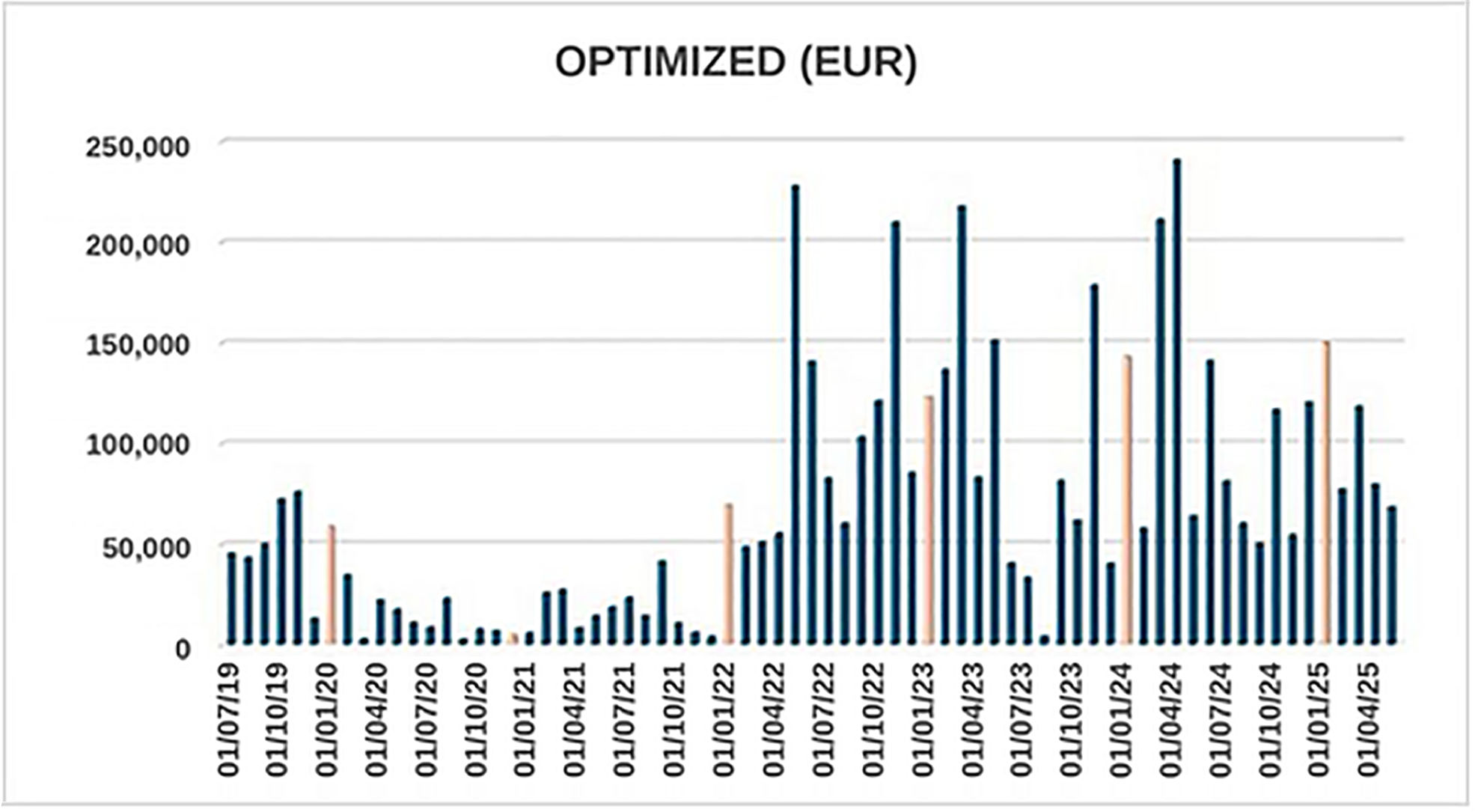
Monthly analysis revealed positive progress in the medicine transfer network. Within the first months of implementation, fewer than 10 monthly transfers were reported, rising to over 60 transfers through the 2022 and 2023 periods, with cost avoidance peaking at EUR 227,863.23. The cumulative cost avoidance as of June 2025 was EUR 5,055,822.98. The volume of transfers increased steadily, with significant peaks occurring concurrently with the establishment and progressive adoption of Farmastock (Figs. 2 and 3).
The case of the active substance palivizumab was remarkable. During the 2023 campaign for the prevention of bronchiolitis caused by respiratory syncytial virus (RSV), palivizumab was withdrawn from the SAS therapeutic protocol before the last dose and replaced with nirsevimab in the following campaigns. As a result, multiple hospitals had a surplus of palivizumab units that were not expected to be used before expiry.
Palivizumab therapy was maintained for paediatric patients receiving palliative care, since the new therapy could not be administered in these cases. Farmastock made it possible to transfer the stock to other hospitals in Andalusia that still needed this medicine, thereby avoiding wastage.
A total of 13 palivizumab transfers were performed to reuse 122 units, resulting in a cost avoidance of EUR 86,322.36. The average cost per transfer was EUR 6640.18, with an average cost per unit of EUR 707.56. The benefits of Farmastock are two-fold: financial, as it contributes to cost avoidance, and clinical, as it helps ensure that exceptional treatments critical to patients’ lives can be maintained.
User evaluation surveyThe survey, conducted among 24 hospital pharmacists (SFH) in October 2025 (see full questionnaire in Appendix 1), was aimed at assessing the operability and potential of Farmastock within the SSPA. As much as 95.8% of participants confirmed that a specific tool was needed for managing near-expiry medicine stocks.
These results indicate a 100% level of implementation of Farmastock among users, since all participants reported being familiar with the tool and had used it actively. The survey revealed poor knowledge of other tools different from Farmastock (16.7%), with this tool emerging as a plausible solution.
Evaluation results are based on extensive experience, since 79.2% (19 in 24) claimed to have been using Farmastock for one or more years. Users rated its capabilities highly (on a 5-point scale). They underscore its ability to contribute added value to stock management (average score of 4.92/5) and promote institutional collaboration (4.88/5). Additionally, users found the tool easy to use (4.79/5) and highlighted its innovative approach (4.71/5). Its perceived ease of use was confirmed for specific tasks, including the medicine request (4.88/5) and registration (4.33/5) processes.
Qualitative evaluations support these findings, as the tool was described as “essential”, “key to system efficiency and sustainability”, and “promoter of collaborative work”. These results confirm that Farmastock is fully operational, hence warranting its establishment as a standard stock management tool for near-expiry medicines.
DiscussionDescriptive analysis suggests that Farmastock is a useful, fully operational tool for redistributing high-cost hospital medicines, associated with increasing cost avoidance, geographical coverage, and professional acceptance. The observational nature of the study hinders establishing any direct causal relationship between tool use and its total estimated economic impact, though data consistently support the magnitude and direction of this effect.
Farmastock, circular economy, and healthcare technology assessmentThese findings can be interpreted within established theoretical frameworks in health economics and health technology assessment. From the perspective of the ISPOR's6 (International Society for Pharmacoeconomics and Outcomes Research) value frameworks, Farmastock contributes to the efficiency dimension and to value for money in healthcare spending by recovering medicine units that would otherwise represent expenditure with no return in patient care. Its contribution lies within the logic of “disinvestment in inefficiencies” promoted by these frameworks, freeing up resources for other clinically relevant uses.
From the perspective of circular economy applied to healthcare, the 10-R Ladder model developed by Huijben et al. (2025)8 provides a particularly useful framework to conceptualise this tool. This framework proposes 10 hierarchical value-retention strategies (Refuse, Rethink, Reduce, Reuse, Repair, Refurbish, Remanufacture, Repurpose, Recycle, Recover), applicable to the healthcare system. Farmastock sits naturally within the Reuse level (reusing the medicine for another patient or hospital without it undergoing transformation) and the Redistribute/repurpose level (redistributing the medicine between nodes of the system to maximise the use of an already-acquired resource). The added value of this tool lies in operationalising value-retention strategies within a real public healthcare system—strategies that in many hospitals remain good intentions, unimplemented owing to a lack of technical and organisational infrastructure.
Comparison with other experiencesAs compared to other initiatives such as Farmatrueque4 o InterMed5, Farmastock offers regional coverage and stability, despite the technical limitations faced to date. Its operational model, based on pharmaceutical registration and pharmacist validation guarantees medicine traceability and safety. Expectedly, AI and predictive algorithms will progressively be integrated to strengthen its strategic value. At the international level, models like SIRUM in the USA and ROAD in the Netherlands have demonstrated the feasibility and economic impact of medicine redistribution platforms. Another added value of this tool lies in it being fully aligned with public hospital regulations, which makes it scalable to other autonomous communities.
Farmastock patterns of use by hospital typeOne of the most remarkable findings of this study is that district, regional and specialist hospitals used Farmastock for different purposes. District hospitals were primarily originating hospitals, whereas regional and specialist hospitals were prevailingly recipients. This pattern of use is explained by differences in healthcare demand and stock turnover. District hospitals treat a lower volume of complex cases and are therefore more likely to accumulate surplus stock, particularly when a patient's clinical course takes an unexpected turn. In contrast, regional and specialist hospitals administer highly complex therapies that require a seamless flow of a wide variety of medicines, thereby emerging as natural recipients within this network. Under the “single-visit” model, sufficient stock must be available to start treatment at the point of care; hence, any surplus arising from a subsequent treatment discontinuation cannot be attributed to poor planning. Farmastock enables an efficient sharing of surplus stock, avoiding medicine expiry.
Reuse culture and anticipatory capacityBeyond its economic impact, Farmastock promotes a rational reuse culture based on the principles of circular economy, promoting institutional sustainability. The implementation of a systematic reuse model prevents therapy suspensions from translating into overstock, supports collaborative culture across hospitals, and strengthens cohesion within the public healthcare system. Additionally, the long-term use of these platforms provides an insight into medicine use patterns, identifies demand deviations, and provides guidance for acquisition policies based on real-world medicine turnover. This anticipatory capacity could be supported by AI-based algorithms trained with historical data.
Barriers to and facilitators of scalabilityThe transferability of Farmastock to other hospital settings depends on a multiplicity of organisational, regulatory and cultural factors.
Facilitators
- •
The availability of a stable network of hospital pharmacy services with a well-established cooperation and communication culture promoted by the SSPA has played a major role in the widespread implementation of this tool.
- •
By bringing hospital pharmacy services together under a single authority, the Andalusian Healthcare System (SSPA) established a shared regulatory framework and standardised logistics procedures that reduced regulatory friction.
- •
Institutional commitment to the circular economy and sustainability of the healthcare system through the integration of this type of strategic tool.
- •
An easy-to-use web-based design that requires minimal technical resources.
- •
Mandatory pharmacist validation for each transfer, thereby ensuring clinical safety and legal traceability.
Barriers
- •
Regulatory heterogeneity across autonomous communities concerning medicine stock management and across-hospital transfers may hinder the adoption of a standard national model.
- •
The lack of interoperativity with local stock management platforms (Athos® in the SSPA) requires data to be entered manually, thereby limiting operational efficiency and potentially discouraging use.
- •
Cultural differences between hospitals—particularly around who “owns” stock and how willing they are to share it, often shaped by internal budget allocation—can create initial resistance.
- •
The absence of a standardised tax and accounting framework to estimate how a medicine is worth when transferred to hospitals with different legal entities, between two autonomous communities, or between a public and an estate-funded hospital, poses a barrier to replication.
- •
The limitations inherent to small hospital networks or geographical regions with a low population density—where supply and demand may not be sufficient to support the system—suggest that the larger the network, the more efficient the tool is.
All managers and professionals considering implementing or escalating similar tools should take these facilitators and barriers into account.
Limitations of the studyThis study provides a descriptive analysis of patterns of use of Farmastock, though it has some limitations. Firstly, an official control group was not included in the practical, operational study design. Although cost avoidance is estimated from the acquisition cost of a far-expiry medication, some of these medicines may have ultimately been used by the originating hospital. For the accumulative cost avoidance to be definitely valid, according to the tool's operational procedures, it is assumed that the medicines effectively transferred are transferred to patients at the recipient hospital. This assumption is based on the recipient having actively requested the dose to meet a specific and anticipated clinical need, as well as on mandatory pharmacist validation prior to transfer. To ensure more precise estimations, further studies are needed to verify how the medicine was actually used at the recipient hospital, for example, through traceability to administration. Secondly, results focus on activity as recorded on Farmastock. However, no robust data are available on the total volume of near-expiry, high-cost medicines that were managed by the SSPA during the study period, which hinders estimating the absolute percentage of cost avoidance over the total. The lack of full integration of Farmastock and local stock management systems requires data to be entered manually, which may negatively affect operational efficacy. Finally, the descriptive, observational nature of the study prevents establishing a causal relationship. Therefore, these findings should be interpreted as consistent trends and operational results of the system, rather than as evidence of comparative efficacy.
These limitations open an avenue for future research to compare expiry indices at Farmastock users versus non-users and assess the impact of the expected integration of the tool with predictive, AI-based algorithms.
ConclusionsFarmastock was not designed to correct hospital pharmacy management deficiencies; rather, it is an innovative solution to a problem inherent to real-world practice: unanticipated changes in patients’ progress leading to the suspension of a planned treatment, especially in antineoplastic and other high-cost treatments. In this context, Farmastock emerges as a key tool for reducing wastage and enabling near-expiry high-cost medicines to be used at other hospitals.
Descriptive analysis demonstrates that Farmastock is a fully operational, widely spread, and well-accepted tool among professionals. Its use was associated with a cumulative cost avoidance of over EUR 5 million (EUR 5,055,822.98) during the study period, included 27 hospitals and was very positively rated by professionals, suggesting a consistent trend with a positive impact on the sustainability of the healthcare system. This cost avoidance assumes an optimal use of the medication at the recipient hospital, given that the recipient actively requested the units and transfer was validated by the pharmacist.
In terms of health technology assessment and circular economy, Farmastock demonstrates how a simple digital tool may operationalise the Reuse and Redistribute levels of the 10-R framework within a real-world healthcare hospital. The integration of this technology with corporate platforms and the incorporation of Artificial Intelligence could multiply its impact in the future, both in public and private healthcare. To achieve this, it is necessary to overcome the identified organisational, regulatory and cultural barriers.
Declaration of generative AI and AI-assisted technologies in the drafting processDuring the drafting process, the authors used Gemini® to detect inconsistencies. After using this AI tool, the authors revised and edited the contents of the manuscript, where appropriate, and assumed full responsibility for its contents.
CRediT authorship contribution statementMyriam Gallego-Galisteo: Writing – original draft, Supervision, Project administration, Methodology, Investigation, Funding acquisition, Formal analysis, Conceptualization. Javier Romero-Puerto: Writing – review & editing, Methodology, Investigation. María Teresa López-Mancha: Writing – review & editing, Investigation. Rosa Seisdedos-Elcuaz: Writing – review & editing, Investigation. María José Martínez-Bautista: Writing – review & editing, Investigation. Esaú Aguilar-del Valle: Writing – review & editing, Investigation. Francisco Sierra-García: Writing – review & editing, Investigation. Carmen Jiménez-de Juan: Writing – review & editing, Investigation. María José Gándara-Ladrón de Guevara: Writing – review & editing, Investigation. Jesús María Fernández-Martín: Writing – review & editing, Investigation. Marcelo Domínguez-Cantero: Writing – review & editing, Investigation. Alberto Varas-Pérez: Writing – review & editing, Investigation. Marta Gutiérrez- Lorenzo: Writing – review & editing, Investigation. Belén María Muñoz-Cejudo: Writing – review & editing, Investigation. Jaime Cordero-Ramos: Writing – review & editing, Investigation. Beatriz Tauste-Hernández: Writing – review & editing, Investigation. David Blánquez-Martínez: Writing – review & editing, Investigation. María de las Aguas Robustillo-Cortés: Writing – review & editing, Investigation. Miguel Reyes-Malia: Writing – review & editing, Investigation. María José Barbero-Hernández: Writing – review & editing, Investigation. María Espinosa-Bosch: Writing – review & editing, Investigation. Lorenzo Villalobos-Torres: Writing – review & editing, Investigation. Teresa Brieva-Herrero: Writing – review & editing, Investigation. Cristina Mora-Herrera: Writing – review & editing, Investigation. Joaquín Urda-Romacho: Writing – review & editing, Investigation. Inmaculada Casas-Hidalgo: Writing – review & editing, Investigation. Elena Álvaro-Sanz: Writing – review & editing, Investigation. María Belén Fuentes-Ibáñez: Writing – review & editing, Investigation. Carlos Núñez-Ortiz: Writing – review & editing, Methodology, Investigation, Conceptualization.
Ethical considerationsGiven the nature of this study, describing the implementation of a stock management and optimisation tool did not require approval from the Ethics Committee. The study did not involve any clinical intervention on patients or did it modify routine practice.
FundingThis work was supported by funding from the Farmastock project, awarded by the Regional Ministry of Health and Families of the Government of Andalusia through a competitive public call for proposals in 2019. The project also received the Quality Seal from the ITEMAS Platform for the Promotion of Innovation and Development of the Carlos III Health Institute (ISCIII) in 2023 and 2024.
The authors declare no conflicts of interest.
To all participating hospitals and pharmacy professionals who supported the implementation of this tool at their hospitals.
The survey was designed using a nominal group technique and was administered anonymously and in a structured format to hospital pharmacists using Farmastock in SSPA hospital pharmacy departments. The instrument consists of 25 items structured into 5 sections. Items were rated on a 5-point Likert scale, with 1 being the lowest and 5 the highest available score, unless otherwise stated. The instrument contained the following items:
- I.
General information (questions 1–5)
- 1.
What is your role within the hospital pharmacy department (HPD)?
- o
General information management/Logistics management/Clinical onco-haematology/Pharmaceutical care/Pharmacotechnics/Rational use of medicines/Clinical pharmacy/Other.
- o
- 2.
What type of hospital do you work in?
- o
Regional/Specialist/District.
- o
- 3.
Do you consider a tool for minimising medicine expiry in HPDs to be necessary?
- o
Yes/No/Don't know – No answer.
- o
- 4.
Are you aware of any tool or tool, other than Farmastock, that supports the management of near-expiry medicines?
- o
Yes/No/Don't know – No answer.
If yes, please specify which one(s).
- o
- 5.
Within the SSPA, are you familiar with the Farmastock tool?
- o
Yes/No/Don't know – No answer.
- o
- 1.
- II.
Use and configuration of Farmastock (questions 6–11)
- 6.
Have you used the Farmastock tool at your hospital?
- o
Yes/No/Don't know – No answer.
- o
- 7.
How long have you been using the tool?
- o
1–3 months/4–12 months/1–4 years/more than 4 years.
- o
- 8.
How would you prefer the registration of a hospital and its responsible pharmacist to be managed in Farmastock?
- o
Both the hospital and the responsible pharmacist registered by an administrator/The Hospital registered by an administrator, and the responsible pharmacist registering themselves.
- o
- 9.
What do you consider necessary for the correct use and operation of the Farmastock tool?
- o
Specific training/Periodic support sessions/Standard operating procedures (SOP)/Mentoring/Other.
- o
- 10.
Which pharmacist or area of the HPD do you think should be responsible for managing medicines in Farmastock?
- o
Logistics management/Clinical onco-haematology/Pharmaceutical care/Rational use of medicines/Clinical pharmacy/Other.
- o
- 11.
How many pharmacists per hospital do you consider appropriate as Farmastock users?
- o
One pharmacist responsible for the whole hospital/One responsible pharmacist per area or unit using high-cost medicines/As many as the department considers appropriate/All pharmacists in the pharmacy department.
- o
- 6.
- III.
Proposals and notifications (questions 12–18)
- 12.
On a 5-point scale, how easy do you find registering a medicine on the web-based tool? (1 = not at all easy; 5 = very easy).
- 13.
On a 5-point scale, how easy do you find requesting a medicine on the web-based tool? (1 = not at all easy; 5 = very easy).
- 14.
How often would you like to receive a list of near-expiry medicines?
- o
Daily/Weekly/Fortnightly/Monthly.
- o
- 15.
How should automatically generated proposals for transferring near-expiry medicines, based on the stock management system (Athos®/Farmatools®), be handled?
- o
The proposal is shared automatically, with no need for validation/The proposal is optionally reviewed and, if necessary, amended by the hospital's pharmacist/The proposal must be reviewed and approved by the hospital's pharmacist.
- o
- 16.
Farmastock allows you to check the status of any registered medicine (available, requested, received). Which alert notifications would you like to receive?
- o
Registration of a medicine by a hospital/Request for a medicine from your hospital/Acceptance of a medicine requested by your hospital/Receipt of a medicine sent from your hospital/All of the above.
- o
- 17.
Which communication channel do you consider most valuable for receiving the selected alert notifications?
- o
E-mail/Instant messaging/I do not wish to receive notifications (as all information is available on Farmastock)/Other.
- o
- 18.
Among Farmastock sub-processes, rate the usefulness of automating each of the following on a 5-point scale (1 = least useful; 5 = most useful):
- o
Periodic registration of near-expiry medicines by each hospital.
- o
Pharmacist validation of the generated list of medicines with a high probability of expiring.
- o
Checking, within the Athos® order proposal, which medicines are available in Farmastock.
- o
Pharmacist validation of a request made to a hospital, a supplier, or both.
- o
- 12.
- IV.
Transfer and receipt of medicines (questions 19–23)
- 19.
How do you think automatic medicine requests should be made?
- o
Based on the units calculated in the order proposal/All units available in Farmastock, even if they exceed the proposed quantity/The requested quantity should be assessed individually by the pharmacist using Farmastock.
- o
- 20.
Regarding the medicine transfers your hospital has taken part in, please rate the following aspects (Never/Occasionally/Always):
- o
Delays in collection.
- o
Delays in delivery.
- o
Deliveries received in poor storage condition.
- o
Deliveries that did not guarantee appropriate storage conditions.
- o
- 21.
In your view, what would be the best way to manage medicine transfers?
- o
By the requesting pharmacist (at the receiving hospital)/By the Farmastock coordinator/By the tool itself/Don't know – No answer.
- o
- 22.
What documentation do you consider important to receive together with the medicine?
- o
Temperature log/Dispatch note from the originating hospital/Other.
- o
- 23.
On a 5-point scale, how easy do you find receiving a medicine via the web-based tool? (1 = not at all easy; 5 = very easy). Please, indicate whether you encounter any difficulty when managing the receipt of a medicine at your hospital:
- o
No, the process raises no concerns for me/Yes, I have concerns and believe the procedure for receiving medicines not acquired through a supplier should be agreed upon.
- o
- 19.
- V.
Specific assessment of Farmastock (questions 24–25)
- 24.
On a scale of 1–5 (1 = lowest rating; 5 = highest rating), rate the following qualities of Farmastock:
- o
Adds value to management.
- o
Easy to use.
- o
Innovative.
- o
Promotes collaboration.
- o
Saves time.
- o
- 25.
In your own words, please provide an overall assessment of the tool (open-ended response).
- 24.