Patient experience is currently recognised as one of the pillars of healthcare quality and a key tool for guiding organisational improvement. This study aimed to evaluate how the systematic collection of patient experience through surveys, integrated into a Quality Management System (QMS), can drive improvement interventions in pharmaceutical care for outpatients attending a Hospital Pharmacy Service (HPS).
MethodsAn observational, descriptive and retrospective study based on repeated annual cross-sectional patient experience surveys was conducted between 2023 and 2025 among outpatients treated at the HPS of a tertiary hospital. The questionnaire assessed patient experience across four thematic domains: facilities, organisation, pharmaceutical consultation and overall satisfaction. Items were rated using a five-point Likert scale, and open-ended fields were included to collect qualitative comments. The surveys were distributed electronically via the Galician Health Service platform. The results were integrated into the PIC/EM continuous improvement cycle (Plan, Implement, Control/Evaluate and Improve) within a QMS certified according to ISO 9001:2015.
ResultsA total of 15,056 surveys were distributed, and 3,175 responses were obtained, yielding a response rate of 21.1%. Overall satisfaction with the HPS remained high and stable throughout the study period, with mean scores of 4.30 for in-person care and 4.38 for remote care, both exceeding the overall hospital rating. Interaction with the pharmacist, including professional treatment, clarity of information and time devoted to the consultation, was the most highly rated aspect. Survey analysis identified areas for improvement related to telephone communication, appointment management and certain organisational aspects. These findings were used as a strategic input for the QMS to implement interventions aimed at improving accessibility, communication and the humanisation of care.
ConclusionsThe integration of PREMs into an ISO 9001:2015-certified QMS strengthened patient-centred care by transforming the users' voice, through the PIC/EM cycle, into specific improvement actions, including FarmaLink. The HPS achieved a high satisfaction score, 4.32, which was higher than the hospital average. This co-design model may help optimise strategic resources; future research should assess its actual impact on adherence, clinical outcomes and continuity of care.
evaluar mediante encuestas cómo la recogida sistemática de la experiencia del paciente, integrada en un sistema de gestión de calidad (SGC), puede impulsar intervenciones de mejora en la atención farmacéutica a pacientes externos de un servicio de farmacia hospitalaria (SFH).
Métodosestudio observacional, descriptivo y retrospectivo basado en encuestas transversales repetidas anuales para la evaluación de la experiencia del paciente (PREM). Las encuestas se realizaron entre 2023 y 2025 a todos los pacientes externos atendidos en un SFH de un hospital de tercer nivel. El cuestionario incluyó 4 bloques temáticos (instalaciones, organización, consulta farmacéutica y satisfacción global) evaluados mediante una escala tipo Likert de 5 puntos, e incorporó campos abiertos para recoger comentarios cualitativos. Las encuestas se distribuyeron electrónicamente mediante la plataforma del Servicio Gallego de Salud. Los resultados se integraron en el ciclo de mejora continua PIC/EM (Planificar-Implantar-Controlar/Evaluar-Mejorar) del SGC, certificado según la norma ISO 9001:2015.
Resultadosse enviaron 15.056 encuestas y se obtuvieron 3.175 respuestas (21,1%). La satisfacción global con el SFH fue elevada y persistente durante el periodo analizado (4,30 en modalidad presencial y 4,38 en modalidad no presencial), superando la valoración global del hospital. La interacción con el farmacéutico (trato, claridad de la información y tiempo dedicado) fue el aspecto mejor valorado. El análisis de las encuestas permitió identificar áreas de mejora relacionadas con la comunicación telefónica, la gestión de citas y algunos aspectos organizativos. Estos resultados se utilizaron como herramienta estratégica del SGC para implementar intervenciones orientadas a mejorar la accesibilidad, la comunicación y la humanización del servicio.
Conclusiónla integración de las PREM en el SGC ISO 9001:2015 consolidó la atención al paciente, transformando su voz mediante el ciclo PIC/EM en mejoras como FarmaLink y una satisfacción global (4,32) superior a la del hospital en su conjunto. Este codiseño podría contribuir a optimizar recursos estratégicos, debiendo evaluarse a futuro su impacto real en la adherencia y la seguridad clínica.
In recent years, healthcare has undergone a paradigm shift toward patient-centered care, positioning the patient not as a passive recipient of care but as an active partner in shared clinical decision-making. This approach fosters patient empowerment and supports collaboration between patients and healthcare professionals in the planning, delivery, and follow-up of care.1–6
Patient-centered care (PCC) is acknowledged as a core pillar of healthcare by reference organizations such as the National Academy of Medicine and the World Health Organization.1–3,5,7 This model not only addresses therapeutic aspects but also social, cultural, and financial factors with an impact on health.3 The available evidence consistently demonstrates the beneficial effects of PCC, including improved patient satisfaction, clinical outcomes, therapeutic adherence, and trust on healthcare professionals, with a positive impact on the quality of life of patients.1–4,8–10 International recognition was consolidated in 2001 with the Institute of Medicine's Crossing the Quality Chasm report, which called for this paradigm shift to be guided by six aims: safety, effectiveness, patient-centeredness, timeliness, efficiency, and equity.5
Quality management systems (QMSs) based on the ISO 9001:2015 standard have become a core strategy within hospital management for standardizing procedures and improving operational efficiency. Nevertheless, current scientific literature cautions that the regulatory framework may be insufficient if not grounded in the realities of clinical practice. Recent research, such as that by Kyriakeli et al.11, suggests that ISO certification alone may have a limited impact on staff perception of safety culture. Accordingly, integrating dynamic tools that capture patient experience is essential to turning technical requirements into an active-listening model that drives genuine, patient-centered improvements in care.
In this setting, where patients take an active role as reviewers of the healthcare system, evaluating patient experience—expressed through PREMs—has become established as one of the three core pillars of healthcare quality, together with clinical safety and effectiveness.5,9 Systematic assessment of patient experience through surveys and other tools moves beyond simple evaluation, becoming a consistent and reliable means of identifying opportunities for improvement.1,7 The implementation of this approach supports clinical safety, communication, and cross-level coordination.1,3,7,9 Additionally, the new model contributes to bridging the widely documented gap between the perspectives of professionals and those of patients. Whereas professionals identify technical skills and clinical knowledge as core elements of healthcare, patients consider empathy, emotional support, and the patient-clinician relationship more relevant. Overlooking this discrepancy is a critical error, as patient voice should not be dismissed in favor of professionals' perceptions.5 Therefore, it is necessary that patient experience is assessed through structured interviews that guide future improvements in healthcare practice.
Providing clear information, empathic communication, and consideration of patient preferences fosters patient autonomy, shared decision-making, and treatment adherence. Incorporating patient voice using structured methods is essential to fostering culture transformation across healthcare organizations.1,4,5,9
In this context, hospital pharmacy (HP)—more specifically outpatient hospital pharmacy (OHP)—has progressively gained relevance. OHP care has become an organizational priority given the steady rise in healthcare demand and the associated cost increase.12 Previous surveys conducted to assess patient satisfaction with OHP care demonstrated high levels of satisfaction, especially regarding professional skills, communication quality, and care provided by hospital pharmacists.10,12 Nevertheless, patients consistently identify areas for improvement, including waiting times, facilities and signage.12 Additionally, the progressive digitalization of healthcare services requires healthcare professionals to acquire digital skills to optimize workflows and support professional-patient interaction via technology-based tools.13
This study aimed to evaluate a continuous improvement model for outpatient pharmaceutical care, whereby the results of annual patient experience and satisfaction surveys are translated into organizational and structural measures within the ISO 9001:2015 framework. Secondary objectives were to: (i) describe satisfaction with face-to-face versus telepharmacy modalities and identify the distinct features of each modality; (ii) identify items with low satisfaction scores to prioritize improvements in structural, organizational, and pharmaceutical counseling domains; and (iii) describe the integration of patient voice as an input for defining the QMS's annual strategic goals.
MethodsThis was an observational, descriptive, retrospective study based on repeated annual cross-sectional surveys conducted between 2023 and 2025 among outpatients attending the outpatient hospital pharmacy clinic of a tertiary care hospital serving a population of approximately 500,000 inhabitants. The study included all questionnaires completed by outpatients or their caregivers during the study period, excluding incomplete questionnaires or those containing inconsistent information.
Variables included age, sex, scores for the different items, and overall satisfaction.
Analysis included two pharmaceutical care modalities:
- a)
Face-to-face pharmaceutical care, whereby the pharmacist provides pharmacotherapeutic monitoring, follow-up, and counseling, and dispenses medication or nutritional support at the outpatient HPS.
- b)
Telepharmacy, whereby the pharmacist remotely provides pharmacotherapeutic monitoring, follow-up, and counseling, while medication or nutritional support is dispensed outside the outpatient HPS, either through the patient's primary care center or via designated medication and nutritional support collection points.
The study methodology is based on the PDCA cycle (Plan–Do–Check–Act).
The plan phase: strategic design and goalsThe core strategic goal in this phase is to meet patient expectations and needs in accordance with ISO 9001:2015 QMS requirements.
Questionnaire designA dedicated questionnaire based on patient-reported experience measures (PREMs) was designed to identify patient expectations in a structured way. This tool objectively assesses aspects related to the pharmaceutical care process, such as smooth appointment scheduling and clear technical counseling, to assess patient satisfaction in a reproducible way and in accordance with ISO 9001:2015 monitoring and performance requirements.
The tool was designed and adapted by a multidisciplinary quality improvement team comprising representatives from the Health District Quality Department, hospital pharmacy quality leads, and clinical pharmacists, ensuring that the items reflected the value these care processes deliver to patients.
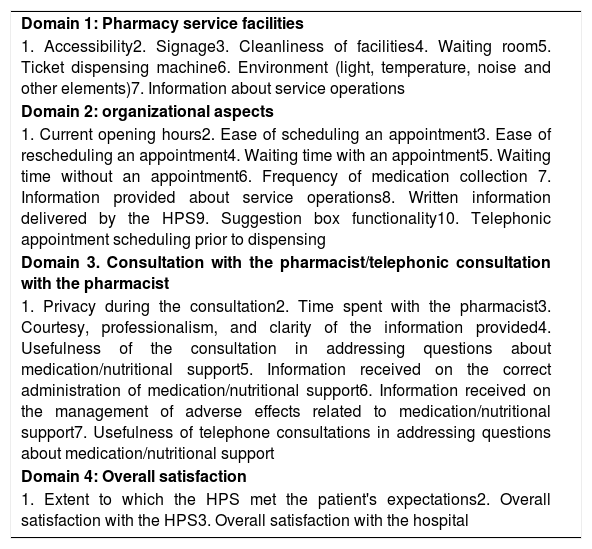
The questionnaire separately addressed the two pharmaceutical care modalities: face-to-face and telepharmacy. The questionnaire was structured into four domains (Table 1), comprising 25 items for face-to-face care and 19 for telepharmacy, each assessed on a five-point Likert scale.
Items grouped into the four domains assessed in the questionnaire for face-to-face care and telepharmacy.
| Domain 1: Pharmacy service facilities |
| 1. Accessibility2. Signage3. Cleanliness of facilities4. Waiting room5. Ticket dispensing machine6. Environment (light, temperature, noise and other elements)7. Information about service operations |
| Domain 2: organizational aspects |
| 1. Current opening hours2. Ease of scheduling an appointment3. Ease of rescheduling an appointment4. Waiting time with an appointment5. Waiting time without an appointment6. Frequency of medication collection 7. Information provided about service operations8. Written information delivered by the HPS9. Suggestion box functionality10. Telephonic appointment scheduling prior to dispensing |
| Domain 3. Consultation with the pharmacist/telephonic consultation with the pharmacist |
| 1. Privacy during the consultation2. Time spent with the pharmacist3. Courtesy, professionalism, and clarity of the information provided4. Usefulness of the consultation in addressing questions about medication/nutritional support5. Information received on the correct administration of medication/nutritional support6. Information received on the management of adverse effects related to medication/nutritional support7. Usefulness of telephone consultations in addressing questions about medication/nutritional support |
| Domain 4: Overall satisfaction |
| 1. Extent to which the HPS met the patient's expectations2. Overall satisfaction with the HPS3. Overall satisfaction with the hospital |
HPS: Hospital Pharmacy Service.
In addition, free-text fields were included to qualitatively capture patient voice, enabling the identification of non-conformities and areas for improvement, which are reviewed annually and incorporated into the service's strategic planning.
Study populationSequential sampling was performed of all outpatients served in January 2023, 2024, and 2025.
“Do” phase: implementation and data collectionPlanned activities were carried out to capture patient experience.
Questionnaires were electronically distributed via bulk notifications sent through the “Lembra” platform (healthcare service of Galicia [SERGAS]. Participation was voluntary and anonymous. Data were collected via the Typeform platform to ensure confidentiality and enable smooth questionnaire completion.
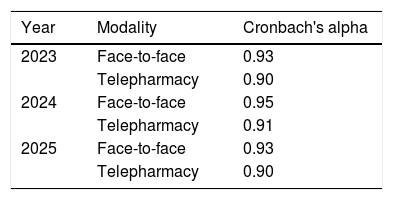
For quantitative analysis, a conformity standard was established: an item was considered positively appraised when it received a rating of 4 to 5 on the Likert scale in more than 50% of responses. A qualitative analysis of patients' feedback from free-text fields was conducted to identify areas for improvement and capture patient voice beyond structured metrics. Cronbach's alpha was used to assess the internal consistency of the questionnaire. The results obtained revealed excellent reliability across years and care modalities, with values ranging from 0.90 to 0.95 (Table 2).
Our primary aim was to integrate the study findings as a systematic requirement for monitoring and measuring HPS performance within the framework of an ISO 9001:2015-certified quality management system. Each year, the results were presented to the Quality Committee and hospital management as key inputs to the management review process, translating patient feedback into measurable strategic goals. By this model, patient experiences systematically drove corrective actions and structural changes, ensuring continuous improvement of the care delivered to patients at the HPS.
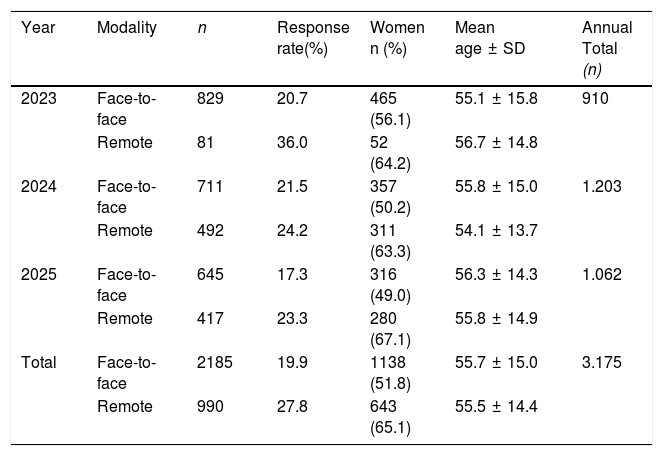
ResultsThe “Check” phase: analysis of results and detection of deviationsBetween 2023 and 2025, a total of 15,056 satisfaction questionnaires were distributed, of which 3175 were returned. Over the three-year period, 2185 responses were related to face-to-face care, whereas 990 were associated with telepharmacy. Respondents were prevailingly female in all years for the two modalities, except for the face-to-face modality in 2025. Caregiver participation remained stable for the face-to-face modality (6–8%), whereas participation in relation to telepharmacy was minimal. Table 3 contains a detailed description of the demographic characteristics of participants and the annual distribution of the questionnaires by pharmaceutical care modality.
Demographic characteristics of participants and ratings by year and pharmaceutical care modality.
| Year | Modality | n | Response rate(%) | Women n (%) | Mean age ± SD | Annual Total (n) |
|---|---|---|---|---|---|---|
| 2023 | Face-to-face | 829 | 20.7 | 465 (56.1) | 55.1 ± 15.8 | 910 |
| Remote | 81 | 36.0 | 52 (64.2) | 56.7 ± 14.8 | ||
| 2024 | Face-to-face | 711 | 21.5 | 357 (50.2) | 55.8 ± 15.0 | 1.203 |
| Remote | 492 | 24.2 | 311 (63.3) | 54.1 ± 13.7 | ||
| 2025 | Face-to-face | 645 | 17.3 | 316 (49.0) | 56.3 ± 14.3 | 1.062 |
| Remote | 417 | 23.3 | 280 (67.1) | 55.8 ± 14.9 | ||
| Total | Face-to-face | 2185 | 19.9 | 1138 (51.8) | 55.7 ± 15.0 | 3.175 |
| Remote | 990 | 27.8 | 643 (65.1) | 55.5 ± 14.4 |
n: number of questionnaires returned; SD: standard deviation.
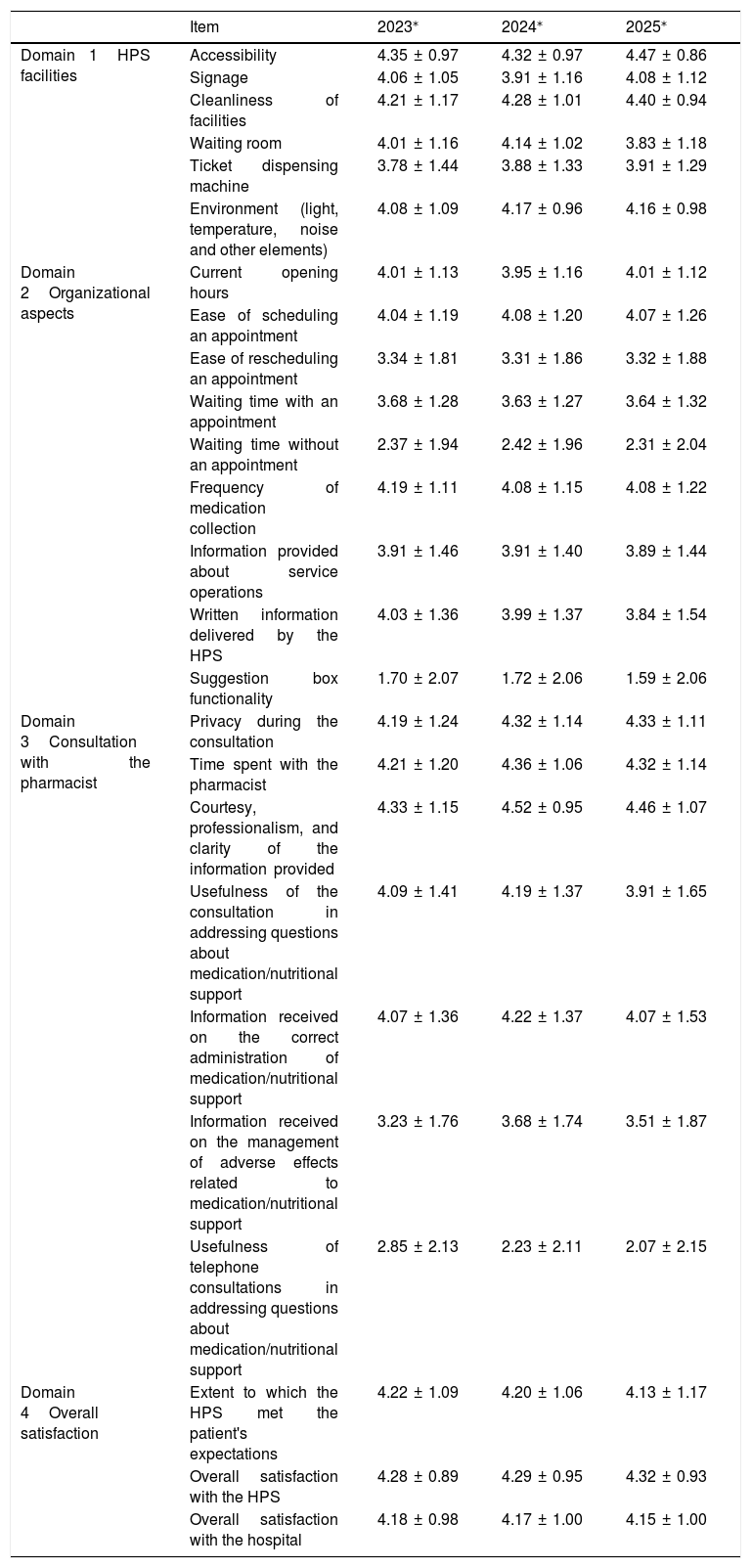
Within the framework of the ISO 9001:2015 quality management system, routine monitoring and performance measurement demonstrated consistently high overall satisfaction with the Hospital Pharmacy Service. For the face-to-face modality (Table 4), direct interaction with the pharmacist (privacy, time spent, and courtesy) was consolidated as a key strength, with average scores consistently exceeding 4.20, underlining the robustness of the patient-facing component. Likewise, patients reported a high level of satisfaction with structural conditions (cleanliness and accessibility). Nevertheless, the analysis revealed critical areas for improvement concerning the usefulness of telephone consultations in addressing questions—for which ratings dropped to 2.07— and written information delivered to patients.
Results for the face-to-face modality by item (2023–2025).
| Item | 2023⁎ | 2024⁎ | 2025⁎ | |
|---|---|---|---|---|
| Domain 1HPS facilities | Accessibility | 4.35 ± 0.97 | 4.32 ± 0.97 | 4.47 ± 0.86 |
| Signage | 4.06 ± 1.05 | 3.91 ± 1.16 | 4.08 ± 1.12 | |
| Cleanliness of facilities | 4.21 ± 1.17 | 4.28 ± 1.01 | 4.40 ± 0.94 | |
| Waiting room | 4.01 ± 1.16 | 4.14 ± 1.02 | 3.83 ± 1.18 | |
| Ticket dispensing machine | 3.78 ± 1.44 | 3.88 ± 1.33 | 3.91 ± 1.29 | |
| Environment (light, temperature, noise and other elements) | 4.08 ± 1.09 | 4.17 ± 0.96 | 4.16 ± 0.98 | |
| Domain 2Organizational aspects | Current opening hours | 4.01 ± 1.13 | 3.95 ± 1.16 | 4.01 ± 1.12 |
| Ease of scheduling an appointment | 4.04 ± 1.19 | 4.08 ± 1.20 | 4.07 ± 1.26 | |
| Ease of rescheduling an appointment | 3.34 ± 1.81 | 3.31 ± 1.86 | 3.32 ± 1.88 | |
| Waiting time with an appointment | 3.68 ± 1.28 | 3.63 ± 1.27 | 3.64 ± 1.32 | |
| Waiting time without an appointment | 2.37 ± 1.94 | 2.42 ± 1.96 | 2.31 ± 2.04 | |
| Frequency of medication collection | 4.19 ± 1.11 | 4.08 ± 1.15 | 4.08 ± 1.22 | |
| Information provided about service operations | 3.91 ± 1.46 | 3.91 ± 1.40 | 3.89 ± 1.44 | |
| Written information delivered by the HPS | 4.03 ± 1.36 | 3.99 ± 1.37 | 3.84 ± 1.54 | |
| Suggestion box functionality | 1.70 ± 2.07 | 1.72 ± 2.06 | 1.59 ± 2.06 | |
| Domain 3Consultation with the pharmacist | Privacy during the consultation | 4.19 ± 1.24 | 4.32 ± 1.14 | 4.33 ± 1.11 |
| Time spent with the pharmacist | 4.21 ± 1.20 | 4.36 ± 1.06 | 4.32 ± 1.14 | |
| Courtesy, professionalism, and clarity of the information provided | 4.33 ± 1.15 | 4.52 ± 0.95 | 4.46 ± 1.07 | |
| Usefulness of the consultation in addressing questions about medication/nutritional support | 4.09 ± 1.41 | 4.19 ± 1.37 | 3.91 ± 1.65 | |
| Information received on the correct administration of medication/nutritional support | 4.07 ± 1.36 | 4.22 ± 1.37 | 4.07 ± 1.53 | |
| Information received on the management of adverse effects related to medication/nutritional support | 3.23 ± 1.76 | 3.68 ± 1.74 | 3.51 ± 1.87 | |
| Usefulness of telephone consultations in addressing questions about medication/nutritional support | 2.85 ± 2.13 | 2.23 ± 2.11 | 2.07 ± 2.15 | |
| Domain 4Overall satisfaction | Extent to which the HPS met the patient's expectations | 4.22 ± 1.09 | 4.20 ± 1.06 | 4.13 ± 1.17 |
| Overall satisfaction with the HPS | 4.28 ± 0.89 | 4.29 ± 0.95 | 4.32 ± 0.93 | |
| Overall satisfaction with the hospital | 4.18 ± 0.98 | 4.17 ± 1.00 | 4.15 ± 1.00 |
HPS: Hospital Pharmacy Service.
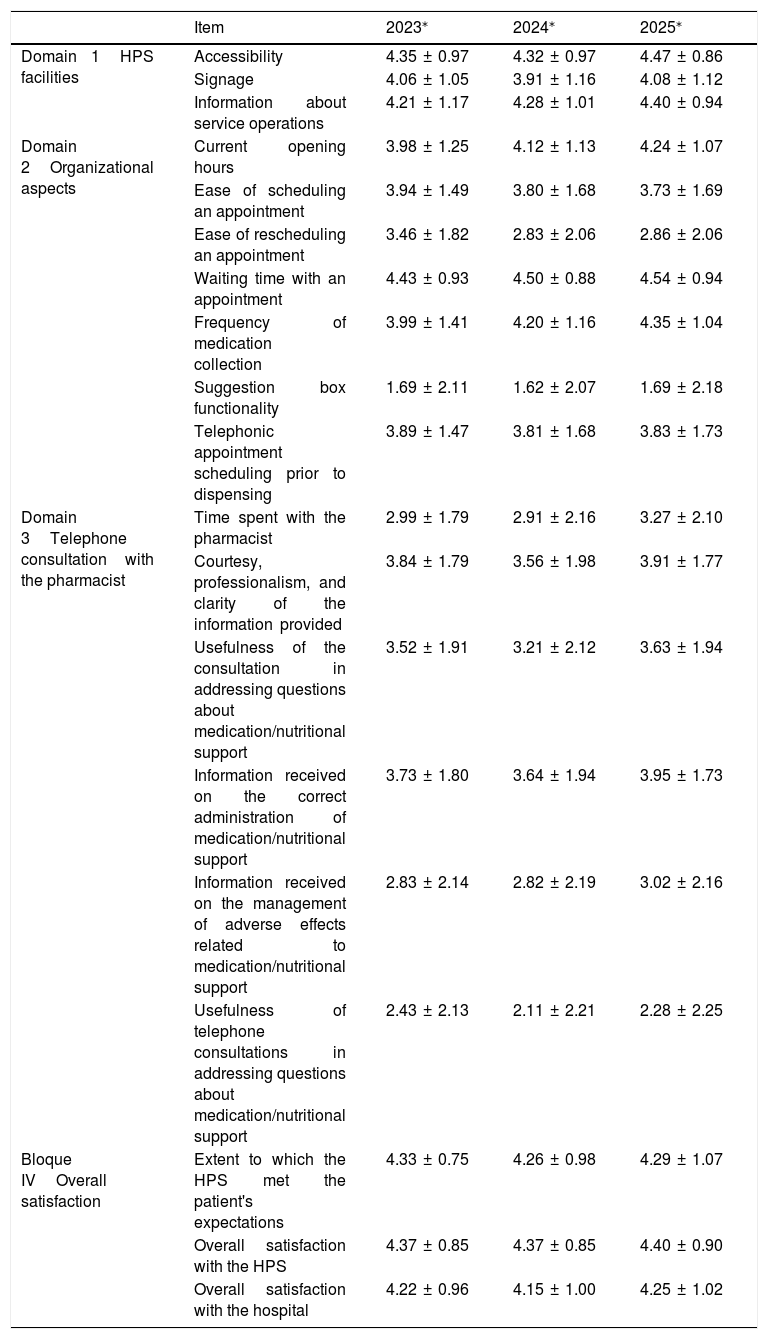
In telepharmacy (Table 5), although overall satisfaction remained high (4.40 in 2025), the survey identified administrative barriers, particularly in the ease of rescheduling appointments, which declined from 3.46 to 2.86.
Results for the remote modality by item (2023–2025).
| Item | 2023⁎ | 2024⁎ | 2025⁎ | |
|---|---|---|---|---|
| Domain 1HPS facilities | Accessibility | 4.35 ± 0.97 | 4.32 ± 0.97 | 4.47 ± 0.86 |
| Signage | 4.06 ± 1.05 | 3.91 ± 1.16 | 4.08 ± 1.12 | |
| Information about service operations | 4.21 ± 1.17 | 4.28 ± 1.01 | 4.40 ± 0.94 | |
| Domain 2Organizational aspects | Current opening hours | 3.98 ± 1.25 | 4.12 ± 1.13 | 4.24 ± 1.07 |
| Ease of scheduling an appointment | 3.94 ± 1.49 | 3.80 ± 1.68 | 3.73 ± 1.69 | |
| Ease of rescheduling an appointment | 3.46 ± 1.82 | 2.83 ± 2.06 | 2.86 ± 2.06 | |
| Waiting time with an appointment | 4.43 ± 0.93 | 4.50 ± 0.88 | 4.54 ± 0.94 | |
| Frequency of medication collection | 3.99 ± 1.41 | 4.20 ± 1.16 | 4.35 ± 1.04 | |
| Suggestion box functionality | 1.69 ± 2.11 | 1.62 ± 2.07 | 1.69 ± 2.18 | |
| Telephonic appointment scheduling prior to dispensing | 3.89 ± 1.47 | 3.81 ± 1.68 | 3.83 ± 1.73 | |
| Domain 3Telephone consultation with the pharmacist | Time spent with the pharmacist | 2.99 ± 1.79 | 2.91 ± 2.16 | 3.27 ± 2.10 |
| Courtesy, professionalism, and clarity of the information provided | 3.84 ± 1.79 | 3.56 ± 1.98 | 3.91 ± 1.77 | |
| Usefulness of the consultation in addressing questions about medication/nutritional support | 3.52 ± 1.91 | 3.21 ± 2.12 | 3.63 ± 1.94 | |
| Information received on the correct administration of medication/nutritional support | 3.73 ± 1.80 | 3.64 ± 1.94 | 3.95 ± 1.73 | |
| Information received on the management of adverse effects related to medication/nutritional support | 2.83 ± 2.14 | 2.82 ± 2.19 | 3.02 ± 2.16 | |
| Usefulness of telephone consultations in addressing questions about medication/nutritional support | 2.43 ± 2.13 | 2.11 ± 2.21 | 2.28 ± 2.25 | |
| Bloque IVOverall satisfaction | Extent to which the HPS met the patient's expectations | 4.33 ± 0.75 | 4.26 ± 0.98 | 4.29 ± 1.07 |
| Overall satisfaction with the HPS | 4.37 ± 0.85 | 4.37 ± 0.85 | 4.40 ± 0.90 | |
| Overall satisfaction with the hospital | 4.22 ± 0.96 | 4.15 ± 1.00 | 4.25 ± 1.02 |
HPS: Hospital Pharmacy Service.
Analysis of free-text feedback provided highly relevant information. In 2024, a total of 196 free-text fields were completed versus 371 in 2025. Congratulations were predominant (21–23%), whereas claims and complaints focused on difficulties contacting the HPS, waiting times, and structural conditions, which is consistent with qualitative findings.
The “Act” phase: implementation of improvements and cycle completionThe study results identified recurrent areas for improvement that drove the implementation of specific interventions:
Digital transformationThe items related to the ease of rescheduling appointments and suggestion box functionality consistently showed low mean scores across both care modalities, underscoring persistent organizational barriers. To meet the identified limitations, the pilot FarmaLink program was launched—an electronic Typeform-based platform aimed at optimizing interaction between patients and the outpatient HPS. This platform enables patients to reschedule appointments, send questions related to their medication (Regimens, adverse effects, drug-to-drug interactions), and consult general information about the service. Requests are pseudoanonymized prior to processing. Scheduling of appointments and referrals to the pharmacist are managed by the administration staff. The tool is accessed via a QR code available on HPS posters and leaflets.
Resource optimizationPatients reported long waiting times and perceived healthcare system overload. In January 2025, an additional outpatient hospital pharmacy clinic was established to minimize demand overload and improve healthcare accessibility. The impact of this intervention will be evaluated in future annual surveys. Opening hours were extended to the afternoon to improve accessibility among patients with time constraints. Additionally, telephone consultations were consolidated as a clinical follow-up and question-solving tool.
HumanizationItems related to the physical environment, signage, waiting room, and privacy reflected opportunities for improvement. In 2024, patient onboarding guides were developed for outpatient HPS patients both in electronic and paper-based format, written in clear and readable language. These materials described healthcare pathways, contact channels, and provided practical information. Materials were adapted for disabled patients (subtitled audiovisual material and QR-accessible signage for load content reading). A pediatric area was created in the waiting room. Finally, visual signs were placed to identify the pharmacy staff in each clinic. Information signage was updated in 2025, and a website was launched to increase the institutional visibility of the HPS and improve access to relevant information.
In 2024, meetings with patient associations were regularly held to collect concerns, suggestions, and satisfaction with the HPS. The HPS promoted participation in meetings aimed at patients, where hospital pharmacists acted as the reference person to get information about medications.
Integration into the strategyImprovements (FarmaLink, new clinic, and onboarding guides) were presented to the hospital management as corrective actions via a review report, thereby translating subjective perceptions into strategic quality management goals for the following PDCA cycle. This fact underlines the potential of this strategy to influence resource allocation.
These interventions, driven by survey findings, illustrate how patient experience can be incorporated into continuous improvement in healthcare practice.
DiscussionThe structured integration of patient experience into a HPS QMS helps translate subjective perceptions into a dynamic continuous improvement model. This process was structured according to the PDCA cycle, consolidating PCC as a key approach. According to the latest scientific literature, the systematic review by Kendir et al. (2026)14 highlights that the routine use of PROM and PREM is crucial in the evaluation of healthcare system performance and advances toward a truly person-centered healthcare model. The annual survey model used in this study aligns with this global tendency, using PREM not only as performance indicators but also as drivers of quality improvement actions.
The starting point of this cycle was the identification of patient needs through the 2022 SATISFAR project15, aimed at evaluating telehealth during and after the pandemic. The results of this project contributed to defining patient needs and establishing quality goals for the 2023–2025 period. By aligning patient need with the ISO 9001:2015 standard, the organization transitioned from reactive listening to strategic planning. Items with traditionally low ratings, such as appointment scheduling, became an institutional priority.
With regard to planning, interventions were designed to improve accessibility and information quality. Of special note is the FarmaLink platform for asynchronous scheduling of appointments and consultations. This initiative met the identified need to improve communication outside the clinic. According to Amat-Fernandez et al.16, the success of these measurement tools relies on their ability to identify barriers and facilitators from the perspective of both patients and professionals. In this line, the integration of these findings into our ISO 9001:2015-certified QMS enabled patient participation to implement “co-design” or “participative consultation” as defined by Bombard et al.17 This approach is critical to avoiding symbolic participation and achieving shared decision-making, and generating a genuine shift in organizational culture.
In relation to humanization, the development of electronic and paper-based patient onboarding guides addressed patients’ claims for clear information. This finding is consistent with that reported by Wilcock et al.18, who reported that 42% of patients preferred oral and written information to improve management of their home medication.
The “check” stage, supported by 3175 questionnaires, revealed a high level of satisfaction with patients’ expectations, with an overall satisfaction (4.32) exceeding that of the hospital. These results are notably more satisfactory than those reported by Surur et al.19 in Ethiopia, where mean satisfaction was 2.48, with critical gaps identified in relation to adverse effects (1.27) and medication storage. A response rate of 21.1% was achieved within a one-week survey period, supporting the feasibility of this electronic approach. These aspects support its usefulness as a robust tool for identifying opportunities for improvement and the applicability of the method to other pharmacy services.
The response rate is lower than that reported in previous studies reporting questionnaire distribution, though with different goals.20
Despite overall satisfaction, the “check” stage identified deviations in the remote modality, particularly in the ease of rescheduling appointments (2.86 in 2025) and telephone consultation operation (2.07). Consistent with Wilcock et al.18, who reported that 20% of patients’ perceived waiting time to be too long, the qualitative results of this study confirmed that overload and delay remain primary barriers to excellence. Zhang et al.21 found that healthcare managers should improve patient experience by reducing waiting times and improving patient experience through the provision of timely information in an appropriate waiting space. The measures implemented at the HPS, including the establishment of a new clinic, extension of opening hours, and signage improvements, are aimed at acting in the two dimensions, namely: reducing effective times and improving subjective perception.
Results show that the most relevant satisfaction factors include professionalism, the time devoted, and courtesy of the pharmacist. These findings are in agreement with the ones reported by Chandra et al.22, who identified communication skills and trust in the professional as key predictors of patient satisfaction, even over waiting time.22,23 These results are closely related to the ones reported by Makowski et al.24 for a tertiary hospital. Their study showed that programs centered on systematic patient-pharmacy communication strategies have significant positive effects on information clarity (35.2% increase) and in response quality (29.5%). These findings support the idea that the direct involvement of the clinical pharmacist is a key predictor of patient satisfaction and medication safety.
The dispensing mode also influenced satisfaction. Previous studies demonstrate that satisfaction increases with collaborative hospital-community models, as compared to exclusive hospital-based models, particularly in terms of accessibility and waiting times.25 Although this study focused on secondary care, study findings suggest that decentralization or hybrid models should be considered in any hospital or healthcare district. This way, digital initiatives such as FarmaLink can be implemented as the first step toward a more flexible, patient-centered, pharmaceutical care model.
The “Act” stage involved reporting these findings to the hospital management and Quality Committee to ensure resource allocation. The establishment of a new pharmacy clinic in 2025 and consolidation of regular meetings with patient associations are corrective actions aimed at mitigating the identified healthcare overload. This model illustrates how the integration of patient voice can contribute to organizational transformation within a quality management framework. The contribution of this study lies in the development of a reproducible, scalable model for integrating patient voice in planning processes to improve pharmaceutical care quality, beyond quantifying the immediate impact of each intervention.26 This approach aligns with the international quality of care framework, which acknowledges patient experience as one of the core pillars, along with medication safety and effectiveness.
Finally, although this study analyzed tendencies over time, the progressive digitalization of the HPS through tools such as FarmLink paves the way to the integration of advanced technologies in pharmaceutical care. Current research, such as that by Alanezi et al.27, explores the potential of artificial intelligence and machine learning to predict PROM, which would be the next level of QMS evolution, as it incorporates personalized preventive interventions based on massive data.
This study, however, has some limitations. Firstly, a comparator group was not used; therefore, findings only reflect temporal associations between improvements such as FarmaLink and patient perception. Secondly, although participants’ age was collected, an age-based analysis was not performed. Accordingly, the influence of age on patient satisfaction could not be determined, which has been explored in previous studies.28 Additionally, waiting times were analyzed, but a distinction was not performed between objective and perceived duration, factors that were identified by other authors as determinants of patient experience.21 Questionnaires were distributed through the SERGAS platform “Lembra”, which did not reach the whole population, since some patients cannot use it or do not have it installed on their mobile phones. Therefore, patients with poor digital skills could have been excluded. Finally, the voluntary, self-administered nature of the questionnaire may have involved selection (more committed or satisfied patients could have participated) and response (tendency to positive responses) biases. The impact of the interventions implemented in 2025, such as FarmaLink, will be evaluated in the next data collection period.
The systematic integration of patient experience as a follow-up and performance requirement within the framework of an ISO 9001:2015 QMS provided a structured approach to incorporating PCC into hospital pharmacy practice. Translating patient voice into measurable strategic goals enabled the continuous improvement cycle to drive specific corrective and humanizing actions, including the digital tool FarmaLink, the creation of a new pharmacy clinic, and the development of patient onboarding guides. High overall satisfaction was observed in 2025 (4.32), exceeding overall satisfaction with the hospital.
This model identified and addressed recurrent non-conformity outputs in critical areas such as telephone communication and appointment scheduling, and increased patient participation toward an HPS co-design model. The active involvement of hospital management in this process, through management review, was key to the appropriate allocation of structural, technological, and workforce resources. This approach shed light on the strategic role of the hospital pharmacy in outpatient hospital pharmacy care. This work provides a reproducible and scalable model for other pharmacy services. Nevertheless, further studies are needed to determine whether improvements in perceived experience have an impact on clinical outcomes such as therapeutic adherence, clinical safety and quality of life.
Contribution to the scientific literatureThis study provides evidence on the structured integration of patient experience into a quality management system as an organizational improvement tool in hospital pharmacy practice. Unlike previous works focused on measuring patient satisfaction, this study demonstrates that the structured assessment of patient experience can be integrated into a continuous improvement model, since it identifies areas for improvement and helps implement specific interventions in healthcare practice. The repeated annual cross-sectional design allowed the assessment of temporal trends and the persistence of specific areas for improvement, by providing a practical model that can be reproduced in other hospital pharmacy services.
Artificial intelligence use statementThe authors declare that no generative Artificial Intelligence model was used for in this study.
CRediT authorship contribution statementVázquez-Gómez Silvia: Writing – review & editing, Writing – original draft, Methodology, Formal analysis, Data curation, Conceptualization. Castro-Luaces Susana: Writing – review & editing, Validation, Investigation, Formal analysis. Herrero-Poch Leticia: Writing – review & editing, Visualization, Data curation. Gayoso-Rey Mónica: Writing – review & editing, Validation. Rodríguez-Lorenzo David: Writing – review & editing, Validation, Investigation. Freire-González Mercedes: Writing – original draft, Data curation. Martínez-López de Castro Noemí: Writing – review & editing, Validation, Supervision, Methodology, Formal analysis, Conceptualization.
Ethical considerationsThis study was conducted in accordance with Organic Law 3/2018 governing personal data protection. This study was conducted in accordance with the tenets of the Declaration of Helsinki and applicable laws and regulations on human rights and biomedical research. This study did not involve research on human beings or animals. Traceable personal data were not used in this study.
FundingThis study did not receive any financial support from public, private or non-profit organizations.
The authors declare no conflict of interest.