


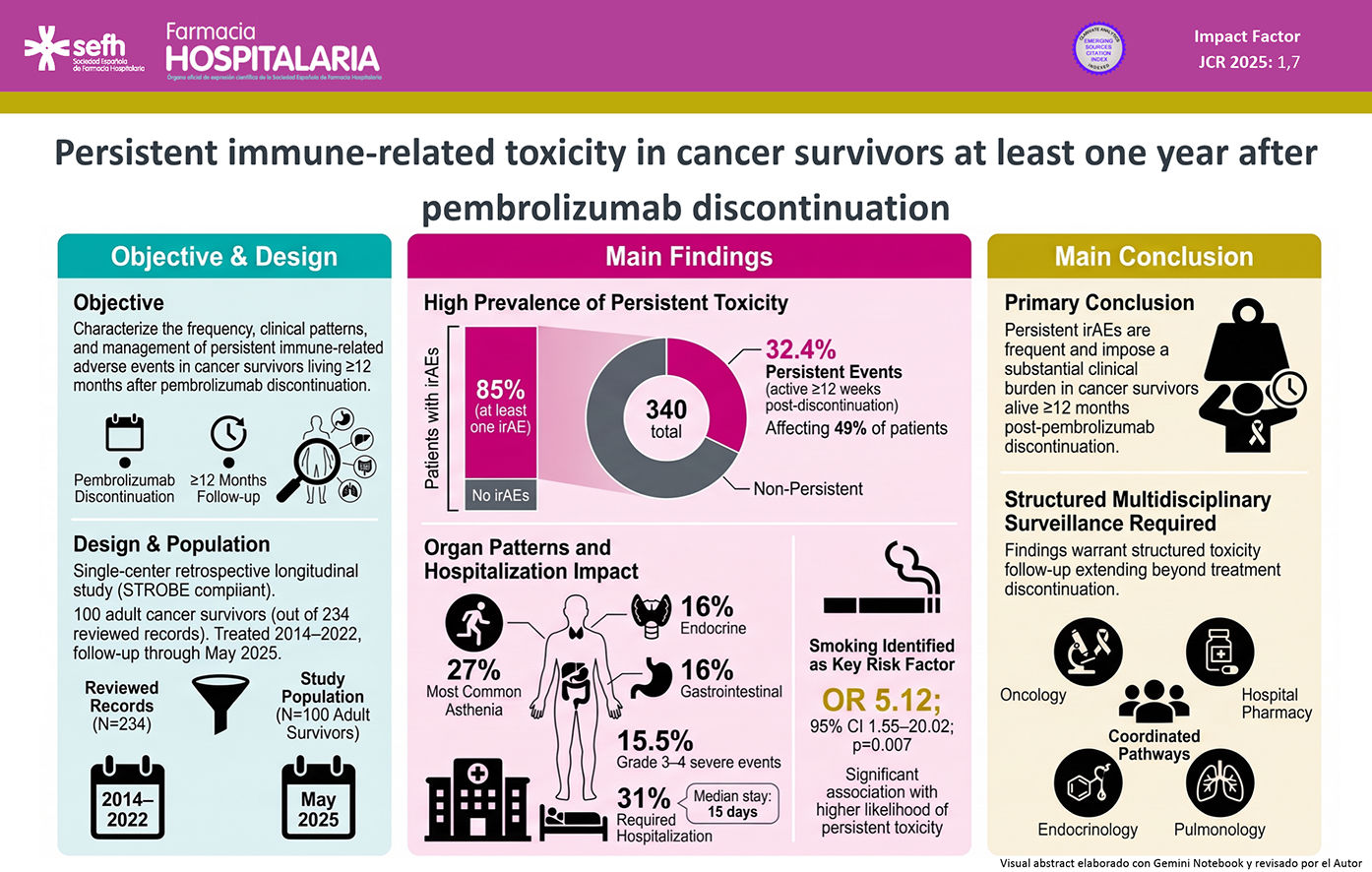
Graphical abstract
Caracterizar la frecuencia, los patrones clínicos y el manejo de los acontecimientos adversos inmunorrelacionados persistentes asociados a pembrolizumab en la práctica clínica habitual, en una cohorte de pacientes supervivientes al menos 12 meses tras la discontinuación del tratamiento, y explorar sus implicaciones para la atención a largo plazo de los pacientes.
MétodosEstudio observacional retrospectivo unicéntrico que incluyó pacientes adultos tratados con pembrolizumab que discontinuaron el tratamiento y permanecieron vivos ≥12 meses después (2014–2022). Los acontecimientos adversos inmunorrelacionados persistentes se definieron como aquellos que persistían ≥12 semanas tras la discontinuación de pembrolizumab. Se recogieron datos sobre características de los pacientes, patrones de toxicidad, estrategias de manejo y resultados clínicos.
ResultadosSe incluyeron 100 pacientes. El 85% presentó al menos un acontecimiento adverso inmunorrelacionado, con un total de 340 eventos registrados, de los cuales 110 (32,4%) fueron persistentes, afectando al 49% de los pacientes (IC95% 39,4-58,7%). Las toxicidades persistentes más frecuentes fueron la astenia (no órgano-específica) y las toxicidades endocrinas, gastrointestinales, dermatológicas y reumatológicas. La mediana de tiempo hasta el inicio fue de 3,5 meses, con una variabilidad considerable entre órganos. Las toxicidades endocrinas mostraron una persistencia especialmente prolongada, sin alcanzarse la mediana de duración ni de persistencia tras la discontinuación. Entre los acontecimientos persistentes con grado disponible, la mayoría fueron de grado 1–2; en conjunto, 17 eventos (15,5%) fueron de grado 3–4. El 31% de los pacientes requirió hospitalización, principalmente por toxicidad gastrointestinal y pulmonar. Se emplearon corticosteroides en el 15,6% de los casos, predominantemente a dosis bajas, mientras que una minoría de pacientes precisó tratamiento inmunosupresor adicional.
ConclusionesEn esta cohorte de vida real de pacientes supervivientes al menos un año tras la discontinuación de pembrolizumab, los acontecimientos adversos inmunorrelacionados persistentes fueron frecuentes y supusieron una carga relevante para el manejo a largo plazo. Estos hallazgos, respaldan un seguimiento estructurado más allá de la discontinuación del tratamiento y estrategias de cuidados de soporte multidisciplinares para reducir el impacto a largo plazo de la toxicidad relacionada con la inmunoterapia.
Pembrolizumab is one of the most widely used immune checkpoint inhibitors (ICIs), with multiple approved indications.1 By enhancing T-cell activation and antitumor immune responses, it has significantly improved clinical outcomes across several malignancies. However, this mechanism of action may also trigger immune-related adverse events (irAEs), resulting from nonspecific immune activation against healthy tissues.2
Although most irAEs occur early during treatment and resolve with appropriate management, a substantial proportion may persist beyond treatment discontinuation, leading to persistent toxicity.3 These long-lasting adverse events may require prolonged treatment, ongoing monitoring, and multidisciplinary management, representing an increasing challenge in the long-term care of cancer patients.4 Data specifically addressing the persistence of irAEs, particularly in routine clinical practice, remain limited.4,5
Current evidence suggests that irAEs persisting beyond 12 weeks after treatment discontinuation may be more frequent than initially recognized.3,6,7 Nevertheless, most available data derive from clinical trials,1 where patient selection criteria and structured follow-up may not fully reflect routine clinical practice, especially in patients with multiple comorbidities or concomitant treatments. Consequently, the real-world incidence, clinical course, and management of persistent irAEs remain insufficiently characterized.8 A better understanding of these events in unselected populations is essential to refine monitoring strategies, support multidisciplinary management, and optimize supportive care in long-term cancer survivors.3 Because persistent irAEs may require prolonged monitoring, hospital-based interventions, hormone replacement, or immunosuppressive treatment, they represent a relevant and increasingly recognized supportive care challenge in cancer survivorship.
The aim of this study was to assess persistent irAEs associated with pembrolizumab in real-world clinical practice, defined as those persisting for at least 12 weeks after treatment discontinuation. Specifically, we sought to describe their frequency and clinical patterns, evaluate their management, explore potential factors associated with persistent irAEs, and explore their relationship with treatment outcomes.
MethodsStudy designA longitudinal retrospective observational study was conducted at a tertiary hospital in Spain, following the STrengthening the Reporting of OBservational studies in Epidemiology (STROBE) recommendations for observational studies. The study was approved by the local Research Ethics Committee (code: INMUNOFAR25), which waived the requirement for informed consent given the retrospective design. Adult patients with cancer (≥18 years) who received at least one cycle of pembrolizumab in routine clinical practice between January 2014 and December 2022 were included, provided they had discontinued treatment and remained alive for ≥12 months thereafter. Patients were followed from treatment initiation until May 2025. Those who did not survive at least one year after discontinuation or were enrolled in clinical trials were excluded. Clinical data were collected from electronic medical records and the institutional oncological prescription database.
Variables and data recordedPatient-related variables included sex, age, body mass index (BMI), Eastern Cooperative Oncology Group (ECOG) performance status, smoking habit at pembrolizumab initiation, prior autoimmune diseases, and comorbidities. Disease-related variables comprised tumor type, biomarkers (PD-L1 expression, BRAF mutations, microsatellite instability [MSI], and mismatch repair deficiency [MMRd]), baseline laboratory parameters (lactate dehydrogenase [LDH], neutrophil and lymphocyte counts), and the presence of metastases, including brain metastases.
Treatment-related variables included line of therapy, dosing schedule of pembrolizumab (2 mg/kg every 3 weeks, 200 mg every 3 weeks, or in a small number of patients, an institutional 4 mg/kg every 6 weeks schedule), number of cycles, treatment start and discontinuation dates, and reason for discontinuation. Effectiveness was assessed by tumor response (Response Evaluation Criteria in Solid Tumors [RECIST] v1.1) and progression-free survival (PFS), defined as the time from treatment initiation to disease progression or death.
Toxicity variables included type of irAEs classified as non-organ-specific (asthenia) or organ-specific (hematologic, rheumatologic, endocrine, neurologic, gastrointestinal, renal, pulmonary, cardiac, and dermatologic) severity (Common Terminology Criteria for Adverse Events [CTCAE] v5.0), time (for irAEs that remained active at the end of follow-up, observed duration was calculated up to the last available assessment, without considering the event resolved), corticosteroid use (yes/no, high/low dose), hospitalization (yes/no and duration), and resolution status. irAE duration was defined from first clinical identification to complete resolution. Persistence after pembrolizumab discontinuation was calculated from treatment discontinuation to irAE resolution and was assessed only for irAEs that remained active at, or were newly identified after, pembrolizumab discontinuation; events that had resolved before discontinuation were excluded from this analysis. Persistent toxicity was defined as persistence ≥12 weeks after treatment discontinuation. Events were included as irAEs only when their relationship with pembrolizumab had been explicitly established by the treating clinical team and documented in the medical record.
Statistical analysisAnalyses were performed on a per-patient or per-event basis, as appropriate. Descriptive statistics were performed, with normality assessed using the Shapiro–Wilk test (n < 50) or Shapiro-Francia test (n ≥ 50). Continuous variables were summarized as medians and interquartile ranges (IQRs), and categorical variables as absolute frequencies and percentages. An exploratory PFS analysis was performed using the Kaplan–Meier method and compared with the log-rank test. Duration of each irAE and its persistence after treatment discontinuation were likewise estimated using the Kaplan–Meier method; irAEs that had not resolved by the end of follow-up were treated as right-censored observations at that date rather than as resolved events, and the number/proportion of such censored (still active) irAEs was reported by toxicity type (Table 3).
Comparisons between patients with and without toxicity were performed using the Chi-squared or Fisher's exact test for categorical variables and the Mann–Whitney U test or Student's t-test for continuous variables, as appropriate. An exploratory multivariable binary logistic regression analysis was performed to assess factors associated with persistent irAEs. Variables included age, smoking habit, baseline corticosteroid use at pembrolizumab initiation, prior autoimmune disease, LDH, tumor type, number of cycles, and clinical response (defined as disease control: Complete Response [CR]/Partial Response [PR]/Stable Disease [SD]). Given the limited number of events relative to the number of covariates (49 events for 8 variables; events-per-variable ≈ 6) and the presence of infrequent exposures, the model was refitted using Firth's penalized (bias-reduction) logistic regression with profile penalized-likelihood confidence intervals, recommended over standard maximum-likelihood estimation in small-sample or sparse-data settings.
Patient characteristics and persistent toxicity, including the multivariable regression analysis, were analyzed on a per-patient basis, whereas toxicity patterns, timing, and management (Tables 2–4) were analyzed on a per-event basis, as some patients experienced more than one irAE.
A two-sided p-value <0.05 was considered statistically significant. Analyses were performed using Stata (version 18).
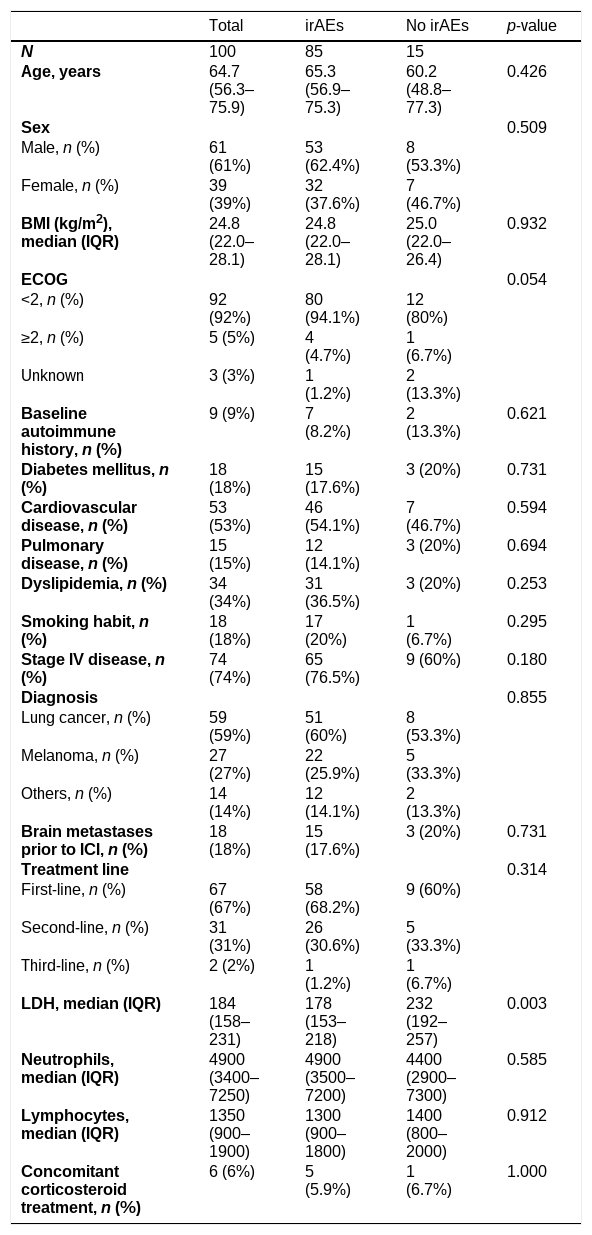
ResultsPatient and disease characteristics and pembrolizumab effectivenessA total of 100 adult patients with cancer met the inclusion criteria out of 234 records reviewed. Among excluded patients, 94.0% survived <12 months after pembrolizumab discontinuation, 3% were still on treatment, 2.3% were enrolled in clinical trials, and 0.7% were <18 years. Median age was 64.7 years (IQR 56.3–75.9), 61% were male, and median BMI was 24.8 kg/m2 (IQR 22.0–28.1); additional characteristics are shown in Table 1. Pretreatment LDH levels differed significantly between patients with and without irAEs (p = 0.003).
Baseline patient and disease characteristics grouped by presence or absence of immune-related adverse events.
| Total | irAEs | No irAEs | p-value | |
|---|---|---|---|---|
| N | 100 | 85 | 15 | |
| Age, years | 64.7 (56.3–75.9) | 65.3 (56.9–75.3) | 60.2 (48.8–77.3) | 0.426 |
| Sex | 0.509 | |||
| Male, n (%) | 61 (61%) | 53 (62.4%) | 8 (53.3%) | |
| Female, n (%) | 39 (39%) | 32 (37.6%) | 7 (46.7%) | |
| BMI (kg/m2), median (IQR) | 24.8 (22.0–28.1) | 24.8 (22.0–28.1) | 25.0 (22.0–26.4) | 0.932 |
| ECOG | 0.054 | |||
| <2, n (%) | 92 (92%) | 80 (94.1%) | 12 (80%) | |
| ≥2, n (%) | 5 (5%) | 4 (4.7%) | 1 (6.7%) | |
| Unknown | 3 (3%) | 1 (1.2%) | 2 (13.3%) | |
| Baseline autoimmune history, n (%) | 9 (9%) | 7 (8.2%) | 2 (13.3%) | 0.621 |
| Diabetes mellitus, n (%) | 18 (18%) | 15 (17.6%) | 3 (20%) | 0.731 |
| Cardiovascular disease, n (%) | 53 (53%) | 46 (54.1%) | 7 (46.7%) | 0.594 |
| Pulmonary disease, n (%) | 15 (15%) | 12 (14.1%) | 3 (20%) | 0.694 |
| Dyslipidemia, n (%) | 34 (34%) | 31 (36.5%) | 3 (20%) | 0.253 |
| Smoking habit, n (%) | 18 (18%) | 17 (20%) | 1 (6.7%) | 0.295 |
| Stage IV disease, n (%) | 74 (74%) | 65 (76.5%) | 9 (60%) | 0.180 |
| Diagnosis | 0.855 | |||
| Lung cancer, n (%) | 59 (59%) | 51 (60%) | 8 (53.3%) | |
| Melanoma, n (%) | 27 (27%) | 22 (25.9%) | 5 (33.3%) | |
| Others, n (%) | 14 (14%) | 12 (14.1%) | 2 (13.3%) | |
| Brain metastases prior to ICI, n (%) | 18 (18%) | 15 (17.6%) | 3 (20%) | 0.731 |
| Treatment line | 0.314 | |||
| First-line, n (%) | 67 (67%) | 58 (68.2%) | 9 (60%) | |
| Second-line, n (%) | 31 (31%) | 26 (30.6%) | 5 (33.3%) | |
| Third-line, n (%) | 2 (2%) | 1 (1.2%) | 1 (6.7%) | |
| LDH, median (IQR) | 184 (158–231) | 178 (153–218) | 232 (192–257) | 0.003 |
| Neutrophils, median (IQR) | 4900 (3400–7250) | 4900 (3500–7200) | 4400 (2900–7300) | 0.585 |
| Lymphocytes, median (IQR) | 1350 (900–1900) | 1300 (900–1800) | 1400 (800–2000) | 0.912 |
| Concomitant corticosteroid treatment, n (%) | 6 (6%) | 5 (5.9%) | 1 (6.7%) | 1.000 |
irAEs: immune-related adverse events; BMI: body mass index; ECOG: Eastern Cooperative Oncology Group; ICI: immune checkpoint inhibitor; LDH: lactate dehydrogenase; IQR: interquartile range.
Regarding biomarkers, 78% (n = 46) of lung cancer patients had PD-L1 positivity (>1%), and 33% (n = 9) of melanoma patients were BRAF-positive. The ‘other diagnoses’ group included breast, endometrial, gastric, urothelial, hepatocellular, Merkel cell, colon, and ear (otic) carcinomas (each n = 1, 7%), whereas head and neck cancer was more frequent (n = 6, 43%).
In terms of treatment exposure, 59% of patients received pembrolizumab 2 mg/kg every 3 weeks, 40% were treated with the fixed dose of 200 mg every 3 weeks, and 1% received 4 mg/kg every 6 weeks. Overall, 76 patients (76%) received pembrolizumab monotherapy, while the remaining 24 (24%) received it in combination with concomitant chemotherapy, most commonly pemetrexed (n = 11), carboplatin plus 5-fluorouracil (n = 4), carboplatin plus pemetrexed (n = 4), paclitaxel plus carboplatin (n = 3), and pemetrexed plus cisplatin (n = 2). Median follow-up from treatment initiation was 27.8 months (IQR 13.6–57.2), with a median of 10 cycles (IQR 4–26.5). Notably, patients with irAEs received significantly more cycles than those without (median 11 [IQR 5–30] vs 5 [IQR 2–8]; p = 0.001).
Clinical response was observed in 69/85 patients with irAEs (81.2%) and in 4/15 patients without irAEs (26.7%) (p = 0.001). Additionally, 77.8% of patients with pre-existing autoimmune disease (7/9) developed irAEs.
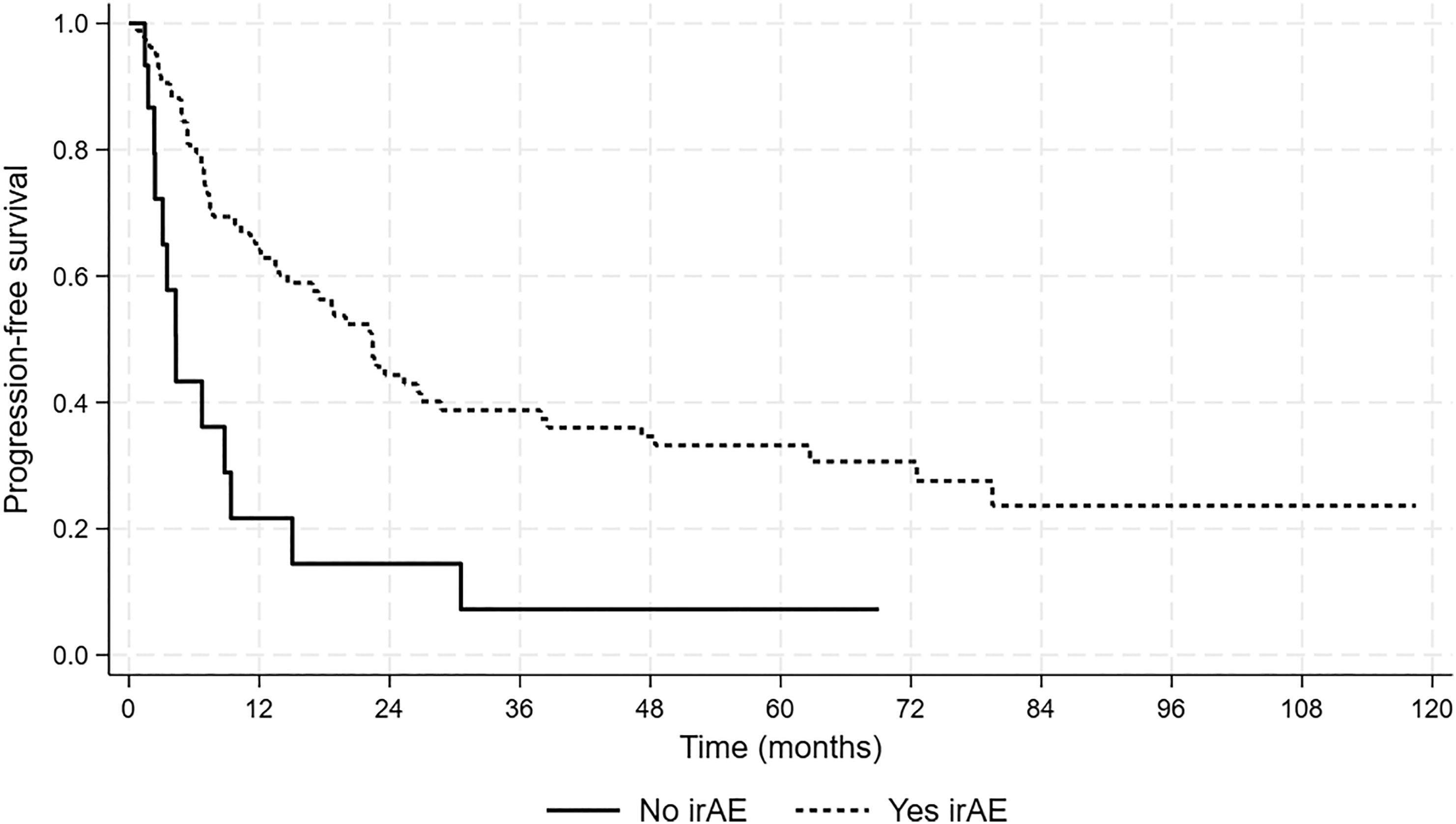
Median PFS was 18.6 months (95% confidence interval [CI] 10.3–23.6). When comparing PFS between groups using the Mantel–Haenszel (log-rank) test, patients with irAEs had significantly longer PFS than those without (22.3 months [95% CI 13.5–28.7] vs 4.3 months [95% CI 2.3–9.4]; χ2 = 12.79; p = 0.0003) (Fig. 1). At the end of follow-up, 52% of patients had died. This comparison should be regarded as exploratory because of potential time-dependent bias and the selection of patients who survived ≥12 months after pembrolizumab discontinuation.
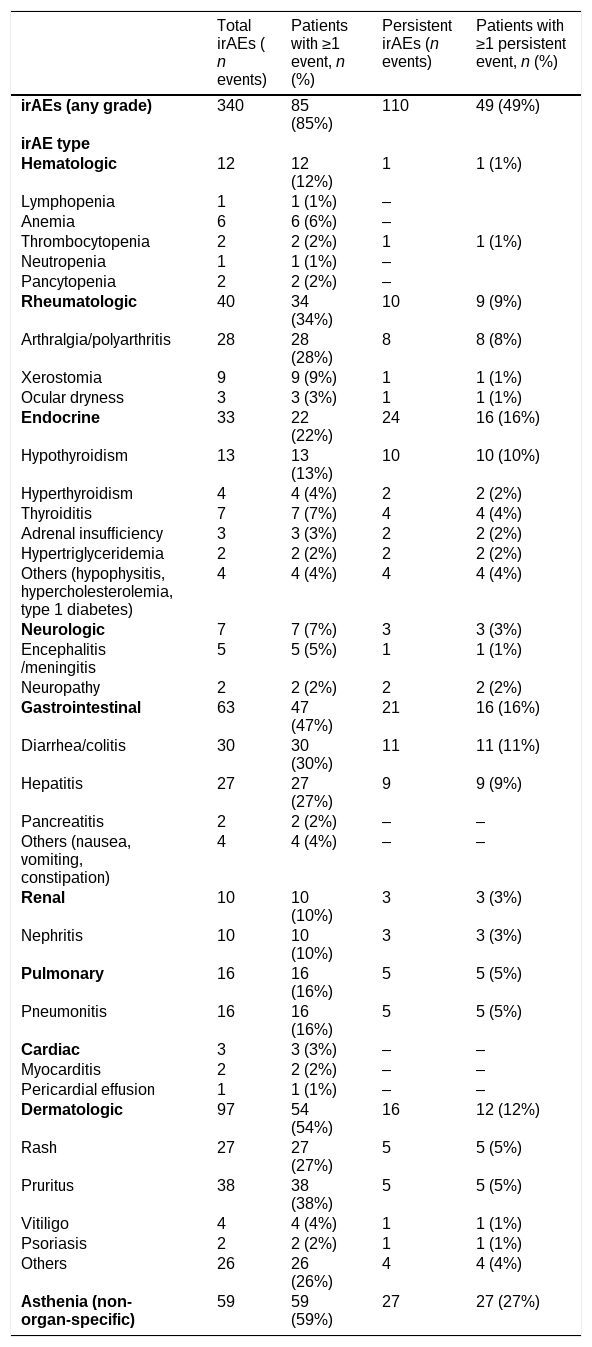
Characteristics and management of immune-related adverse eventsA total of 85 patients (85%) experienced at least one irAE, with a median of 2 events per patient (IQR 1–3). Overall, 340 irAEs were identified, of which 32.4% (110) were persistent, affecting 49 patients (95% CI 39.4–58.7%) (Table 2). Asthenia, classified as a non-organ-specific toxicity, was the most frequent persistent irAE (27 events; 27% of patients). Among organ-specific irAEs, endocrine toxicity was the most frequent (24 events; 16% of patients), followed by gastrointestinal (21; 16%), dermatologic (16; 12%), and rheumatologic (10; 9%).
Patterns and characteristics of immune-related adverse events.
| Total irAEs (n events) | Patients with ≥1 event, n (%) | Persistent irAEs (n events) | Patients with ≥1 persistent event, n (%) | |
|---|---|---|---|---|
| irAEs (any grade) | 340 | 85 (85%) | 110 | 49 (49%) |
| irAE type | ||||
| Hematologic | 12 | 12 (12%) | 1 | 1 (1%) |
| Lymphopenia | 1 | 1 (1%) | – | |
| Anemia | 6 | 6 (6%) | – | |
| Thrombocytopenia | 2 | 2 (2%) | 1 | 1 (1%) |
| Neutropenia | 1 | 1 (1%) | – | |
| Pancytopenia | 2 | 2 (2%) | – | |
| Rheumatologic | 40 | 34 (34%) | 10 | 9 (9%) |
| Arthralgia/polyarthritis | 28 | 28 (28%) | 8 | 8 (8%) |
| Xerostomia | 9 | 9 (9%) | 1 | 1 (1%) |
| Ocular dryness | 3 | 3 (3%) | 1 | 1 (1%) |
| Endocrine | 33 | 22 (22%) | 24 | 16 (16%) |
| Hypothyroidism | 13 | 13 (13%) | 10 | 10 (10%) |
| Hyperthyroidism | 4 | 4 (4%) | 2 | 2 (2%) |
| Thyroiditis | 7 | 7 (7%) | 4 | 4 (4%) |
| Adrenal insufficiency | 3 | 3 (3%) | 2 | 2 (2%) |
| Hypertriglyceridemia | 2 | 2 (2%) | 2 | 2 (2%) |
| Others (hypophysitis, hypercholesterolemia, type 1 diabetes) | 4 | 4 (4%) | 4 | 4 (4%) |
| Neurologic | 7 | 7 (7%) | 3 | 3 (3%) |
| Encephalitis/meningitis | 5 | 5 (5%) | 1 | 1 (1%) |
| Neuropathy | 2 | 2 (2%) | 2 | 2 (2%) |
| Gastrointestinal | 63 | 47 (47%) | 21 | 16 (16%) |
| Diarrhea/colitis | 30 | 30 (30%) | 11 | 11 (11%) |
| Hepatitis | 27 | 27 (27%) | 9 | 9 (9%) |
| Pancreatitis | 2 | 2 (2%) | – | – |
| Others (nausea, vomiting, constipation) | 4 | 4 (4%) | – | – |
| Renal | 10 | 10 (10%) | 3 | 3 (3%) |
| Nephritis | 10 | 10 (10%) | 3 | 3 (3%) |
| Pulmonary | 16 | 16 (16%) | 5 | 5 (5%) |
| Pneumonitis | 16 | 16 (16%) | 5 | 5 (5%) |
| Cardiac | 3 | 3 (3%) | – | – |
| Myocarditis | 2 | 2 (2%) | – | – |
| Pericardial effusion | 1 | 1 (1%) | – | – |
| Dermatologic | 97 | 54 (54%) | 16 | 12 (12%) |
| Rash | 27 | 27 (27%) | 5 | 5 (5%) |
| Pruritus | 38 | 38 (38%) | 5 | 5 (5%) |
| Vitiligo | 4 | 4 (4%) | 1 | 1 (1%) |
| Psoriasis | 2 | 2 (2%) | 1 | 1 (1%) |
| Others | 26 | 26 (26%) | 4 | 4 (4%) |
| Asthenia (non-organ-specific) | 59 | 59 (59%) | 27 | 27 (27%) |
irAEs: immune-related adverse events.
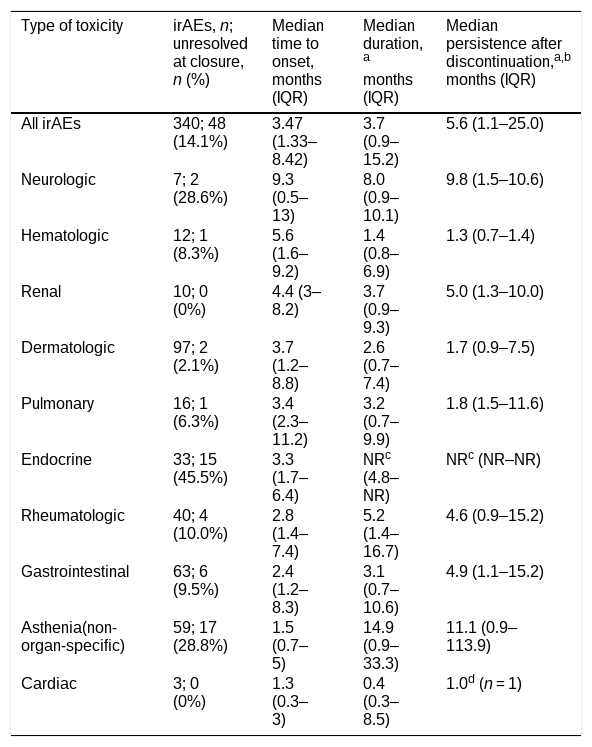
Median time to toxicity onset was 3.47 months (IQR 1.33–8.42). Neurologic toxicity showed the longest onset (9.3 months; IQR 0.5–13), while cardiac toxicity occurred earliest (1.3 months; IQR 0.3–3). Median irAE duration, estimated with the Kaplan–Meier method to account for events still unresolved at last follow-up, was 3.7 months (IQR 0.9–15.2); endocrine toxicity did not reach a median duration, as 45.5% of endocrine events remained unresolved. At the end of follow-up, 48 of 340 irAEs (14.1%), affecting 33 patients, remained active and were treated as censored observations in the time-to-resolution analysis. Detailed timings are shown in Table 3.
Time to onset, duration, and persistence after treatment discontinuation by type of toxicity.
| Type of toxicity | irAEs, n; unresolved at closure, n (%) | Median time to onset, months (IQR) | Median duration,a months (IQR) | Median persistence after discontinuation,a,b months (IQR) |
|---|---|---|---|---|
| All irAEs | 340; 48 (14.1%) | 3.47 (1.33–8.42) | 3.7 (0.9–15.2) | 5.6 (1.1–25.0) |
| Neurologic | 7; 2 (28.6%) | 9.3 (0.5–13) | 8.0 (0.9–10.1) | 9.8 (1.5–10.6) |
| Hematologic | 12; 1 (8.3%) | 5.6 (1.6–9.2) | 1.4 (0.8–6.9) | 1.3 (0.7–1.4) |
| Renal | 10; 0 (0%) | 4.4 (3–8.2) | 3.7 (0.9–9.3) | 5.0 (1.3–10.0) |
| Dermatologic | 97; 2 (2.1%) | 3.7 (1.2–8.8) | 2.6 (0.7–7.4) | 1.7 (0.9–7.5) |
| Pulmonary | 16; 1 (6.3%) | 3.4 (2.3–11.2) | 3.2 (0.7–9.9) | 1.8 (1.5–11.6) |
| Endocrine | 33; 15 (45.5%) | 3.3 (1.7–6.4) | NRc (4.8–NR) | NRc (NR–NR) |
| Rheumatologic | 40; 4 (10.0%) | 2.8 (1.4–7.4) | 5.2 (1.4–16.7) | 4.6 (0.9–15.2) |
| Gastrointestinal | 63; 6 (9.5%) | 2.4 (1.2–8.3) | 3.1 (0.7–10.6) | 4.9 (1.1–15.2) |
| Asthenia(non-organ-specific) | 59; 17 (28.8%) | 1.5 (0.7–5) | 14.9 (0.9–33.3) | 11.1 (0.9–113.9) |
| Cardiac | 3; 0 (0%) | 1.3 (0.3–3) | 0.4 (0.3–8.5) | 1.0d (n = 1) |
IQR: interquartile range; NR: median not reached (Kaplan–Meier estimate).
Duration and persistence after pembrolizumab discontinuation were estimated using the Kaplan–Meier method, with irAE resolution as the event of interest. Unresolved irAEs were right-censored at the last available clinical assessment or death, whichever occurred first.
Persistence after discontinuation was calculated only for irAEs that remained active at, or were newly identified after, pembrolizumab discontinuation; events resolved before discontinuation were excluded from this analysis.
Regarding severity, 152 toxicities (44.7%) were grades 1–2, 27 (8.0%) were grades 3–4, and in 161 cases (47.3%), the severity grade was not available in the medical records. Among persistent toxicities, 47 events (42.7%) were grades 1–2, 17 (15.5%) were grades 3–4, and 46 (41.8%) had an unknown grade. Grade 4 events included pneumonitis (n = 1), hepatitis (n = 1), diarrhea/colitis (n = 1), and thrombocytopenia (n = 1). No treatment-related deaths occurred.
Thirty-one patients required hospitalization (median stay 15 days; IQR 8–26), mainly due to gastrointestinal (42.4%) and pulmonary toxicity (15.2%), followed by hematologic, rheumatologic, and cardiac (each 9%), neurologic (6%), renal (3.4%), and other causes (6%).
Pembrolizumab discontinuation was due to disease progression (39%), toxicity (30%), treatment completion (20%), clinical deterioration (5%), or other causes (loss to follow-up or treatment break) in 6%. Among irAEs leading to discontinuation, gastrointestinal (31.3%) and pulmonary (21.9%) toxicities predominated, followed by rheumatologic (15.6%), hematologic (12.5%), renal (6.3%), endocrine (3.1%), neurologic (3.1%), dermatologic (3.1%) and systemic toxicities (3.1%).
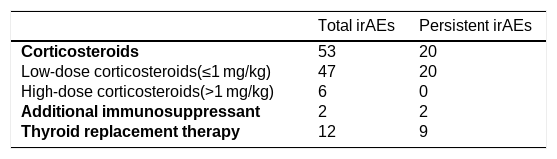
Overall, 15.6% of irAEs (n = 53) required corticosteroids, of which 88.7% (n = 47) were managed with low dose (≤1 mg/kg) and 11.3% (n = 6) with high dose (>1 mg/kg). Among corticosteroid-treated irAEs with available grading (35/53, 66.0%), the majority (54.3%, 19/35) were grades 1–2, consistent with the predominance of low-dose regimens. In cases that did not improve within 24–48 h (n = 2) following corticosteroid administration, vedolizumab was used as an additional immunosuppressive agent for the management of colitis. Thyroid toxicities were managed with hormone replacement therapy (Table 4).
Treatment of immune-related adverse events in patients requiring therapy.
| Total irAEs | Persistent irAEs | |
|---|---|---|
| Corticosteroids | 53 | 20 |
| Low-dose corticosteroids(≤1 mg/kg) | 47 | 20 |
| High-dose corticosteroids(>1 mg/kg) | 6 | 0 |
| Additional immunosuppressant | 2 | 2 |
| Thyroid replacement therapy | 12 | 9 |
irAEs: immune-related adverse events.
Applying the same Kaplan–Meier approach, median persistence of toxicity after pembrolizumab discontinuation was 5.6 months (IQR 1.1–25.0); endocrine toxicity did not reach a median persistence, as 45.5% of persistent endocrine events remained active at last follow-up (Table 3).
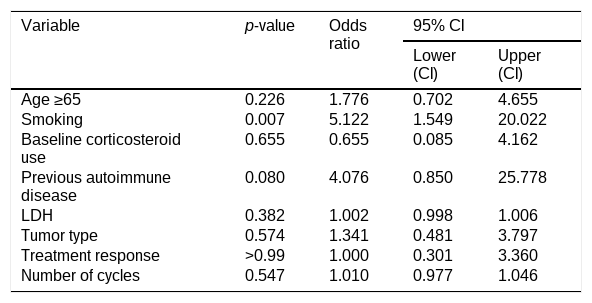
Exploratory multivariable logistic regression analysis of factors associated with persistent immune-related adverse eventsIn the exploratory multivariable analysis, smoking was associated with a higher likelihood of persistent irAEs (odds ratio [OR] 5.12; 95% CI 1.55–20.02; p = 0.007). A trend toward a higher risk was observed in patients with a history of autoimmune disease (OR 4.08; 95% CI 0.85–25.78; p = 0.080), although this did not reach statistical significance.
No associations were found for age ≥65 years, baseline corticosteroid use at pembrolizumab initiation, baseline LDH, tumor type, treatment response, or number of treatment cycles (Table 5).
Exploratory multivariable logistic regression analysis of factors associated with persistent immune-related adverse events.
| Variable | p-value | Odds ratio | 95% CI | |
|---|---|---|---|---|
| Lower (CI) | Upper (CI) | |||
| Age ≥65 | 0.226 | 1.776 | 0.702 | 4.655 |
| Smoking | 0.007 | 5.122 | 1.549 | 20.022 |
| Baseline corticosteroid use | 0.655 | 0.655 | 0.085 | 4.162 |
| Previous autoimmune disease | 0.080 | 4.076 | 0.850 | 25.778 |
| LDH | 0.382 | 1.002 | 0.998 | 1.006 |
| Tumor type | 0.574 | 1.341 | 0.481 | 3.797 |
| Treatment response | >0.99 | 1.000 | 0.301 | 3.360 |
| Number of cycles | 0.547 | 1.010 | 0.977 | 1.046 |
LDH: lactate dehydrogenase; CI: confidence interval.
This study describes the frequency, patterns, and management of persistent irAEs associated with pembrolizumab in a real-world cohort of 100 adult patients with cancer, with particular relevance for long-term supportive care. Unlike trial populations, this cohort reflects routine clinical practice and includes patients with a relevant comorbidity burden, such as diabetes mellitus, cardiovascular disease, pulmonary disease, dyslipidemia, and smoking history. These data provide additional real-world evidence on the patterns of pembrolizumab-associated irAEs across different tumor types.
In our cohort, baseline demographic and clinical characteristics were not associated with irAE development, consistent with previous real-world studies of pembrolizumab in which robust baseline predictors have not been clearly identified.5,9
We observed that 85% of patients experienced at least one irAE, with a total of 340 events identified, of which 32.4% were persistent. Asthenia, classified as a non-organ-specific toxicity, was the most frequent persistent irAE, followed by endocrine, gastrointestinal, dermatologic, and rheumatologic toxicities. The frequency of endocrine toxicity was comparable to previous studies,2,10 and asthenia was frequently observed in our cohort, as previously described by Yang et al.11 Most irAEs were mild to moderate, consistent with prior studies.12 Median time to irAE onset was 3.5 months, with organ-specific variability, consistent with pembrolizumab safety evidence from pooled phase 3 clinical trial data.13 A pembrolizumab-focused FDA Adverse Event Reporting System [FAERS] pharmacovigilance study in cervical cancer emphasized the need for organ-specific vigilance within a 3–6-month window, aligning closely with our onset distribution.14 Available evidence suggests that the timing of irAE onset varies by affected organ system5: thyroid toxicities tend to occur later than colitis, while severe colitis more often leads to treatment discontinuation. Pneumonitis has been associated with poorer clinical outcomes, likely due to symptom burden, performance deterioration, and the need for prolonged corticosteroid therapy.5
Cardiac toxicities showed the earliest onset (median 1.3 months). While pembrolizumab-specific studies rarely provide robust median onset estimates for cardiac irAEs, recent analyses demonstrate that cardiac events are infrequent but severe and associated with high fatality, supporting early clinical vigilance. Our early-onset pattern is compatible with the recognized severity profile of pembrolizumab-associated cardiotoxicity.15
Neurologic toxicities showed the latest onset (median 9.3 months), suggesting development after prolonged exposure. Although uncommon, case series including pembrolizumab-treated patients describe heterogeneous central and peripheral involvement and variable timing,16 underscoring the need for sustained neurological surveillance.
Median irAE duration was 3.7 months; endocrine toxicities were considerably more prolonged, with a median that was not reached, as 45.5% of endocrine irAEs remained unresolved at the end of follow-up. Toxicity persisted for a median of 5.6 months after discontinuation, predominantly driven by endocrine events, whose persistence likewise did not reach a median given the high proportion of unresolved events. Consistent with these findings, a real-world pembrolizumab cohort reported a median time to irAE resolution of 81 days, with unresolved events persisting for up to 271 days, supporting prolonged toxicities in a substantial proportion of patients.9 Furthermore, European Medicines Agency [EMA] product information for pembrolizumab indicates that endocrine irAEs may require long-term hormone replacement therapy, reinforcing their sustained nature in our study.1
Management of irAEs was severity-driven and aligned with current recommendations. Mild events were generally self-limited, whereas grade 2–4 toxicities required corticosteroids, mainly at low doses, with high-dose regimens reserved for severe cases, consistent with American Society of Clinical Oncology [ASCO] guidelines17 and the pembrolizumab Summary of Product Characteristics [SmPC], both of which recommend corticosteroids for ≥grade 2 irAEs and escalation to immunosuppressive therapy in steroid-refractory cases.1,17 Accordingly, vedolizumab was used in steroid-refractory colitis, in line with previously published reports.18 The limited use of immunosuppressants beyond corticosteroids likely reflects the predominance of grade 1–2 irAEs in our cohort, with only 4 of 340 events classified as grade 4. Endocrinopathies were managed with hormone replacement therapy, as recommended in current guidelines,1,17 allowing continuation of oncologic treatment once stabilized.
From a supportive care perspective, our results underscore the substantial healthcare burden associated with irAEs. Hospital admission occurred in 31% of patients, with a median stay of 15 days. Gastrointestinal toxicity was the main driver of admission (42.4%), followed by pulmonary toxicity (15.2%). Previous studies reported colitis as the main cause of hospitalization, with a shorter median inpatient stay of 7 days,19 and pneumonitis as the leading cause of admission in lung cancer patients (32%), with gastroenterocolitis accounting for 19% and a similarly shorter stay.20 Longer hospitalization in our cohort may reflect greater clinical complexity or a more conservative approach to admission and discharge.
Additional admissions were due to cardiac, rheumatologic, and hematologic causes (each 9%), neurologic (6%, consistent with recent pharmacovigilance data14), and renal toxicities (3.4%). Although less common, these events frequently require inpatient management due to their severity or diagnostic complexity,17,21 potentially contributing to the longer stays observed in our cohort.
Endocrine toxicities often required long-term hormone replacement and showed particularly prolonged persistence, with the median not reached, whereas gastrointestinal and pulmonary toxicities were the main causes of hospital admission and treatment interruption. These results suggest that persistent irAEs justify structured follow-up beyond discontinuation, with coordinated multidisciplinary management involving oncology, pharmacy, endocrinology, pulmonology, and other specialists.
Pembrolizumab discontinuation was mainly due to disease progression, followed by toxicity, consistent with real-world evidence.22 Among irAEs leading to discontinuation, gastrointestinal toxicities were most frequent, followed by pulmonary and rheumatologic events. Immune-mediated colitis frequently requires corticosteroids, treatment interruption or discontinuation according to current guidelines,17,23 while immune-related pneumonitis, though less frequent, is associated with significant morbidity and treatment withdrawal, particularly in lung cancer.17,24
Rheumatologic manifestations are increasingly recognized in real-world cohorts and may persist after treatment, influencing therapeutic decisions.25 Hematologic, renal, and endocrine toxicities are less frequent causes of discontinuation but remain clinically relevant given their severity and need for prolonged management.17,23 Overall, the organ distribution observed aligns with the established safety profile of pembrolizumab and reinforces the clinical impact of gastrointestinal and pulmonary irAEs on treatment continuity, highlighting the need for continuous toxicity monitoring during and after treatment.12
In our exploratory multivariable analysis, smoking showed an exploratory association with persistent toxicity. Recent analyses in lung cancer populations receiving ICIs have identified smoking as an independent risk factor for immune-related pneumonitis, supporting a link between chronic inflammatory exposure and sustained immune toxicity.26,27 Zheng et al. also observed smoking to be associated with increased cardiac events.28
A prior history of autoimmune disease showed a non-significant association with persistent toxicity, likely due to limited statistical power, consistent with previous evidence that patients with pre-existing autoimmune disorders treated with PD-1 inhibitors have increased rates of autoimmune flares and irAEs.29 Pembrolizumab trials largely excluded patients with active autoimmune disease, as reflected in the current EMA product information, reinforcing the importance of real-world evidence in this subgroup.1 In contrast, age, tumor type, and baseline LDH were not associated with persistent toxicity, consistent with pooled analyses of pembrolizumab trials showing similar toxicity patterns across tumor types.13 These associations should be interpreted cautiously given the exploratory design, limited sample size, and possible residual confounding.
As a secondary exploratory finding, patients who developed irAEs showed longer PFS than those who did not, consistent with previous reports suggesting an association between immune-related toxicity and improved outcomes during ICI therapy.6,30 This result should be interpreted cautiously, as the study was not designed to assess efficacy outcomes and time-dependent bias cannot be excluded. This suggests that patients with longer pembrolizumab exposure may also need prolonged follow-up for persistent toxicity.
This study has several limitations, primarily its retrospective, single-center design, which may limit generalizability. In addition, the inclusion of only patients who survived for at least 12 months after pembrolizumab discontinuation introduces a potential selection bias and restricts the applicability of the findings to this selected population. The retrospective identification of irAEs based on clinical documentation may also have resulted in some degree of misclassification. Furthermore, severity grade was unavailable for a substantial proportion of events (47.3% overall; 41.8% among persistent events), limiting the characterization of toxicity severity. Finally, the multivariable analysis should be considered exploratory because of the limited sample size, the number of covariates included, the low frequency of some exposures, and the wide confidence intervals of some estimates. Nevertheless, the study reflects real-world practice by characterizing the persistent toxicities associated with pembrolizumab. Persistent and unresolved irAEs appear relatively frequent in routine clinical practice, underscoring the need for long-term vigilance beyond discontinuation. Enhanced monitoring and structured risk assessment, particularly in high-risk populations, may help optimize the benefit–risk balance of pembrolizumab therapy.
In this single-center, real-world cohort restricted to survivors ≥12 months after pembrolizumab discontinuation, persistent irAEs after pembrolizumab were frequent and clinically relevant, often extending beyond treatment discontinuation. Asthenia was the most frequent persistent toxicity, while endocrine, gastrointestinal, dermatologic, and rheumatologic toxicities predominated among organ-specific irAEs. Their association with hospitalization, corticosteroid use, and long-term endocrine replacement underscores the need for structured follow-up and multidisciplinary supportive care pathways in cancer survivors receiving immunotherapy. Future studies should further refine risk stratification and long-term monitoring strategies for patients at higher risk of persistent toxicity.
Contribution to the scientific literatureThis study adds real-world evidence on an undercharacterized phase of pembrolizumab toxicity: the post-discontinuation period.
The findings support extending toxicity monitoring beyond treatment discontinuation in long-term survivors.
CRediT authorship contribution statementSilvia del-Barrio-Buesa: Writing – review & editing, Writing – original draft, Visualization, Validation, Software, Methodology, Investigation, Formal analysis, Data curation, Conceptualization. María Amparo Lucena-Campillo: Writing – review & editing, Visualization, Validation, Software, Methodology, Investigation, Formal analysis, Data curation, Conceptualization. Vicente Escudero-Vilaplana: Writing – review & editing, Validation, Supervision, Project administration, Methodology, Conceptualization. Eva González-Haba-Peña: Writing – review & editing, Validation, Supervision. Cristina Villanueva-Bueno: Writing – review & editing, Validation, Supervision. José Luis Revuelta-Herrero: Writing – review & editing, Validation, Supervision. María del Pilar Montero-Antón: Writing – review & editing, Validation, Supervision. María Martín-Bartolomé: Writing – review & editing, Validation, Supervision. Ana Herranz-Alonso: Writing – review & editing, Validation, Supervision. María Sanjurjo-Sáez: Writing – review & editing, Validation, Supervision.