
The presence of cirrhosis may require adjustment of medication doses or substitution with safer alternatives. Inadequate treatment can lead to medication-related problems, which in most cases are preventable.
The objectives are to describe the implementation of a safety strategy consisting of a comprehensive medication review for patients with cirrhosis, and to evaluate the acceptance rate of the intervention.
MethodsIt is a study of the implementation of a medication risk minimization strategy. It consisted of a medication review by hospital pharmacists, with clinical advice from a physician specializing in hepatology to patients in Primary Care.
ResultsA total of 307 patients were included in the study, of whom 76.2% had at least one potentially inappropriate medication prescribed, for with a safer alternative was available in 87.2% of cases. Benzodiazepines and related drugs, proton pump inhibitors, and lipid-lowering drugs were the most frequently proposed. Benzodiazepines and related drugs were the least modified by physicians. 48.1% of the 405 proposals were accepted.
ConclusionsA high percentage of patients with cirrhosis were receiving inadequate treatment for their hepatic pathology, despite the availability of alternatives to minimize risks in most cases. Half of the pharmacists' recommendations were accepted and the acceptance rate of these proposals was not influenced by patient characteristics.
la presencia de cirrosis hepática puede requerir ajuste de las dosis de medicamentos o la sustitución por alternativas más seguras. La no adecuación del tratamiento puede conllevar a la aparición de problemas relacionados con los medicamentos, que en la mayoría de los casos son prevenibles.
Los objetivos son describir la implementación de una estrategia de seguridad que implica la revisión exhaustiva de los tratamientos de los pacientes con cirrosis y evaluar la aceptación de la intervención.
Métodoses un estudio de implementación de una estrategia de minimización de riesgos con medicamentos. La estrategia consistió en una revisión del tratamiento farmacológico por parte de farmacéuticos hospitalarios, con el asesoramiento clínico de un hepatólogo, en pacientes con cirrosis en el ámbito de atención primaria.
Resultadosse incluyeron 307 pacientes, de los cuales el 76,2% tenía al menos un medicamento potencialmente inapropiado prescrito, existiendo en un 87,2% de los casos una alternativa más segura por la que podía sustituirse. Los grupos terapéuticos más frecuentemente implicados en los problemas detectados fueron las benzodiacepinas y fármacos relacionados, los inhibidores de la bomba de protones e hipolipemiantes, siendo las benzodiacepinas los que menos se modificaron por parte del médico. Se aceptó un 48,1% de las 405 propuestas realizadas por los farmacéuticos.
Conclusionesun alto porcentaje de los pacientes con cirrosis presentaban tratamientos no adecuados para su enfermedad hepática, existiendo en la mayoría de los casos alternativas para minimizar los riesgos. Se aceptó la mitad de las propuestas realizadas por los farmacéuticos y las características de los pacientes no influyeron en el grado de aceptación de las propuestas.
Liver cirrhosis causes pathophysiological changes that influence the response to drug treatments. Portal hypertension and portosystemic shunts increase the bioavailability of drugs with a high first-pass effect. Meanwhile, hypoalbuminaemia affects competition for binding sites on plasma proteins, increasing the free fraction of highly protein-bound drugs, which raises the risk of toxicity. Furthermore, the presence of ascites increases the volume of distribution of water-soluble drugs, and the progressive loss of cytochrome enzyme activity, together with reduced biliary excretion, compromises systemic clearance. Changes also occur in the number and sensitivity of receptors, sometimes increasing the risk of adverse reactions.1,2 Due to these pathophysiological changes, these patientsare included in the summaries of product characteristics (SmPC) of most drugs. Sections on contraindications, warnings and dosage specify the measures to be taken in patients with liver damage.1
Several high-risk medications, such as nonsteroidal anti-inflammatory drugs (NSAIDs), certain proton pump inhibitors (PPIs), specific statins, and benzodiazepines, have safe therapeutic alternatives for patients with cirrhosis.2–4 Consequently, many drug-related problems (DRPs) in this patient population are preventable.5
Despite this, there are no specific guidelines providing recommendations on drug safety and dosing in this patient population. While the SmPCs provide general guidelines for liver disease, these are not always aligned with current safety data.6–9 Furthermore, a lack of training among healthcare professionals regarding medication use in these patients has been identified, and the presence of cirrhosis is often not considered during both prescription and treatment validation.10,11
It is estimated that 31% of patients with liver cirrhosis take multiple medications,12 which adds complexity to their treatment and makes crutial regular reviews by a multidisciplinary team. However, few studies have been published evaluating the impact of therapeutic optimisation in patients with cirrhosis, and none of these have been conducted in a primary care (PC) setting.
Preliminary analysis of the electronic health records (EHRs) in our setting suggested that around 25% of patients with liver cirrhosis may be taking a medication that is contraindicated for their condition.13
Therefore, developing a safety strategy that involved a comprehensive medication review was essential to optimise treatment for these patients.
The primary outcomes of this study are the implementation of a safety strategy involving a comprehensive review of treatments for patients with cirrhosis, and the acceptance rate of the pharmacist-led interventions aimed at reducing medication-related risks in the primary care setting.
The secondary outcome variables are the appropriateness of the treatment provided to patients with liver cirrhosis in our setting and the response to the recommendations based on the following factors: a) the recommendation type, b) the drug groups involved, c) the severity of liver cirrhosis, d) the clinical characteristics of the patients, and e) age and sex.
MethodsImplementation study of a medication risk-minimisation strategy.14
Patient selection was based on a cross-sectional analysis of adult patients with an active diagnosis of liver cirrhosis in April 2024 in Navarre, who were prescribed at least one medication contraindicated for use with liver cirrhosis2–4 at the time of data collection (see Appendix 1).
Inclusion criteria: patients with an active diagnosis of liver cirrhosis in their EHR, coded as CIAP-2 D70 or ICD-10 K74; patients taking drugs contraindicated in liver cirrhosis, regardless of severity, at the time of data extraction (see Appendix 1).
Exclusion criteria: paediatric patients; liver transplant recipients; patients with no clinical data in their EHR; patients in long-term care facilities with their own pharmacy service; and patients who died between data retrieval and the analysis of the acceptance rate of the recommendations.
Hospital pharmacists working in our community's primary care setting implemented a strategy consisting of a structured, individualised, and evidence-based review of drug therapy, with clinical guidance from a hepatologist. Through the Electronic Health Record (EHR), we made recommendations regarding the drugs, which could include dose adjustments, substitution with safer alternatives, discontinuation, and monitoring for possible adverse drug reactions (ADRs), among others. In some cases, several alternatives were suggested so that the clinician could decide on the best course of action for each patient. These reviews were recorded in each patient's EHR so that they could be consulted by any part of staff involved in their care. Additionally, we notified each patient's primary care clinician and reference hepatologist via email. Although a comprehensive review of all prescribed drugs was performed, this study only presents data on potentially inappropriate drugs (PIMs) in relation to liver cirrhosis.
The following variables were collected: age, sex, Charlson Comorbidity Index, and liver function (AST and ALT [U/L], Child-Pugh score, serum bilirubin [mg/dL], prothrombin time [seconds over control or INR], albumin [g/dL], ascites grade [unknown/absent/mild/moderate], and encephalopathy grade [unknown, grade 0–4]); renal function ([serum creatinine [mg/dL] and CKD-EPI glomerular filtration rate [mL/min/1.73 m2]); PIMs due to contraindications or inappropriateness in liver cirrhosis; justification or lack thereof for the PIM prescription at the time of treatment review; the pharmacist's treatment modification recommendation; and the availability of safer alternatives considering each patient's characteristics and comorbidities.
Outcome variablesThe primary outcome variable is the acceptance rate of recommendations (the ratio of accepted recommendations to the total number of recommendations made).
The secondary outcome variables are:
- 1.
Percentage of patients with liver cirrhosis receiving treatment with drugs that were unsuitable or contraindicated due to their liver disease.
- 2.
Clinician acceptance rate of the proposed treatment modifications based on:
- o
The type of recommendation made
- o
Child-Pugh score
- o
Group of drugs involved
- o
The patient's disease burden (Charlson index)
- o
Renal function (glomerular filtration rate > 60 ml/min: adequate kidney function; 30–60 ml/min: moderate kidney impairment; <30 ml/min: severe kidney impairment
- o
Sex
- o
Age (<70 years and ≥70 years)
Data on the included patients was retrieved from the integrated database of the healthcare system and the EHR. Data on safety and dosage, therapeutic alternatives, and the indication or contraindication for treatment were obtained from the SmPCs,15 the ‘Geneesmiddelen bij’ database (Dutch version),3 RxCirrhosis (French version),4 UpToDate16 and a pharmacotherapy bulletin from our community.2
Data analysisWe performed a descriptive analysis of the baseline characteristics of the population. Categorical variables were described using percentages; quantitative variables were described using the mean and standard deviation if they followed a normal distribution, or the median and interquartile range otherwise. Categorical variables were compared between groups using the Chi-squared test, and continuous variables using the Mann–Whitney U test. We performed a post-hoc analysis with Bonferroni correction where differences were statistically significant. Subsequently, we constructed a binary logistic regression model. Statistical significance was set at a probability level of less than 0.05. The results were reported separately by sex.
An intervention-focused analysis was performed, in which each therapeutic suggested adjustment was treated as an independent unit.
Given the scarcity of previous studies, no threshold for successful intervention could not be established.
Statistical analysis was performed using IBM SPSS Statistics, version 25 for Windows.
ResultsInitially, 579 patients with a diagnosis of liver cirrhosis who had received at least one prescription for a contraindicated medicine at the time of data extraction were identified. This represented 37% of patients with a CIAP-2 or ICD-10 diagnosis of liver cirrhosis or advanced chronic liver disease. Of these patients, 255 were excluded prior to the review due to errors in diagnosis coding or death, leaving 324 patients for treatment review. A further 17 patients were excluded due to death between the treatment review and the evaluation of the recommendation acceptance. A total of 307 patients were included in the final analysis.
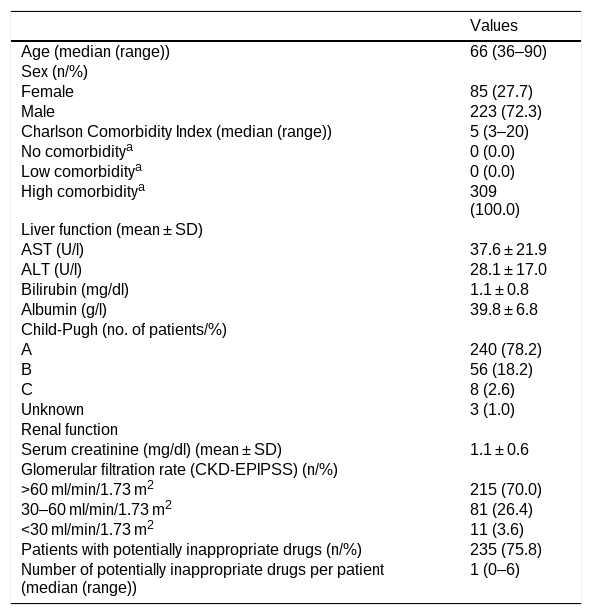
The median age was 66 years (range 36–90), and 72.3% were men. The median Charlson score was 5 points (ranged 3–20). Regarding cirrhosis severity: 78.2% of patients were classified as Child-Pugh A, 18.2% as Child-Pugh B, and 2.6% as Child-Pugh C; data required for calculation were missing for three patients. Potentially inappropriate medications (PIMs) were identified in patients at all stages of disease severity. The clinical and demographic characteristics of the patients are summarised in Table 1.
Characteristics of included patients.
| Values | |
|---|---|
| Age (median (range)) | 66 (36–90) |
| Sex (n/%) | |
| Female | 85 (27.7) |
| Male | 223 (72.3) |
| Charlson Comorbidity Index (median (range)) | 5 (3–20) |
| No comorbiditya | 0 (0.0) |
| Low comorbiditya | 0 (0.0) |
| High comorbiditya | 309 (100.0) |
| Liver function (mean ± SD) | |
| AST (U/l) | 37.6 ± 21.9 |
| ALT (U/l) | 28.1 ± 17.0 |
| Bilirubin (mg/dl) | 1.1 ± 0.8 |
| Albumin (g/l) | 39.8 ± 6.8 |
| Child-Pugh (no. of patients/%) | |
| A | 240 (78.2) |
| B | 56 (18.2) |
| C | 8 (2.6) |
| Unknown | 3 (1.0) |
| Renal function | |
| Serum creatinine (mg/dl) (mean ± SD) | 1.1 ± 0.6 |
| Glomerular filtration rate (CKD-EPIPSS) (n/%) | |
| >60 ml/min/1.73 m2 | 215 (70.0) |
| 30–60 ml/min/1.73 m2 | 81 (26.4) |
| <30 ml/min/1.73 m2 | 11 (3.6) |
| Patients with potentially inappropriate drugs (n/%) | 235 (75.8) |
| Number of potentially inappropriate drugs per patient (median (range)) | 1 (0–6) |
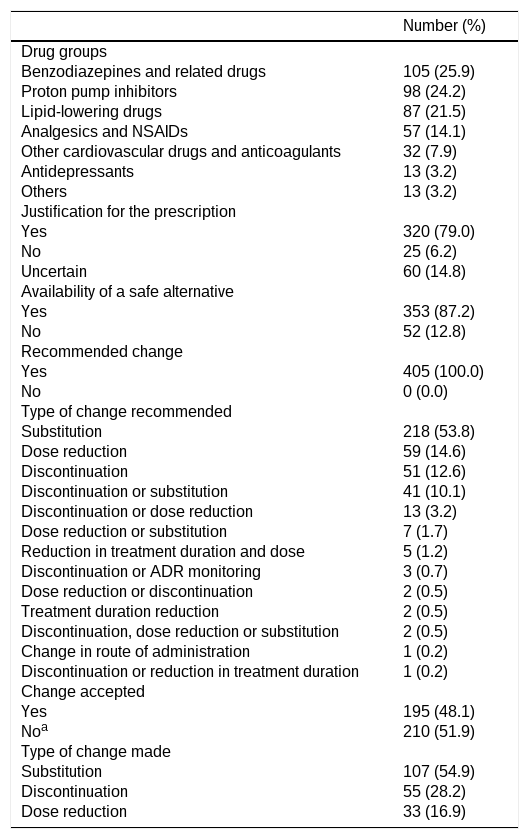
A total of 405 PIMs related to cirrhosis were identified in 234 patients (76.2%), with a median of 1 PIM per patient (0–6). A safer alternative was available in 87.2% of cases, and the corresponding changes were therefore suggested. The majority involved substitution, dose reduction or discontinuation of treatment. Benzodiazepines and related drugs were involved in 25.9% of recommendations, 24.2% involved PPIs, 21.5% involved lipid-lowering agents, 7.9% concerned other drugs acting on the cardiovascular system and anticoagulants, and the remainder were antidepressants and other drugs. The active ingredients of each drug group and the changes suggested are detailed in Appendix 2. In 79.0% of cases, the pharmacist identified a valid indication for treatment, although the specific drug or dosage used was inappropriate due to liver disease, requiring either dose adjustment or substitution with a safer alternative. No indication was found in 6.2% of cases, and discontinuation was recommended; in the remaining cases, the justification was questionable based on the data in the EHR, leading the pharmacist to suggest multiple alternatives for the clinician to consider.
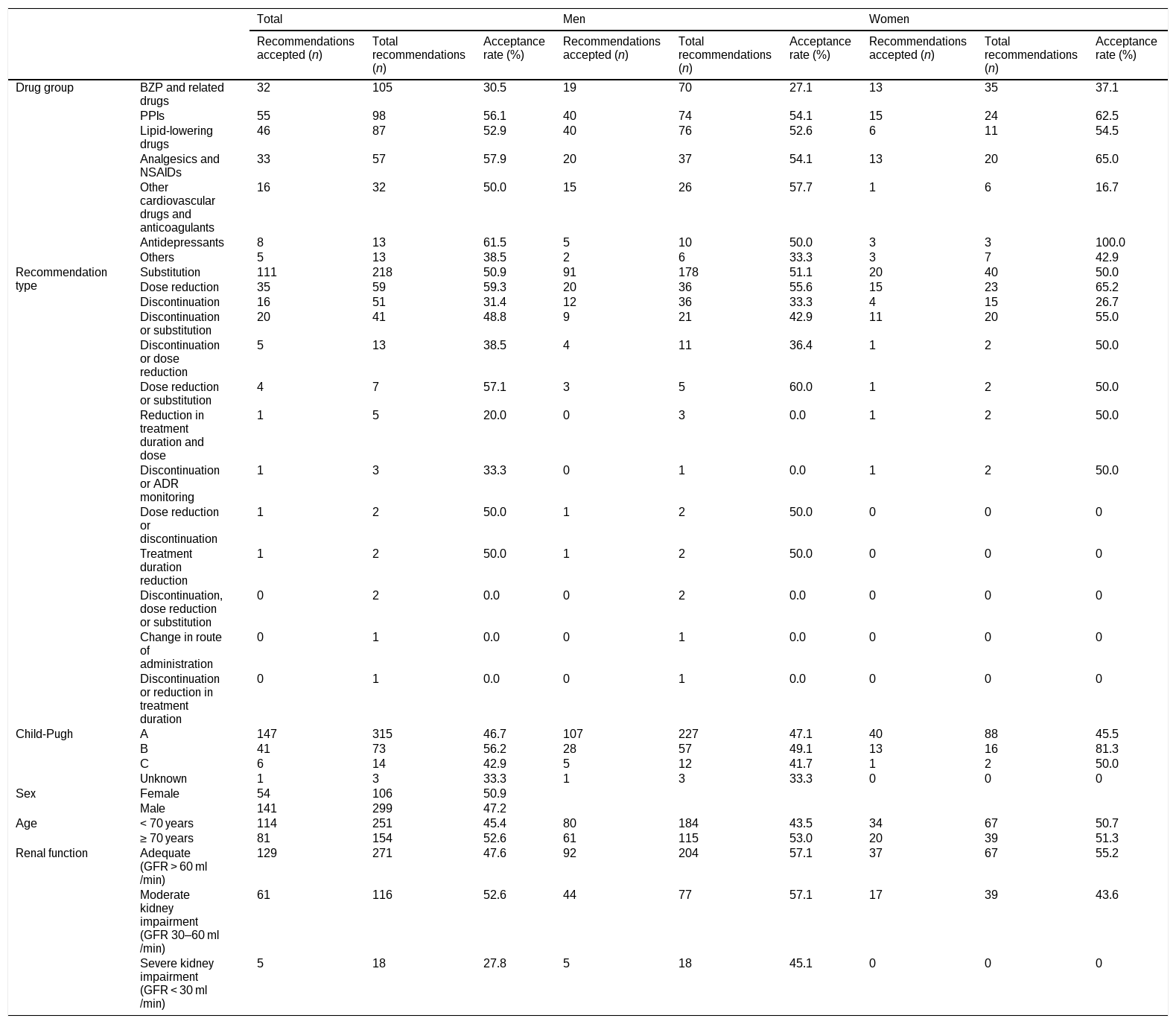
A total of 195 (48.1%) recommendations were accepted, 106 (26.2%) were rejected, and 104 (25.7%) were unaddressed and classified as rejected for the purposes of the analysis. The accepted changes comprised 107 (54.9%) substitutions, 55 (28.2%) discontinuations of treatment, and 33 (16.9%) dose reductions. Any PIMs found and the actions taken in response are described in Tables 2 and 3 shows the acceptance rate by variable.
Identified PIMs and Recommendations.
| Number (%) | |
|---|---|
| Drug groups | |
| Benzodiazepines and related drugs | 105 (25.9) |
| Proton pump inhibitors | 98 (24.2) |
| Lipid-lowering drugs | 87 (21.5) |
| Analgesics and NSAIDs | 57 (14.1) |
| Other cardiovascular drugs and anticoagulants | 32 (7.9) |
| Antidepressants | 13 (3.2) |
| Others | 13 (3.2) |
| Justification for the prescription | |
| Yes | 320 (79.0) |
| No | 25 (6.2) |
| Uncertain | 60 (14.8) |
| Availability of a safe alternative | |
| Yes | 353 (87.2) |
| No | 52 (12.8) |
| Recommended change | |
| Yes | 405 (100.0) |
| No | 0 (0.0) |
| Type of change recommended | |
| Substitution | 218 (53.8) |
| Dose reduction | 59 (14.6) |
| Discontinuation | 51 (12.6) |
| Discontinuation or substitution | 41 (10.1) |
| Discontinuation or dose reduction | 13 (3.2) |
| Dose reduction or substitution | 7 (1.7) |
| Reduction in treatment duration and dose | 5 (1.2) |
| Discontinuation or ADR monitoring | 3 (0.7) |
| Dose reduction or discontinuation | 2 (0.5) |
| Treatment duration reduction | 2 (0.5) |
| Discontinuation, dose reduction or substitution | 2 (0.5) |
| Change in route of administration | 1 (0.2) |
| Discontinuation or reduction in treatment duration | 1 (0.2) |
| Change accepted | |
| Yes | 195 (48.1) |
| Noa | 210 (51.9) |
| Type of change made | |
| Substitution | 107 (54.9) |
| Discontinuation | 55 (28.2) |
| Dose reduction | 33 (16.9) |
Degree of acceptance of recommendations by drug group, type of recommendation, severity of liver cirrhosis, sex, age and kidney function. Total data and data segregated by sex.
| Total | Men | Women | ||||||||
|---|---|---|---|---|---|---|---|---|---|---|
| Recommendations accepted (n) | Total recommendations (n) | Acceptance rate (%) | Recommendations accepted (n) | Total recommendations (n) | Acceptance rate (%) | Recommendations accepted (n) | Total recommendations (n) | Acceptance rate (%) | ||
| Drug group | BZP and related drugs | 32 | 105 | 30.5 | 19 | 70 | 27.1 | 13 | 35 | 37.1 |
| PPIs | 55 | 98 | 56.1 | 40 | 74 | 54.1 | 15 | 24 | 62.5 | |
| Lipid-lowering drugs | 46 | 87 | 52.9 | 40 | 76 | 52.6 | 6 | 11 | 54.5 | |
| Analgesics and NSAIDs | 33 | 57 | 57.9 | 20 | 37 | 54.1 | 13 | 20 | 65.0 | |
| Other cardiovascular drugs and anticoagulants | 16 | 32 | 50.0 | 15 | 26 | 57.7 | 1 | 6 | 16.7 | |
| Antidepressants | 8 | 13 | 61.5 | 5 | 10 | 50.0 | 3 | 3 | 100.0 | |
| Others | 5 | 13 | 38.5 | 2 | 6 | 33.3 | 3 | 7 | 42.9 | |
| Recommendation type | Substitution | 111 | 218 | 50.9 | 91 | 178 | 51.1 | 20 | 40 | 50.0 |
| Dose reduction | 35 | 59 | 59.3 | 20 | 36 | 55.6 | 15 | 23 | 65.2 | |
| Discontinuation | 16 | 51 | 31.4 | 12 | 36 | 33.3 | 4 | 15 | 26.7 | |
| Discontinuation or substitution | 20 | 41 | 48.8 | 9 | 21 | 42.9 | 11 | 20 | 55.0 | |
| Discontinuation or dose reduction | 5 | 13 | 38.5 | 4 | 11 | 36.4 | 1 | 2 | 50.0 | |
| Dose reduction or substitution | 4 | 7 | 57.1 | 3 | 5 | 60.0 | 1 | 2 | 50.0 | |
| Reduction in treatment duration and dose | 1 | 5 | 20.0 | 0 | 3 | 0.0 | 1 | 2 | 50.0 | |
| Discontinuation or ADR monitoring | 1 | 3 | 33.3 | 0 | 1 | 0.0 | 1 | 2 | 50.0 | |
| Dose reduction or discontinuation | 1 | 2 | 50.0 | 1 | 2 | 50.0 | 0 | 0 | 0 | |
| Treatment duration reduction | 1 | 2 | 50.0 | 1 | 2 | 50.0 | 0 | 0 | 0 | |
| Discontinuation, dose reduction or substitution | 0 | 2 | 0.0 | 0 | 2 | 0.0 | 0 | 0 | 0 | |
| Change in route of administration | 0 | 1 | 0.0 | 0 | 1 | 0.0 | 0 | 0 | 0 | |
| Discontinuation or reduction in treatment duration | 0 | 1 | 0.0 | 0 | 1 | 0.0 | 0 | 0 | 0 | |
| Child-Pugh | A | 147 | 315 | 46.7 | 107 | 227 | 47.1 | 40 | 88 | 45.5 |
| B | 41 | 73 | 56.2 | 28 | 57 | 49.1 | 13 | 16 | 81.3 | |
| C | 6 | 14 | 42.9 | 5 | 12 | 41.7 | 1 | 2 | 50.0 | |
| Unknown | 1 | 3 | 33.3 | 1 | 3 | 33.3 | 0 | 0 | 0 | |
| Sex | Female | 54 | 106 | 50.9 | ||||||
| Male | 141 | 299 | 47.2 | |||||||
| Age | < 70 years | 114 | 251 | 45.4 | 80 | 184 | 43.5 | 34 | 67 | 50.7 |
| ≥ 70 years | 81 | 154 | 52.6 | 61 | 115 | 53.0 | 20 | 39 | 51.3 | |
| Renal function | Adequate (GFR > 60 ml/min) | 129 | 271 | 47.6 | 92 | 204 | 57.1 | 37 | 67 | 55.2 |
| Moderate kidney impairment (GFR 30–60 ml/min) | 61 | 116 | 52.6 | 44 | 77 | 57.1 | 17 | 39 | 43.6 | |
| Severe kidney impairment (GFR < 30 ml/min) | 5 | 18 | 27.8 | 5 | 18 | 45.1 | 0 | 0 | 0 | |
NSAIDs, non-steroidal anti-inflammatory drugs; BZPs, benzodiazepines; GFR, glomerular filtration rate; PPIs, proton pump inhibitors; ADRs, adverse drug reactions.
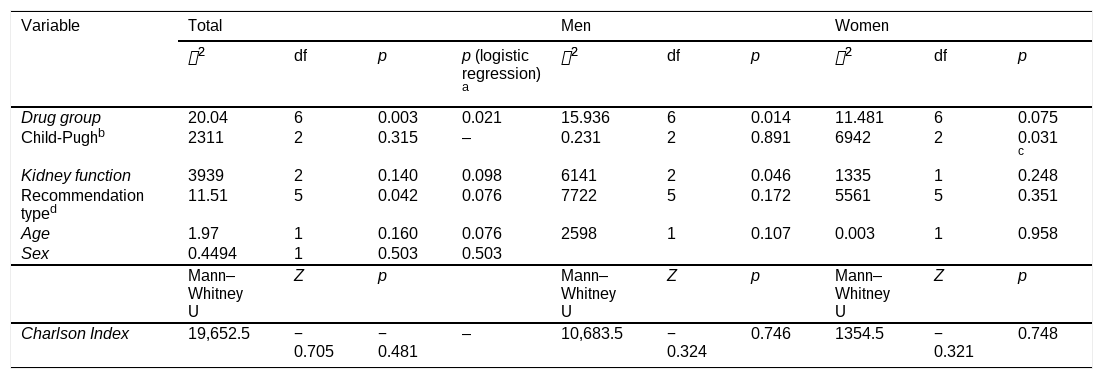
Significant differences in acceptance rates were observed depending on the type of medicine involved in the proposal. Residual analysis showed that recommendations concerning benzodiazepines and related drugs had a significantly lower acceptance rate than those in the other categories. No significant differences were found between the other types of recommendations, which had similar acceptance rates of approximately 50%. Significant differences in acceptance rates were observed across recommendation types, with treatment discontinuation yielding the lowest rate. Adjusting the logistic regression model, we confirmed that the type of medication influenced the acceptance rate (p = 0.021). Sex was not associated with a higher or lower acceptance rate for the proposals. No statistically significant differences were found between the groups regarding the remaining patient characteristics (Table 4).
Differences in acceptance rate of recommendations according to drug group, type of recommendation, severity of liver cirrhosis, sex, age and kidney function. Total data and data segregated by sex.
| Variable | Total | Men | Women | |||||||
|---|---|---|---|---|---|---|---|---|---|---|
| ꭓ2 | df | p | p (logistic regression)a | ꭓ2 | df | p | ꭓ2 | df | p | |
| Drug group | 20.04 | 6 | 0.003 | 0.021 | 15.936 | 6 | 0.014 | 11.481 | 6 | 0.075 |
| Child-Pughb | 2311 | 2 | 0.315 | – | 0.231 | 2 | 0.891 | 6942 | 2 | 0.031c |
| Kidney function | 3939 | 2 | 0.140 | 0.098 | 6141 | 2 | 0.046 | 1335 | 1 | 0.248 |
| Recommendation typed | 11.51 | 5 | 0.042 | 0.076 | 7722 | 5 | 0.172 | 5561 | 5 | 0.351 |
| Age | 1.97 | 1 | 0.160 | 0.076 | 2598 | 1 | 0.107 | 0.003 | 1 | 0.958 |
| Sex | 0.4494 | 1 | 0.503 | 0.503 | ||||||
| Mann–Whitney U | Z | p | Mann–Whitney U | Z | p | Mann–Whitney U | Z | p | ||
| Charlson Index | 19,652.5 | − 0.705 | − 0.481 | – | 10,683.5 | − 0.324 | 0.746 | 1354.5 | − 0.321 | 0.748 |
χ2, chi-squared test; df, degrees of freedom.
More than three-quarters of the analysed patients had at least one PIM. Clinicians accepted around half of the recommendations, which included substitutions, treatment discontinuations, and dose adjustments aimed at reducing medication-related risks. The proportion of patients with PIMs was higher than in the preliminary analysis conducted prior to the implementation of the strategy,13 as only those patients who, at the time of data retrieval (April 2024), were prescribed at least one medication contraindicated in liver cirrhosis were included.
The drug group with the highest number of recommendations was benzodiazepines and related drugs, followed by PPIs, lipid-lowering agents, analgesics, and NSAIDs. A published study concluded that patients with cirrhosis are prescribed more benzodiazepines than patients with other chronic conditions, despite the associated high risk of adverse drug reactions (ADRs).17 A simulated clinical trial assessed the reduction in the risk of mortality, disease decompensation, fractures, falls and alcohol-related hospitalisations following the deprescribing of benzodiazepines and zolpidem. The discontinuation of zolpidem reduced the risk of falls and fractures, although no differences were found in mortality or decompensation rates.18 However, in our strategy, the recommendations relating to these drugs were the least frequently accepted.
The use of PPIs increases the risk of spontaneous bacterial peritonitis in patients with liver cirrhosis, particularly following long-term use. This increases the risk of mortality.19,20 Another published study simulated a clinical trial comparing the risk of death and liver disease decompensation in patients who were deprescribed off PPIs with those who continued to take them. Deprescribing was associated with lower rates of ascites.21 In cases where the use of a PPI is necessary, the duration of treatment should be kept to a minimum, at the lowest effective dose, and priority should always be given to the use of esomeprazole or omeprazole, depending on the Child-Pugh score.22
Exposure to certain statins, such as atorvastatin, increases from the early stages of liver disease, raising the risk of rhabdomyolysis. It is important to ensure that their use is justified based on the patient's medical history and cardiovascular risk, that the patient's condition is periodically reassessed. Simvastatin should be prioritised, due to its better safety profile.2
NSAIDs are widely used in the general population and also in patients with liver cirrhosis, despite the fact that in this patient group, they increase the risk of bleeding and kidney failure. The American Gastroenterological Association's guidelines for the management of kidney damage in patients with cirrhosis recommend avoiding the use of NSAIDs to prevent kidney failure.23 It is important that all healthcare professionals, including community pharmacists who care for these patients, are aware of this and advise against taking them.
A safer alternative was available for 87.2% of the PIMs for our patients. In a study by Hayward et al., 375 DRPs were identified, of which 16 were considered to be the result of inappropriate drug use in patients with decompensated cirrhosis, with three-quarters of these classified as high-risk.5
The most frequently recommended changes were substitution with safer drugs, dose adjustments. Discontinuation was the least frequently accepted suggestion. In a qualitative study by Williams et al., 22 surveys were conducted with doctors and patients regarding deprescribing in cirrhosis. The main barriers cited by doctors to deprescribing were liability, lack of time, a lack of knowledge about the risks, and the absence of a safe method for deprescribing. Patients reported a lack of knowledge about the risks associated with the drugs and anxiety about symptom recurrence following deprescribing, although they trusted their doctors and wanted them to provide more information.24
In our study, prescription of the PIM was not justified in 6.2% of cases according to the pharmacist, and in approximately 15% of cases, the justification was questionable based on the information found in the EHR. It is essential to ensure that treatment is appropriately indicated, reassess it periodically in line with the patient's needs, and optimise it by reducing the number of drugs, particularly for vulnerable patient groups where polypharmacy is common.2,12
No differences in acceptance rates were found based on the severity of cirrhosis, kidney function, age, or sex. Patients' comorbidity burden did not affect whether the suggestion was accepted or not.
The main limitation of the review was the lack of data on drug management in cirrhosis; consequently, recommendations were restricted to medications with available data.2–4 In some cases, incomplete EHR prevented comprehensive patient assessments, as reflected by the percentage of prescriptions categorised as questionable by the pharmacists. Additionally, because these patients are managed by various clinicians, modifying treatments initiated by other prescribers proved more challenging.
There are few studies in the literature that assess the appropriateness of drugs in patients with cirrhosis or that evaluate a strategy for optimising treatment. One such study, published in 2019, assessed the appropriateness of treatment in 400 patients upon hospital admission. It found that 20% of patients had inappropriate prescriptions and 210 ADRs occurred, of which 78% were preventable. Deaths and readmissions were most strongly associated with NSAIDs, benzodiazepines and zolpidem.25
A clinical trial assessed the impact of treatment appropriateness in patients with decompensated cirrhosis on medication-related safety through a review performed by clinical pharmacists. The trial concluded that patients with at least one hospitalisation during the intervention period had a higher incidence of high-risk DRPs, as did patients who died during the study.26 Many of the identified DRPs were preventable and consistent with our findings, in which the majority of PIMs could be replaced with a safer alternative.27
A review of treatment optimisation in patients with cirrhosis concluded that treatment management is complex and associated with multiple risks. It requires coordinated care from adequately trained and informed caregivers.28 A systematic review comprising 27 studies assessed the prevalence, causes and risk factors of DRPs in these patients. It concluded that DRPs were prevalent and the factors involved in their occurrence extended beyond medications to include the nature of the healthcare system and patient-related characteristics. This highlights the need for patients to be actively involved in managing their condition.29
The main strength of this study is its cross-sectional approach. The review of treatment in patients with cirrhosis has been integrated into the clinical practice of clinical pharmacists in collaboration with the gastroenterology department and the involvement of PC doctors. Another strength is the wide scope of the population, as the study included all patients in our community with liver cirrhosis who were taking drugs contraindicated for this condition. However, the analysis focuses on process and intermediate safety indicators. A key limitation is the absence of health outcomes such as mortality, hospitalisations or episodes of decompensation, which should be explored in future studies.
In conclusion, a high proportion of patients with cirrhosis received medications unsuitable for their hepatic condition, despite the availability of safer risk-minimising alternatives. Although half of the pharmacists' clinical recommendations were accepted, proposals regarding benzodiazepines and related drugs, as well as those involving complete treatment discontinuation, faced the lowest acceptance rates. Finally, patient-specific clinical characteristics did not influence whether these interventions were accepted or not.
Training for all healthcare professionals involved in patient care is required. Furthermore, it is essential to develop clinical decision support strategies and educational materials for both clinicians and patients to optimise medication safety.
Contribution to the scientific literatureLiver cirrhosis causes pharmacokinetic and pharmacodynamic changes that may affect medication safety in these patients. The manuscript describes a pharmaceutical intervention consisting of a comprehensive review of the pharmacological treatment of patients with liver cirrhosis.
Three-quarters of the patients were taking drugs that were inappropriate for their liver disease, with safer alternatives available in the majority of cases. Doctors accepted half of the recommendations made by the pharmacists during the study period.
Ethical responsibilitiesThe authors accept the responsibilities defined by the ICMJE.
The study was approved by the Navarre Committee on Ethics in Research Involving Drugs (EO_2024/4).
The protocol was registered and published in the Spanish Register of Clinical Trials (REec) (identifier number 0118–2024-OBS and AEPMS number 24–00130) and in the Spanish Journal of Public Health.30
Declaration on the use of generative artificial intelligenceNone declared.
Submission to other journalsThis work has not been submitted to any other scientific journal or conference.
CRediT authorship contribution statementAndrea Rodriguez Esquiroz: Writing – original draft, Resources, Project administration, Methodology, Investigation, Formal analysis, Data curation, Conceptualization. Amaya Echeverría Gorriti: Writing – original draft, Validation, Investigation. Marta Marín Marín: Writing – original draft, Validation, Methodology, Investigation, Conceptualization. Lorea Sanz Álvarez: Writing – original draft, Methodology, Investigation, Data curation, Conceptualization. Patricia García González: Writing – original draft, Methodology, Investigation, Conceptualization. Javier Gorricho Mendivil: Writing – original draft, Resources, Methodology, Investigation, Data curation, Conceptualization. Juan Uriz Otano: Writing – original draft, Validation, Resources, Methodology, Investigation, Conceptualization. Javier Garjón Parra: Writing – original draft, Validation, Supervision, Project administration, Methodology, Formal analysis, Data curation, Conceptualization. Inés Aguinaga Ontoso: Writing – original draft, Validation, Supervision.
FundingNone declared.
None declared.

Supplementary material