
To analyze the use of antimicrobials in the pediatric and neonatal population at a national level in order to identify consumption patterns, assess treatment appropriateness, and detect potential areas for improvement in therapeutic management.
MethodWe designed a retrospective, cross-sectional, multicenter observational study that included neonatal (<1 month) and pediatric (<15 years) inpatients with at least one active prescription of systemic antibacterials or antifungals. The study consists of two phases. The first phase involves the analysis of antimicrobial consumption through quarterly data collection, expressed as pediatric and neonatal defined daily doses (DDD) per 100 patient-days. A temporal trend analysis will be performed using segmented regression and calculation of the average quarterly percent change with 95% confidence intervals, identifying change points through the Monte Carlo permutation method.
The second phase focuses on evaluating prescription appropriateness based on indication, antimicrobial selection, timing of administration, dose, frequency, route of administration, treatment duration, monitoring of efficacy and adverse effects, and documentation in the medical record. The review will be conducted by a hospital pharmacist and an infectious diseases specialist, with interobserver verification in 25% of cases. A sample size of 379 patients (270 pediatric and 109 neonatal) has been estimated for this phase. Differences between variables will be analyzed using Student's t-test, Mann–Whitney U test, Chi-squared test, or Fisher's exact test as appropriate. Inter-rater agreement will be assessed using Cohen's Kappa coefficient, and factors associated with differences in appropriateness will be analyzed through binary logistic regression and generalized lineal mixed models.
DiscussionThis study will allow the identification of antimicrobial consumption patterns and the evaluation of prescription appropriateness in pediatric and neonatal populations, providing objective and comparable information across centers. The findings will help strengthen Antimicrobial Stewardship Programs, serve as a solid basis for future research, and support the development of targeted national strategies, ultimately improving patient safety and helping to curb the progression of antimicrobial resistance.
analizar el uso de antimicrobianos en la población pediátrica y neonatal a nivel nacional, con el fin de identificar patrones de consumo, evaluar la adecuación del tratamiento y detectar posibles áreas de mejora en el manejo terapéutico.
Metodologíase diseñó un estudio observacional, retrospectivo, transversal y multicéntrico que incluyó a pacientes neonatos (menores de1 mes) y pediátricos (menores de 15 años) hospitalizados con al menos una prescripción activa de antibacterianos o antifúngicos de uso sistémico. El estudio consta de 2 fases: la primera consiste en el análisis del consumo de antimicrobianos, mediante un registro trimestral, expresado en dosis diarias definidas (DDD) pediátricas y neonatales por cada 100 estancias. Se llevará a cabo un análisis de tendencias temporales mediante regresión segmentada y el cálculo del cambio porcentual trimestral promedio con intervalos de confianza (IC) del 95%, identificando los puntos de cambio mediante el método de permutación de Monte Carlo.
La segunda fase consiste en la evaluación de la adecuación de las prescripciones, considerando la indicación, el antimicrobiano elegido, el momento de administración, dosis, frecuencia, vía de administración y duración del tratamiento, la monitorización de la eficacia y los efectos adversos, y registro en la historia clínica. La revisión será realizada por un farmacéutico hospitalario y un médico experto en enfermedades infecciosas, con verificación interobservador en el 25% de los casos. Para esta fase, se ha estimado un tamaño muestral de 379 pacientes (270 pediátricos y 109 neonatos). Las diferencias entre variables se analizarán mediante la prueba t de Student, U de Mann–Whitney, la prueba de chi-cuadrado o la prueba exacta de Fisher según corresponda. El grado de concordancia entre evaluadores se evaluará con el coeficiente kappa de Cohen, y los factores asociados a diferencias en la adecuación se analizarán mediante regresión logística binaria y modelos lineales mixtos generalizados.
Discusióneste estudio permitirá identificar patrones de consumo y evaluar la adecuación de las prescripciones de antimicrobianos en población pediátrica y neonatal, proporcionando información objetiva y comparable entre centros. Los hallazgos contribuirán a fortalecer los programas de optimización del uso de antimicrobianos, servirán como base sólida para futuras investigaciones y apoyarán el desarrollo de estrategias nacionales específicas, mejorando la seguridad del paciente y ayudando a frenar la progresión de las resistencias antimicrobianas.
Antimicrobials are among the most commonly used medications in hospital settings. In Spain, 46.6% of hospitalized patients receive antimicrobial therapy during their stay.1 However, excessive and inappropriate use has led to the development of bacterial antimicrobial resistance, which is now a leading threat to public health. In Spain, more than 24,000 deaths were attributed to multidrug-resistant organism infections in 2023. It is estimated that global mortality rates will reach 10 million by 2050, exceeding cancer-related deaths.2,3 Spain is one of the countries with the highest levels of antimicrobial consumption worldwide, a factor strongly associated with the elevated incidence of multidrug-resistant pathogenic infections in the country.4
This concern is even more urgent for the pediatric and neonatal populations, due to the distinctive clinical manifestations and etiology of infections in these populations—with a high prevalence of viral infections. At these ages, there is high variability in the pharmacokinetics of antimicrobials between and within subjects, resulting in an excessive and inappropriate use of these medications.5 The relationship between antimicrobials and the emergence of bacterial resistance is well-established. This problem compromises not only the patient's clinical progress but also prolongs the length of hospital stay, increasing healthcare costs.6
To address this problem, a variety of hospitals in Spain have implemented the Antimicrobial Stewardship Program (ASP, PROA in Spanish). These programmes aim to improve clinical outcomes, reduce antimicrobial resistance and optimize antimicrobial use.7 A core activity of ASPs lies in the implementation of ongoing surveillance through indicators such as mortality, incidence of multidrug resistance, length of hospital stay, and antimicrobial use.8
Antimicrobial consumption has traditionally been assessed through the defined daily dose (DDD), which was established by the World Health Organization (WHO) as the assumed average maintenance dose per day for a drug used for its main indication in adults.9 However, this definition has important limitations when applied to pediatric and neonatal populations, given that dosing in these populations is generally based on body weight and maturational age, rather than a fixed daily dose. This heterogeneity in antimicrobial use indicators poses a barrier to the consistent implementation and evaluation of stewardship interventions across these settings.10
The neoKiDDDs and KiDDDs projects aimed to define and validate neonatal DDDs (nDDD) for 11 antimicrobials and pediatric DDDs (pDDD) for 32 antimicrobials, respectively, adjusted for the weight and most frequent indications.11–13 Both projects provide a standardized tool for assessing antimicrobial use, although they are not widely implemented in clinical practice.
Another key strategy within ASPs to assess the appropriateness of antimicrobial prescriptions. Point Prevalence Surveys (PPSs) are effective tools for evaluating the quality prescriptions at a given point in time. They address aspects such as the indication, dosage, frequency, route of administration, duration, and monitoring. Despite their limitations, including subjectivity, heterogeneity, and their resource-consuming nature, PPSs are essential to identifying inappropriate patterns of use and optimizing antimicrobial prescribing.14
Based on this evidence, the multicentre PROA-KIDDDs study protocol has been to build on the findings of the neoKiDDDs and KiDDDs projects. This protocol provides a practical framework for the continuous evaluation of antimicrobial consumption and appropriate use in pediatric and neonatal care units. This approach is especially relevant, in view of the generalized lack of national or European programs for the continuous monitoring of antimicrobial prescribing quality.
MethodsDesignThis is an observational, retrospective, cross-sectional, multicenter study.
Target populationThis study examined neonatal and pediatric patients admitted to neonatal or pediatric units in Spanish hospitals who were receiving a therapeutic or prophylactic antimicrobial or antifungal regimen.
Participating sitesPublic hospitals in Spain featuring pediatric or neonatal care units that agreed to taking part in the two phases of the study.
Inclusion criteriaNeonatal (<1 month of life) and pediatric (>1 month until <15 years) patients admitted to neonatal or pediatric care units; presence of at least one active prescription of ATC J01 group (antimicrobials for systemic use) and ATC J02 (systemic antifungals) agents as a prophylactic/empirical therapy to treat a known or suspected infection during the study period.
Exclusion criteriaPatients younger than 15 years who were hospitalized in adult care units or transferred to these units during the study period.
Study phasesThe study will comprise two phases. The first phase will assess antimicrobial consumption in neonatal and pediatric care units, and the second will evaluate the appropriateness of prescribing in these same units.
Phase I: Analysis of consumptionAntibacterial (ATC group J01) and antifungal (ATC group J02) consumption from January 2021 to December 2025 will be documented retrospectively on a quarterly basis. The results will be expressed as pDDD and nDDD used per 100 stays (the DDD-to-pDDD-to-nDDD conversion factor can be found in Tables S2 and S3 of the Supplementary Material).
Phase II: Evaluation of prescribing appropriatenessA hospital pharmacist and a pediatric ASP physician will assess the appropriateness of antimicrobial prescriptions among pediatric and neonatal care patients. This phase will include two point prevalence surveys, separated by an interval of at least one month apart. A single reference date will be set for all participating hospitals, and each site will be allowed a ±5-day window in which to carry out data collection.
The study sample will consist of neonatal and pediatric patients receiving at least one antimicrobial agent from ATC group J01 or J02 on the day of the survey. From this sample, a set of variables will then be assessed, as described further below:
To assess inter-observer variability, an expert pediatrician in infectious diseases will independently evaluate 25% of the cases included in each site.
Study periodThe estimated duration of the study is 15 months. Data collection will extend from October 2025 to March 2026.
Subsequently, data review, curation, and analysis will be performed, and results will be presented between April and December 2026.
Study variablesSite-related variables: site name, location and size, defined by the total number of inpatient, neonatal and pediatric beds.
Antimicrobial use-related variables: grams of antibacterial and antifungal medications administered to pediatric and neonatal patients. These values will be converted into pDDD and nDDD using conversion factors (Tables S2 and S3); hospital stays (pediatric and neonatal).
These variables will be collected on a quarterly and annual basis for each site and patient population. Data will be analyzed aggregately for medical, surgical, and pediatric intensive care units.
Prescribing appropriateness-related variables: demographic [sex, date of birth, gestational age (weeks), patient type (pediatric/neonate)].
Anthropometric and clinical [weight (kg), admission ward, infectious process of the patient].
Antimicrobial-use variables: active substances (days) and antimicrobial indication (targeted, empirical, or prophylactic treatment).
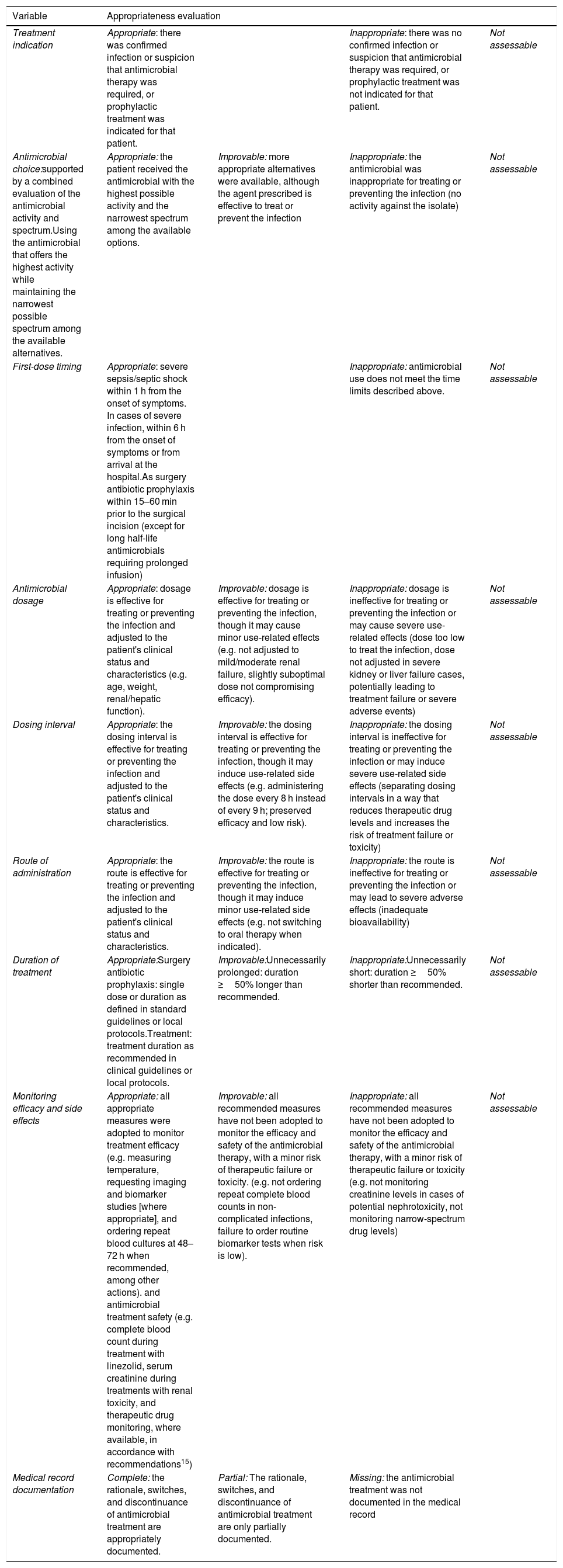
The appropriateness of prescribing will be evaluated as a function of the indication; antimicrobial choice; timing of administration; dosage; frequency; route of administration; duration of treatment; monitoring of efficacy and adverse events; and record on the patient's medical history. Each item will be assigned one of the following values: “Appropriate”, “Improvable”, “Inappropriate” or “Not Assessable” in the case of missing data (Table 1). In view that a patient may receive several antimicrobials for different indications, the evaluation will be conducted either individually or globally, as appropriate, distinguishing between therapeutic (empirical and targeted), prophylaxis, and combined scenarios (treatment plus prophylaxis), as detailed in Table S4. In the case of global evaluation, where one of the antimicrobials is considered to be inappropriate in some of the items assessed, that item will be deemed inappropriate in the global evaluation.
Evaluation of antimicrobial therapy appropriateness.
| Variable | Appropriateness evaluation | |||
|---|---|---|---|---|
| Treatment indication | Appropriate: there was confirmed infection or suspicion that antimicrobial therapy was required, or prophylactic treatment was indicated for that patient. | Inappropriate: there was no confirmed infection or suspicion that antimicrobial therapy was required, or prophylactic treatment was not indicated for that patient. | Not assessable | |
| Antimicrobial choice:supported by a combined evaluation of the antimicrobial activity and spectrum.Using the antimicrobial that offers the highest activity while maintaining the narrowest possible spectrum among the available alternatives. | Appropriate: the patient received the antimicrobial with the highest possible activity and the narrowest spectrum among the available options. | Improvable: more appropriate alternatives were available, although the agent prescribed is effective to treat or prevent the infection | Inappropriate: the antimicrobial was inappropriate for treating or preventing the infection (no activity against the isolate) | Not assessable |
| First-dose timing | Appropriate: severe sepsis/septic shock within 1 h from the onset of symptoms. In cases of severe infection, within 6 h from the onset of symptoms or from arrival at the hospital.As surgery antibiotic prophylaxis within 15–60 min prior to the surgical incision (except for long half-life antimicrobials requiring prolonged infusion) | Inappropriate: antimicrobial use does not meet the time limits described above. | Not assessable | |
| Antimicrobial dosage | Appropriate: dosage is effective for treating or preventing the infection and adjusted to the patient's clinical status and characteristics (e.g. age, weight, renal/hepatic function). | Improvable: dosage is effective for treating or preventing the infection, though it may cause minor use-related effects (e.g. not adjusted to mild/moderate renal failure, slightly suboptimal dose not compromising efficacy). | Inappropriate: dosage is ineffective for treating or preventing the infection or may cause severe use-related effects (dose too low to treat the infection, dose not adjusted in severe kidney or liver failure cases, potentially leading to treatment failure or severe adverse events) | Not assessable |
| Dosing interval | Appropriate: the dosing interval is effective for treating or preventing the infection and adjusted to the patient's clinical status and characteristics. | Improvable: the dosing interval is effective for treating or preventing the infection, though it may induce use-related side effects (e.g. administering the dose every 8 h instead of every 9 h; preserved efficacy and low risk). | Inappropriate: the dosing interval is ineffective for treating or preventing the infection or may induce severe use-related side effects (separating dosing intervals in a way that reduces therapeutic drug levels and increases the risk of treatment failure or toxicity) | Not assessable |
| Route of administration | Appropriate: the route is effective for treating or preventing the infection and adjusted to the patient's clinical status and characteristics. | Improvable: the route is effective for treating or preventing the infection, though it may induce minor use-related side effects (e.g. not switching to oral therapy when indicated). | Inappropriate: the route is ineffective for treating or preventing the infection or may lead to severe adverse effects (inadequate bioavailability) | Not assessable |
| Duration of treatment | Appropriate:Surgery antibiotic prophylaxis: single dose or duration as defined in standard guidelines or local protocols.Treatment: treatment duration as recommended in clinical guidelines or local protocols. | Improvable:Unnecessarily prolonged: duration ≥50% longer than recommended. | Inappropriate:Unnecessarily short: duration ≥50% shorter than recommended. | Not assessable |
| Monitoring efficacy and side effects | Appropriate: all appropriate measures were adopted to monitor treatment efficacy (e.g. measuring temperature, requesting imaging and biomarker studies [where appropriate], and ordering repeat blood cultures at 48–72 h when recommended, among other actions). and antimicrobial treatment safety (e.g. complete blood count during treatment with linezolid, serum creatinine during treatments with renal toxicity, and therapeutic drug monitoring, where available, in accordance with recommendations15) | Improvable: all recommended measures have not been adopted to monitor the efficacy and safety of the antimicrobial therapy, with a minor risk of therapeutic failure or toxicity. (e.g. not ordering repeat complete blood counts in non-complicated infections, failure to order routine biomarker tests when risk is low). | Inappropriate: all recommended measures have not been adopted to monitor the efficacy and safety of the antimicrobial therapy, with a minor risk of therapeutic failure or toxicity (e.g. not monitoring creatinine levels in cases of potential nephrotoxicity, not monitoring narrow-spectrum drug levels) | Not assessable |
| Medical record documentation | Complete: the rationale, switches, and discontinuance of antimicrobial treatment are appropriately documented. | Partial: The rationale, switches, and discontinuance of antimicrobial treatment are only partially documented. | Missing: the antimicrobial treatment was not documented in the medical record | |
Table adapted from the PAUSATE study.16
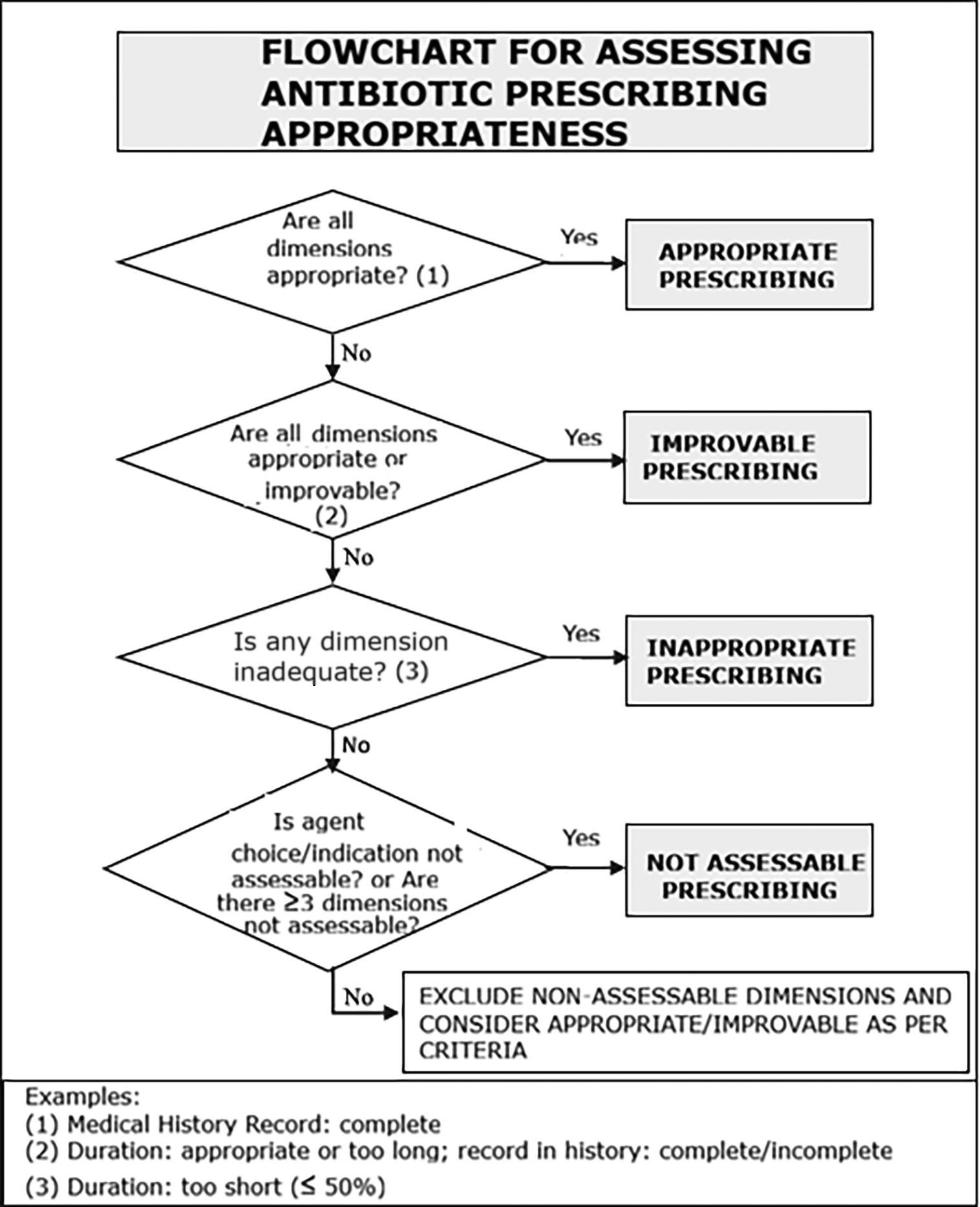
Each prescription will then be given an overall rating, classified as “appropriate”, “improvable”, “inappropriate” or “not assessable” (Fig. 1).

Overall prescription rating algorithm.
Figure adapted from the PAUSATE study.16
A hospital pharmacist and a local ADS physician will independently evaluate the appropriateness of the antimicrobial therapy.
The appropriateness of prescriptions will be assessed against the local guidelines of each site. Where local guidelines are not available, national guidelines such as the Spanish Society of Pediatric Infectious Diseases protocol (2023) in pediatrics and the Neonatal Hospital Drug Formulary SEGURNEO (2025) in neonatology will be used.17,18
Sample sizeThe sample size was calculated for the appropriateness assessment phase using the proportion estimation formula, implemented in Epidat 4.2 software. The following parameters were included: an antimicrobial prescribing rate of 36.7%,19 an estimated population of 8,975 pediatric and neonatal beds in Spanish public hospitals,20 a 95% confidence interval, a 5% sampling error, and a 10% loss adjustment.
Accordingly, the estimated sample size was 379 patients to be distributed across 270 pediatric and 109 neonatal care units, considering that, according to the Spanish Ministry of Health data, pediatric and neonatal patients account for 71.3% and 28.7% of hospital admissions, respectively.
Data collection and processingData will be extracted from electronic medical records and local prescribing modules. Throughout the two phases of the study, data will be entered into an electronic database using REDCap software (Research Electronic Data Capture). Each prescription will be assigned an anonymized code; only the local research team will have access to the corresponding key to track patient identity.
Statistical analysisA descriptive analysis will be performed for both phases, presenting the data through measures of central tendency, dispersion, and position, both overall and stratified by population (pediatric and neonatal) and admission ward (medical, surgical, and intensive care).
Consumption use assessment phaseTime-based tendencies in the use of antimicrobials will be analyzed using segmented regression models with Joinpoint Regression v4.9.0.1. Model selection will be based on the weighted Bayesian Information Criterion, with adjustments made for autocorrelation in the data. Jointpoints will be detected using a Monte Carlo permutation procedure.
Results will be reported as the average quarterly percentage change (APC), along with 95% confidence intervals (CIs) and corresponding p-values.
Appropriateness assessment phaseDifferences between quantitative variables will be assessed using Student's t-test or Mann-Whitney U test. Comparison of quantitative variables will be performed using the Chi-squared test or Fisher's exact test.
To explore factors related to the patient, center, care area, or treatment indication that may be associated with differences in the appropriateness of antimicrobial use, we will perform univariate and multivariate binary logistic regression, together with generalized linear mixed models to account for hospital-level clustering.
A two-tailed test will be conducted. A p-value <0.05 will be considered statistically significant. All statistical analyses will be performed using IBM SPSS 25.0 and R software.
Inter-observer variability will be assessed using Cohen's kappa coefficient, with their standard 95% CI.
Reporting of adverse drug reactionsAdverse drug reactions will be reported to the Centro Regional de Farmacovigilancia using the yellow card or via www.notificaRAM.es.
DiscussionThe PROA-KIDDD study is a multi-centre project conducted to assess the use and appropriateness of antimicrobial prescribing in pediatric and neonatal care units. The study design integrates the use of standardized indicators specific to these populations (pDDD and nDDD) with the evaluation of prescribing appropriateness through point prevalence surveys, thereby providing a comprehensive and more precise understanding of antimicrobial use in this patient population. The information obtained will contribute to improving ADS programs in this setting and facilitate the implementation of specific interventions based on comparable, objective evidence.
A comparative analysis of our findings with those reported in previous studies would be a valuable area for future research. In the international scene, the systematic review conducted by Donà et al. demonstrated that 20–50% of pediatric antimicrobial prescriptions are unnecessary or inappropriate, which highlights the extent of the issue.21 The PAUSATE study is the reference study in Spain. This study involved 103 Spanish hospitals to assess the prevalence and appropriateness of antimicrobial use among hospitalized patients (adult and pediatric). The study revealed that 45% of prescriptions were improvable, whereas 19% were inappropriate, thereby underlining the need to strengthen ASP programs.16 However, the study did not account for the particularities of the pediatric and neonatal population, including the challenges associated with dosing, empirical antimicrobial selection, and the high prevalence of viral infections.16 The 2019 RENAVE survey documented the prevalence of healthcare-associated infections and antimicrobial overuse in Spain.22 The PROA-KIDDDs study will provide specific data for the neonatal and pediatric population. Based on adapted assessment tools (pDDDp and nDDD), this study will guide the optimization of antimicrobial use in these units.
This study has some limitations. Voluntary site participation may result in a selection bias, given that hospitals with a greater awareness of antimicrobial use optimization are more likely to engage in the project. The extent of the problem may be underestimated due to the inclusion of only patients receiving antimicrobial therapy, whereas cases where antimicrobials were not prescribed despite being indicated will be excluded. These limitations can be partially overcome by the multicenter design of the study and implementation of two-point prevalence surveys separated in time, which will provide a more accurate picture of real-world practice.
In conclusion, the PROA-KIDDDs study is a step forward in the standardization of antimicrobial use and prescribing appropriateness in the neonatal and pediatric population in Spain. The results of the study will provide comparable, reliable data that will guide antimicrobial stewardship policies and strengthen ASPs in these settings.
Contribution to the scientific literatureThis study will provide national data regarding the use and prescribing appropriateness of antimicrobials in pediatric and neonatal care practice. Additionally, the study will open an avenue for future research and the development of national clinical policies.
Ethical considerationsThis study will be conducted in accordance with Royal Decree 957/2020 of 3 November 2020 governing observational studies with medicines for human use. The project will be carried out in compliance with best clinical practices and the tenets of the Declaration of Helsinki. The study was approved by the regional Ethics Committee of Seville, Spain on 24 July 2025 (sponsor code:PROA-KIDDDs, IRB code: 2025999010243673). Due to the characteristics of the study, the Ethics Committee confirmed the informed consent exemption.
This protocol has not been presented at any Congress. The manuscript will not be submitted for consideration in any other journal during the review process.
FundingThis study is supported by the Spanish Foundation for Hospital Pharmacy (FEFH) within the 2025/26 Working Group Grant Call. Marta Mejías Trueba is supported by the Juan Rodés Program, Carlos III Health Institute, Subdirectorate-General for Cooperative Research Networks and Centers, Ministry of Science, Innovation and Universities, Spain (JR24/00011). Ana Belén Guisado-Gil is supported by the Juan Rodés Program, Carlos III Health Institute, Subdirectorate-General for Cooperative Research Networks and Centers, Ministry of Science, Innovation and Universities, Spain (JJR21/00017).
The authors confirm that there are no known conflicts of interest associated with this publication.

Supplementary material.