Outpatient parenteral antimicrobial therapy (OPAT) in paediatric hospital-at-home (HAH) units is expanding. Standardisation of ready-to-use presentations increases safety, reduces variability, and facilitates logistics, particularly in paediatrics, where administration volumes, maximum concentrations, and infusion times strongly condition preparation.
ObjectiveTo standardise the antimicrobials used in a paediatric HAH unit by defining preparation, final container selection, and storage, based on the available evidence on physicochemical and microbiological stability, while considering administration criteria specific to the paediatric setting.
MethodsAntimicrobials included in the hospital's OPAT protocol were selected. Administration systems and consumables were reviewed, prioritising syringes and low-adsorption plastic materials. Maximum concentrations and infusion times recommended in paediatrics were compiled. Physicochemical stability was established through a literature review, selecting studies with comparable conditions (diluent, concentration, temperature, photoprotection, and primary container material) and assays that had evaluated active ingredient degradation; a content deviation of ≤10% was considered acceptable. Microbiological stability was estimated using the risk matrix for sterile preparations from the Good Preparation Practice Guide for Hospital Pharmacy Services, considering aseptic compounding in a cleanroom using a Class II biological safety cabinet and subsequent home storage.
ResultsSixteen antimicrobials were standardised (acyclovir, amikacin, ampicillin, cefazolin, cefepime, ceftazidime, ceftriaxone, cefuroxime, cidofovir, clindamycin, ganciclovir, imipenem/cilastatin, meropenem, piperacillin/tazobactam, tobramycin, and vancomycin). A fixed diluent volume and filling into syringes were prioritised; bags were used when the volume exceeded 60 ml. For each drug, diluent, material, temperature, photoprotection, and maximum in-use time were defined, integrating physicochemical stability evidence and adopting a conservative approach for microbiological use due to uncontrolled home refrigeration.
ConclusionsThis study supports a more uniform and safer OPAT practice in paediatric HAH units and provides an operational basis for protocol implementation and future evaluation, combining stability evidence for compounded preparations with paediatric administration requirements.
la terapia antimicrobiana domiciliaria endovenosa (TADE) en unidades de hospitalización a domicilio (UHAD) pediátricas está en expansión. La estandarización de las presentaciones ready-to-use aumenta la seguridad, disminuye la variabilidad y facilita la logística, particularmente en pediatría, donde los volúmenes de administración, las concentraciones máximas y los tiempos de infusión condicionan especialmente la preparación.
Objetivorealizar una estandarización de los antimicrobianos utilizados en una UHAD pediátrica, definiendo la preparación, el acondicionamiento y la conservación a partir de la evidencia disponible de estabilidad fisicoquímica y microbiológica, teniendo en cuenta criterios de administración específicos para el ámbito pediátrico.
Métodosse seleccionaron los antimicrobianos incluidos en el protocolo TADE del hospital. Se revisaron los sistemas de administración y el material fungible, priorizando jeringas y materiales plásticos de baja adsorción. Se recopilaron concentraciones máximas y tiempos de infusión recomendados en pediatría. La estabilidad fisicoquímica se estableció mediante revisión bibliográfica, seleccionando estudios con condiciones comparables (diluyente, concentración, temperatura, fotoprotección y material de acondicionamiento primario) y ensayos que habían analizado la degradación del principio activo, considerando aceptable una desviación del contenido inferior o igual al 10%. La estabilidad microbiológica se estimó mediante la matriz de riesgo para preparaciones estériles de la Guía de buenas prácticas de preparación en servicios de farmacia hospitalaria, considerando elaboración aséptica en sala blanca con cabina de bioseguridad tipo II y almacenamiento domiciliario.
Resultadosse estandarizaron 16 antimicrobianos (aciclovir, amikacina, ampicilina, cefazolina, cefepima, ceftazidima, ceftriaxona, cefuroxima, cidofovir, clindamicina, ganciclovir, imipenem/cilastatina, meropenem, piperacilina/tazobactam, tobramicina y vancomicina). Se priorizó un volumen fijo de diluyente y el acondicionamiento en jeringa, utilizando bolsa si el volumen superaba los 60 ml. Para cada fármaco se definieron diluyente, material, temperatura, fotoprotección y tiempo máximo de uso, integrando la evidencia de estabilidad fisicoquímica y un enfoque conservador para el uso microbiológico por la refrigeración domiciliaria no controlada.
Conclusioneseste estudio favorece una práctica más uniforme y segura de la TADE en UHAD pediátricas y proporciona una base operativa para la implantación y evaluación futura de protocolos, combinando evidencia de estabilidad de preparaciones y requisitos de administración pediátrica.
In recent years, the use of parenteral antimicrobials in hospitals has increased substantially. Estimations suggest that one third of inpatients receive intravenous antimicrobial therapy.1 In this setting, outpatient parenteral antimicrobial therapy (OPAT) has been progressively integrated into hospital-at-home (HAH) care. By using this model, intravenous therapies can be completed at the patient's home, thereby reducing hospital stay and hospital-related events. OPAT protocols are taken into account as non-mandatory measures for the certification of antimicrobial stewardship program (ASP).2
In paediatrics, HAH has been positioned as a safe and effective alternative to conventional hospitalization. The criteria for a paediatric patient to be eligible for HAH include clinical stability and social considerations, including a trained caregiver available round-the-clock; adequate comprehension and communication skills; and absence of adverse social circumstances, among other considerations. Demographic criteria include minimum standards of habitability and hygiene and home located within 30 minutes of the referring hospital. This model is beneficial for patients, caregivers and the healthcare system.3
A variety of studies consistently demonstrate that HAH care reduces the incidence of hospital-acquired infections, a major risk of prolonged hospital stay.1,4 Staying in a familiar environment is emotionally favorable for paediatric patients and favors their recovery and well-being.5 Additionally, this model contributes to more efficient use of healthcare resources by reducing healthcare burden, freeing up hospital beds, and decreasing admission-related costs. This model, however, is not exempt from some limitations, as it involves the handling of medications by untrained caregivers and a higher risk of microbiological contamination and medication errors. This supports the need for hospital pharmacy services to compound ready-to-use preparations.
To compound paediatric intravenous solutions, it is necessary to adjust dose to the patient's age and body weight. The development of drug compounding protocols, including fixed concentrations and administration volumes, substantially reduces the risk of medication errors and helps preserve both drug stability and medication safety. Standardized operating procedures validated by a multidisciplinary team facilitate planning and processes while reducing healthcare burden.
Finally, medication safety also depends on the environment where they are compounded. Cleanroom compounding, performed in accordance with Guía de buenas prácticas de preparación de medicamentos en servicios de farmacia hospitalaria [Good practice guideline for medicine preparation in hospital pharmacy services, GBPP], maintains a sterile environment to ensure optimal final product quality.6,7
Additionally, individualized dose preparation by specialist hospital pharmacists helps reduce errors, as required doses rarely correspond to commercially available, full-strength pharmaceutical forms. Finally, technology-assisted cleanroom compounding enhances process safety by recording every operational step, ensuring complete component traceability, and reducing the risk of errors.8,9 Simultaneously, gravimetric controls provide precise verification of final dosing.
Whereas data are available for conventional admission,10 standardization of antimicrobial preparation, packaging, and administration in paediatric HAH units has not yet been documented despite its clear relevance.
This study aimed to standardize dosing of the most commonly used antimicrobials in a paediatric HAH unit, promoting consistent and safe OPAT practice.
Materials and methodsAntimicrobial selectionThe study focused on the antimicrobials included in the OPAT protocol of the HAH unit at a children's hospital. According to this protocol, antimicrobials for HAH care are selected based on four criteria: spectrum (favoring monotherapy over combination regimens); dosing frequency (fewest daily doses); physicochemical stability (minimum 24-hours post-reconstitution); and safety profile (considering both systemic adverse effects and the risk of phlebitis).
Analysis of drug packaging, administration devices, and consumables at HAH unitsThe HAH unit favored syringe infusion pumps over infusion bag systems, owing to their ease of use for nursing staff and caregivers and the lower risk of air entry into the line. Elastomeric pumps were excluded, since keeping a device attached to the body—requiring careful, restricted movement—is impractical for paediatric patients, particularly younger children, who need to move freely during play. This constraint increases the risk of drug loss, extravasation, and related complications.
Preference was given to studies using syringes and bags made of low drug-adsorption materials, such as ethylene-vinyl acetate (EVA) and non-PVC polyolefin-based polymers (e.g., polypropylene [PP] and polyethylene [PE]), over those using high-adsorption plastics such as polyvinyl chloride (PVC). Studies using non-plastic materials such as glass were excluded.
Dose administration in paediatric patients: Maximum concentrations and infusion timeTo adjust antibiotic dose to the paediatric population, the Lexicomp® database was searched for maximum administration concentration and infusion time data. The search for physicochemical stability data was constrained by the maximum administration concentration.
Antimicrobial physicochemical stabilityA search on Stabilis®, Micromedex® and PubMed®, along with the Summary of Product Characteristics (SmPC) of each antimicrobial, was conducted for physicochemical stability data. The following search criteria were applied: (1) syringe and bag material; (2) diluent type, with dextrose-containing solutions excluded owing to the risk of altering patients' blood glucose levels; (3) final concentration; (4) temperature tested; (5) protection from light exposure; (6) analytical method used to determine drug concentration; (7) acceptable degradation cutoffs for the active ingredient; and (8) complementary physical and chemical parameters, including particle count or turbidimetric assessment of particulate matter, and measurement of pH or osmolality.
Microbiological stability of preparationsMicrobiological stability was determined using the risk matrix for sterile preparations included in the GBPP. Preparation was required to be performed in a class II biological safety cabinet within a cleanroom.
ResultsAntimicrobial selectionA standard administration protocol was established at the HAH unit for the following antimicrobials: acyclovir, amikacin, ampicillin, cefazolin, cefepime, ceftazidime, ceftriaxone, cefuroxime, cidofovir, clindamycin, ganciclovir, imipenem/cilastatin, meropenem, piperacillin/tazobactam, tobramycin, and vancomycin.
Drug packaging, administration devices, and consumables at HAH unitsOwing to the limitations of bag infusion pumps described above, administration through antimicrobial syringe pumps was standardized with a maximum volume of 60 ml—the largest syringe capacity available at the center. When preparations could not be adjusted to this volume because of physicochemical stability constraints or paediatric administration recommendations, saline bags of the required volume were used instead.
Syringes and bags were primarily made of low-protein-adsorption plastic materials such as PP, EVA, and PE, among other components. Where no literature evidence was available on the stability of antimicrobials packaged in these materials, data from studies using high-adsorption plastics—such as PVC—were used instead, assuming that more inert polymers would perform at least as well.
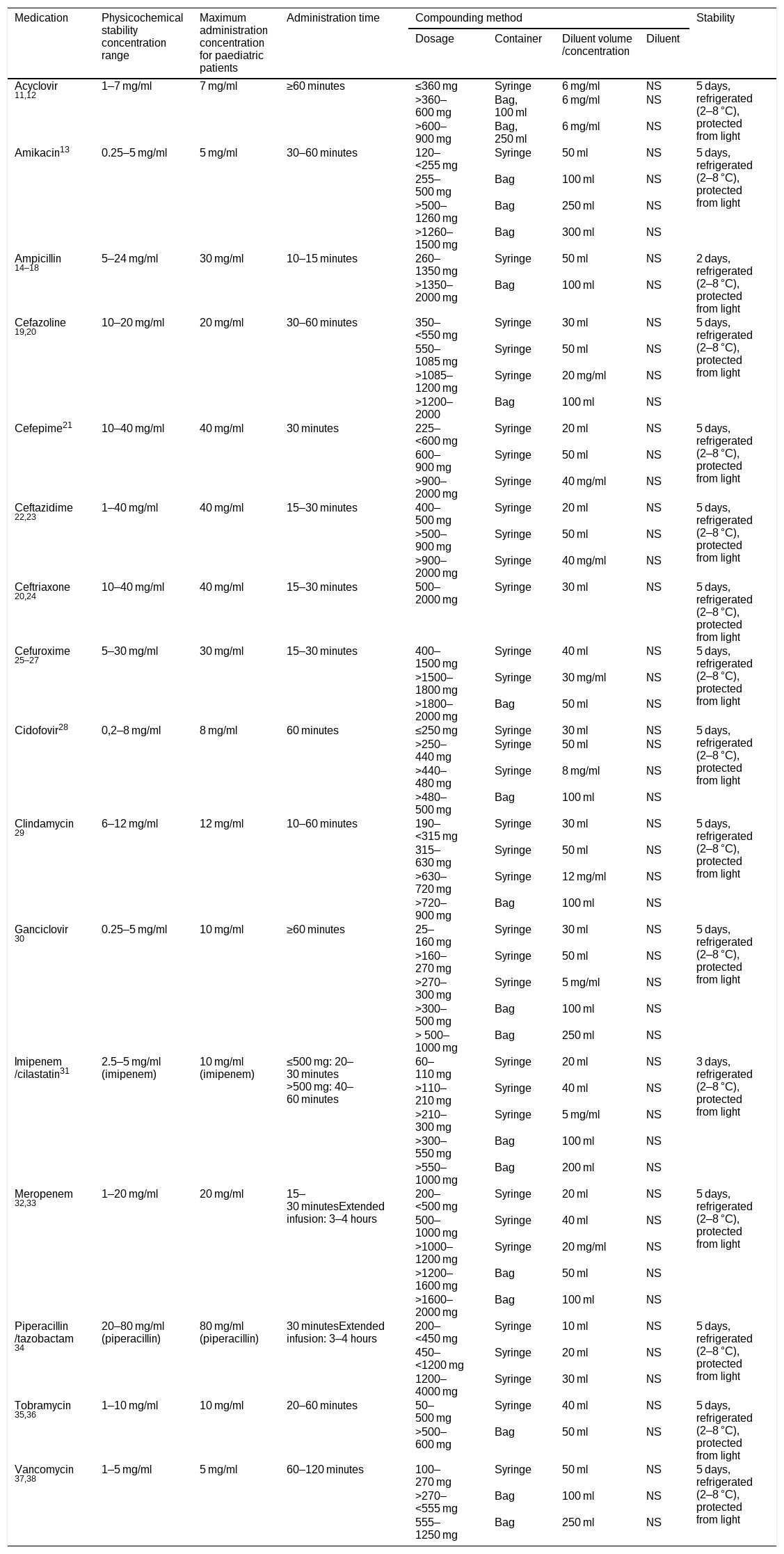
Dose administration in paediatric patients: Maximum concentrations and infusion timeMaximum administration concentration and infusion time data were obtained for selected antimicrobials. Data are summarized in Table 1.
Administration, compounding, and storage methods for antimicrobials used at a paediatric HAH unit.
| Medication | Physicochemical stability concentration range | Maximum administration concentration for paediatric patients | Administration time | Compounding method | Stability | |||
|---|---|---|---|---|---|---|---|---|
| Dosage | Container | Diluent volume/concentration | Diluent | |||||
| Acyclovir11,12 | 1–7 mg/ml | 7 mg/ml | ≥60 minutes | ≤360 mg | Syringe | 6 mg/ml | NS | 5 days, refrigerated (2–8 °C), protected from light |
| >360–600 mg | Bag, 100 ml | 6 mg/ml | NS | |||||
| >600–900 mg | Bag, 250 ml | 6 mg/ml | NS | |||||
| Amikacin13 | 0.25–5 mg/ml | 5 mg/ml | 30–60 minutes | 120–<255 mg | Syringe | 50 ml | NS | 5 days, refrigerated (2–8 °C), protected from light |
| 255–500 mg | Bag | 100 ml | NS | |||||
| >500–1260 mg | Bag | 250 ml | NS | |||||
| >1260–1500 mg | Bag | 300 ml | NS | |||||
| Ampicillin14–18 | 5–24 mg/ml | 30 mg/ml | 10–15 minutes | 260–1350 mg | Syringe | 50 ml | NS | 2 days, refrigerated (2–8 °C), protected from light |
| >1350–2000 mg | Bag | 100 ml | NS | |||||
| Cefazoline19,20 | 10–20 mg/ml | 20 mg/ml | 30–60 minutes | 350–<550 mg | Syringe | 30 ml | NS | 5 days, refrigerated (2–8 °C), protected from light |
| 550–1085 mg | Syringe | 50 ml | NS | |||||
| >1085–1200 mg | Syringe | 20 mg/ml | NS | |||||
| >1200–2000 | Bag | 100 ml | NS | |||||
| Cefepime21 | 10–40 mg/ml | 40 mg/ml | 30 minutes | 225–<600 mg | Syringe | 20 ml | NS | 5 days, refrigerated (2–8 °C), protected from light |
| 600–900 mg | Syringe | 50 ml | NS | |||||
| >900–2000 mg | Syringe | 40 mg/ml | NS | |||||
| Ceftazidime22,23 | 1–40 mg/ml | 40 mg/ml | 15–30 minutes | 400–500 mg | Syringe | 20 ml | NS | 5 days, refrigerated (2–8 °C), protected from light |
| >500–900 mg | Syringe | 50 ml | NS | |||||
| >900–2000 mg | Syringe | 40 mg/ml | NS | |||||
| Ceftriaxone20,24 | 10–40 mg/ml | 40 mg/ml | 15–30 minutes | 500–2000 mg | Syringe | 30 ml | NS | 5 days, refrigerated (2–8 °C), protected from light |
| Cefuroxime25–27 | 5–30 mg/ml | 30 mg/ml | 15–30 minutes | 400–1500 mg | Syringe | 40 ml | NS | 5 days, refrigerated (2–8 °C), protected from light |
| >1500–1800 mg | Syringe | 30 mg/ml | NS | |||||
| >1800–2000 mg | Bag | 50 ml | NS | |||||
| Cidofovir28 | 0,2–8 mg/ml | 8 mg/ml | 60 minutes | ≤250 mg | Syringe | 30 ml | NS | 5 days, refrigerated (2–8 °C), protected from light |
| >250–440 mg | Syringe | 50 ml | NS | |||||
| >440–480 mg | Syringe | 8 mg/ml | NS | |||||
| >480–500 mg | Bag | 100 ml | NS | |||||
| Clindamycin29 | 6–12 mg/ml | 12 mg/ml | 10–60 minutes | 190–<315 mg | Syringe | 30 ml | NS | 5 days, refrigerated (2–8 °C), protected from light |
| 315–630 mg | Syringe | 50 ml | NS | |||||
| >630–720 mg | Syringe | 12 mg/ml | NS | |||||
| >720–900 mg | Bag | 100 ml | NS | |||||
| Ganciclovir30 | 0.25–5 mg/ml | 10 mg/ml | ≥60 minutes | 25–160 mg | Syringe | 30 ml | NS | 5 days, refrigerated (2–8 °C), protected from light |
| >160–270 mg | Syringe | 50 ml | NS | |||||
| >270–300 mg | Syringe | 5 mg/ml | NS | |||||
| >300–500 mg | Bag | 100 ml | NS | |||||
| > 500–1000 mg | Bag | 250 ml | NS | |||||
| Imipenem/cilastatin31 | 2.5–5 mg/ml (imipenem) | 10 mg/ml (imipenem) | ≤500 mg: 20–30 minutes >500 mg: 40–60 minutes | 60–110 mg | Syringe | 20 ml | NS | 3 days, refrigerated (2–8 °C), protected from light |
| >110–210 mg | Syringe | 40 ml | NS | |||||
| >210–300 mg | Syringe | 5 mg/ml | NS | |||||
| >300–550 mg | Bag | 100 ml | NS | |||||
| >550–1000 mg | Bag | 200 ml | NS | |||||
| Meropenem32,33 | 1–20 mg/ml | 20 mg/ml | 15–30 minutesExtended infusion: 3–4 hours | 200–<500 mg | Syringe | 20 ml | NS | 5 days, refrigerated (2–8 °C), protected from light |
| 500–1000 mg | Syringe | 40 ml | NS | |||||
| >1000–1200 mg | Syringe | 20 mg/ml | NS | |||||
| >1200–1600 mg | Bag | 50 ml | NS | |||||
| >1600–2000 mg | Bag | 100 ml | NS | |||||
| Piperacillin/tazobactam34 | 20–80 mg/ml (piperacillin) | 80 mg/ml (piperacillin) | 30 minutesExtended infusion: 3–4 hours | 200–<450 mg | Syringe | 10 ml | NS | 5 days, refrigerated (2–8 °C), protected from light |
| 450–<1200 mg | Syringe | 20 ml | NS | |||||
| 1200–4000 mg | Syringe | 30 ml | NS | |||||
| Tobramycin35,36 | 1–10 mg/ml | 10 mg/ml | 20–60 minutes | 50–500 mg | Syringe | 40 ml | NS | 5 days, refrigerated (2–8 °C), protected from light |
| >500–600 mg | Bag | 50 ml | NS | |||||
| Vancomycin37,38 | 1–5 mg/ml | 5 mg/ml | 60–120 minutes | 100–270 mg | Syringe | 50 ml | NS | 5 days, refrigerated (2–8 °C), protected from light |
| >270–<555 mg | Bag | 100 ml | NS | |||||
| 555–1250 mg | Bag | 250 ml | NS | |||||
NS: Normal saline (0.9% sodium chloride solution).
All studies used antimicrobials diluted in normal saline, whereas none of the preparations contained glycosylated solutions. Solely tests performed at 2–8 °C were included to reduce the risk of microbiological contamination. For preparations with an administration time exceeding 60 minutes, assays conducted at 8–25 °C were prioritized. When light exposure conditions were not reported, stability was assumed to have been assessed under light-protected conditions. Studies measuring drug concentration by high-performance liquid chromatography (HPLC) with a concentration deviation not exceeding ±10% were selected. Complementary parameters were confirmed to remain within stability ranges.
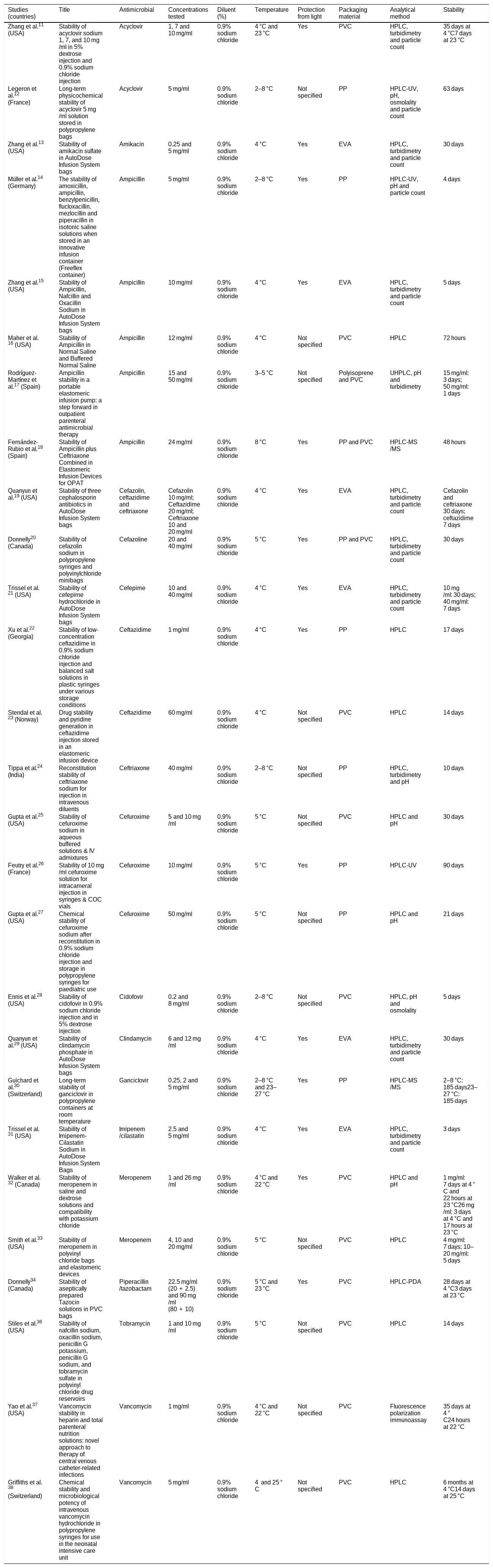
Table 2 describes the characteristics of the assays performed in the studies. Of note, although Yao et al.37 used fluorescence polarization instead of HPLC, their study was included, as the precision and reproducibility of results showed good correlation with the HPLC technique.
Characteristics of the assays used in the studies for each antimicrobial.
| Studies (countries) | Title | Antimicrobial | Concentrations tested | Diluent (%) | Temperature | Protection from light | Packaging material | Analytical method | Stability |
|---|---|---|---|---|---|---|---|---|---|
| Zhang et al.11 (USA) | Stability of acyclovir sodium 1, 7, and 10 mg/ml in 5% dextrose injection and 0.9% sodium chloride injection | Acyclovir | 1, 7 and 10 mg/ml | 0.9% sodium chloride | 4 °C and 23 °C | Yes | PVC | HPLC, turbidimetry and particle count | 35 days at 4 °C7 days at 23 °C |
| Legeron et al.12 (France) | Long-term physicochemical stability of acyclovir 5 mg/ml solution stored in polypropylene bags | Acyclovir | 5 mg/ml | 0.9% sodium chloride | 2–8 °C | Not specified | PP | HPLC-UV, pH, osmolality and particle count | 63 days |
| Zhang et al.13 (USA) | Stability of amikacin sulfate in AutoDose Infusion System bags | Amikacin | 0.25 and 5 mg/ml | 0.9% sodium chloride | 4 °C | Yes | EVA | HPLC, turbidimetry and particle count | 30 days |
| Müller et al.14 (Germany) | The stability of amoxicillin, ampicillin, benzylpenicillin, flucloxacillin, mezlocillin and piperacillin in isotonic saline solutions when stored in an innovative infusion container (Freeflex container) | Ampicillin | 5 mg/ml | 0.9% sodium chloride | 2–8 °C | Yes | PP | HPLC-UV, pH and particle count | 4 days |
| Zhang et al.15 (USA) | Stability of Ampicillin, Nafcillin and Oxacillin Sodium in AutoDose Infusion System bags | Ampicillin | 10 mg/ml | 0.9% sodium chloride | 4 °C | Yes | EVA | HPLC, turbidimetry and particle count | 5 days |
| Maher et al.16 (USA) | Stability of Ampicillin in Normal Saline and Buffered Normal Saline | Ampicillin | 12 mg/ml | 0.9% sodium chloride | 4 °C | Not specified | PVC | HPLC | 72 hours |
| Rodríguez-Martínez et al.17 (Spain) | Ampicillin stability in a portable elastomeric infusion pump: a step forward in outpatient parenteral antimicrobial therapy | Ampicillin | 15 and 50 mg/ml | 0.9% sodium chloride | 3–5 °C | Not specified | Polyisoprene and PVC | UHPLC, pH and turbidimetry | 15 mg/ml: 3 days; 50 mg/ml: 1 days |
| Fernández-Rubio et al.18 (Spain) | Stability of Ampicillin plus Ceftriaxone Combined in Elastomeric Infusion Devices for OPAT | Ampicillin | 24 mg/ml | 0.9% sodium chloride | 8 °C | Yes | PP and PVC | HPLC-MS/MS | 48 hours |
| Quanyun et al.19 (USA) | Stability of three cephalosporin antibiotics in AutoDose Infusion System bags | Cefazolin, ceftazidime and ceftriaxone | Cefazolin 10 mg/ml; Ceftazidime 20 mg/ml; Ceftriaxone 10 and 20 mg/ml | 0.9% sodium chloride | 4 °C | Yes | EVA | HPLC, turbidimetry and particle count | Cefazolin and ceftriaxone 30 days; ceftazidime 7 days |
| Donnelly20 (Canada) | Stability of cefazolin sodium in polypropylene syringes and polyvinylchloride minibags | Cefazoline | 20 and 40 mg/ml | 0.9% sodium chloride | 5 °C | Yes | PP and PVC | HPLC, turbidimetry and particle count | 30 days |
| Trissel et al.21 (USA) | Stability of cefepime hydrochloride in AutoDose Infusion System bags | Cefepime | 10 and 40 mg/ml | 0.9% sodium chloride | 4 °C | Yes | EVA | HPLC, turbidimetry and particle count | 10 mg/ml: 30 days; 40 mg/ml: 7 days |
| Xu et al.22 (Georgia) | Stability of low-concentration ceftazidime in 0.9% sodium chloride injection and balanced salt solutions in plastic syringes under various storage conditions | Ceftazidime | 1 mg/ml | 0.9% sodium chloride | 4 °C | Yes | PP | HPLC | 17 days |
| Stendal et al.23 (Norway) | Drug stability and pyridine generation in ceftazidime injection stored in an elastomeric infusion device | Ceftazidime | 60 mg/ml | 0.9% sodium chloride | 4 °C | Not specified | PVC | HPLC | 14 days |
| Tippa et al.24 (India) | Reconstitution stability of ceftriaxone sodium for injection in intravenous diluents | Ceftriaxone | 40 mg/ml | 0.9% sodium chloride | 2–8 °C | Not specified | PP | HPLC, turbidimetry and pH | 10 days |
| Gupta et al.25 (USA) | Stability of cefuroxime sodium in aqueous buffered solutions & IV admixtures | Cefuroxime | 5 and 10 mg/ml | 0.9% sodium chloride | 5 °C | Not specified | PVC | HPLC and pH | 30 days |
| Feutry et al.26 (France) | Stability of 10 mg/ml cefuroxime solution for intracameral injection in syringes & COC vials | Cefuroxime | 10 mg/ml | 0.9% sodium chloride | 5 °C | Yes | PP | HPLC-UV | 90 days |
| Gupta et al.27 (USA) | Chemical stability of cefuroxime sodium after reconstitution in 0.9% sodium chloride injection and storage in polypropylene syringes for paediatric use | Cefuroxime | 50 mg/ml | 0.9% sodium chloride | 5 °C | Not specified | PP | HPLC and pH | 21 days |
| Ennis et al.28 (USA) | Stability of cidofovir in 0.9% sodium chloride injection and in 5% dextrose injection | Cidofovir | 0.2 and 8 mg/ml | 0.9% sodium chloride | 2–8 °C | Not specified | PVC | HPLC, pH and osmolality | 5 days |
| Quanyun et al.29 (USA) | Stability of clindamycin phosphate in AutoDose Infusion System bags | Clindamycin | 6 and 12 mg/ml | 0.9% sodium chloride | 4 °C | Yes | EVA | HPLC, turbidimetry and particle count | 30 days |
| Guichard et al.30 (Switzerland) | Long-term stability of ganciclovir in polypropylene containers at room temperature | Ganciclovir | 0.25, 2 and 5 mg/ml | 0.9% sodium chloride | 2–8 °C and 23–27 °C | Yes | PP | HPLC-MS/MS | 2–8 °C: 185 days23–27 °C: 185 days |
| Trissel et al.31 (USA) | Stability of Imipenem-Cilastatin Sodium in AutoDose Infusion System Bags | Imipenem/cilastatin | 2.5 and 5 mg/ml | 0.9% sodium chloride | 4 °C | Yes | EVA | HPLC, turbidimetry and particle count | 3 days |
| Walker et al.32 (Canada) | Stability of meropenem in saline and dextrose solutions and compatibility with potassium chloride | Meropenem | 1 and 26 mg/ml | 0.9% sodium chloride | 4 °C and 22 °C | Yes | PVC | HPLC and pH | 1 mg/ml: 7 days at 4 °C and 22 hours at 23 °C26 mg/ml: 3 days at 4 °C and 17 hours at 23 °C |
| Smith et al.33 (USA) | Stability of meropenem in polyvinyl chloride bags and elastomeric devices | Meropenem | 4, 10 and 20 mg/ml | 0.9% sodium chloride | 5 °C | Not specified | PVC | HPLC | 4 mg/ml: 7 days; 10–20 mg/ml: 5 days |
| Donnelly34 (Canada) | Stability of aseptically prepared Tazocin solutions in PVC bags | Piperacillin/tazobactam | 22.5 mg/ml (20 + 2.5) and 90 mg/ml (80 + 10) | 0.9% sodium chloride | 5 °C and 23 °C | Yes | PVC | HPLC-PDA | 28 days at 4 °C3 days at 23 °C |
| Stiles et al.36 (USA) | Stability of nafcillin sodium, oxacillin sodium, penicillin G potassium, penicillin G sodium, and tobramycin sulfate in polyvinyl chloride drug reservoirs | Tobramycin | 1 and 10 mg/ml | 0.9% sodium chloride | 5 °C | Not specified | PVC | HPLC | 14 days |
| Yao et al.37 (USA) | Vancomycin stability in heparin and total parenteral nutrition solutions: novel approach to therapy of central venous catheter-related infections | Vancomycin | 1 mg/ml | 0.9% sodium chloride | 4 °C and 22 °C | Not specified | PVC | Fluorescence polarization immunoassay | 35 days at 4 °C24 hours at 22 °C |
| Griffiths et al.38 (Switzerland) | Chemical stability and microbiological potency of intravenous vancomycin hydrochloride in polypropylene syringes for use in the neonatal intensive care unit | Vancomycin | 5 mg/ml | 0.9% sodium chloride | 4 and 25 °C | Not specified | PVC | HPLC | 6 months at 4 °C14 days at 25 °C |
USA: United States of America; EVA: ethyl vinyl acetate; HPLC: High-Performance Liquid Chromatography; HPLC–MS/MS: High-Performance Liquid Chromatography–Tandem Mass Spectrometry); IV: intravenous; OPAT: Outpatient Parenteral Antimicrobial Therapy; pH: potential of hydrogen; PDA: photodiode array; PP: polypropylene; PVC: polyvinyl chloride; UHPLC: Ultra-High-Performance Liquid Chromatography; UV: ultraviolet.
According to the risk matrix for sterile preparations established in GBPP, all preparations were classified as intermediate risk. For this level of risk, these guidelines establish a stability period of 9 days when stored at 2-8 °C. Instead, we reduced the microbiological stability period to a maximum of 5 days under refrigeration, provided that physicochemical stability allowed it, as preparations are stored under uncontrolled refrigeration conditions (the patient's home refrigerator). This period substantially reduces cumulative exposure to temperature deviations without disproportionately compromising the operational feasibility of the care pathway.
Standardization of antimicrobials at paediatric hospital-at-home unitsCompounding based on a fixed diluent volume was the preferred approach, since it simplifies the process and reduces the risk of compounding errors. Where this strategy necessitated bag rather than syringe use, an alternative strategy was applied, targeting a fixed final concentration and reducing the final preparation volume to <60 ml, so that the greatest possible number of doses could be packaged in syringes. This concentration generally matched the maximum administration concentration for children. Notably, the irritant effects of acyclovir required adjustment to lower concentrations. When, despite all these measures, the total volume exceeded 60 ml, preparations were packaged in bags.
Table 1 contains a description of antimicrobial compounding and storage methods for the selected drugs.
DiscussionTo the best of our knowledge, this is the first study to standardize ready-to-use antimicrobial preparations at a paediatric HAH unit.
In accordance with OPAT guidelines published in Spain,39 Germany40 and the United Kingdom,41 among other countries, antimicrobials were selected based on stability data including temperature; shelf life; maximum concentration for physicochemical stability; and diluent compatibility. For antimicrobials requiring an infusion time greater than 60 minutes, stability at room temperature was confirmed, as required in the guidelines mentioned above.
Compounding was carried out in a validated sterile environment within a certified class A laminar flow cabinet. Stability data were obtained from the databases recommended in the guidelines.
Maximum administration concentration in children was considered, as it is essential for patient safety. Fluid restriction is frequently required in paediatric patients, including neonates and those with cardiac or renal disease. By defining a maximum concentration, the drug can be infused in the smallest possible volume, minimizing the risk of fluid overload, an issue not accounted for in adult guidelines.
As a distinguishing feature of our paediatric HAH unit, the inclusion and exclusion criteria for medication administration systems also account for the dimension of patient-centered, humanized care—a particularly relevant factor for patients, especially children. This approach improves treatment adherence and reduces caregiver stress.
A key limitation of this study is that the stability data of the preparations were not verified via in-house analytical testing under real-world conditions; rather, they were derived from the available literature. Additionally, physical stability data were not available for all antimicrobials. Another limitation is that the stability studies for most of the reviewed drugs are not recent. Consequently, current techniques and media would be expected to yield better results, incorporate data on novel drugs, and reduce the active pharmaceutical ingredient degradation limit to 5%.
The standardization suggested in this study is the first step in harmonizing paediatric HAH practice, thereby reducing variability in compounding methods and facilitating the implantation of national protocols.
Currently, paediatric HAH programs are ongoing to optimize the management of non-infectious diseases, including oncological and immune-mediated diseases. In this line, standard protocols for a broader variety of drugs should be established, including high-risk and hazardous drugs.
This study contributes to the standardization of OPAT practice in paediatric HAH units through the promotion of more consistent, reproducible, and safe care. Our approach integrates available evidence on preparation stability with the specific drug administration requirements of children. These findings offer a solid technical and organizational foundation for implementing and evaluating future protocols, supporting decision-making in risk management and continuous improvement.
Contribution to the scientific literatureThis is the first study to standardize ready-to-use intravenous preparations at a paediatric hospital-at-home unit by integrating the available scientific evidence.
The results provided will be useful to hospital pharmacy practice as it standardizes antimicrobial compounding in children receiving hospital-at-home care. Standardization will help reduce variability across professionals and facilitate the development of pharmacy care procedures in this setting.
Authorship responsibility and copyright transferAll authors accept full responsibility as defined by the International Committee of Medical Journal Editors (available at http://www.icmje.org/).
Upon acceptance for publication, the authors hereby assign to the journal Hospital Pharmacy the exclusive rights to reproduce, distribute, translate, and publicly communicate the work in any medium or format, including print, audio, audiovisual, and electronic formats.
Declaration of submissionThe manuscript is not under consideration for publication elsewhere and has not been published previously in any other journal or presented at any congress.
Artificial intelligence use statementThe authors declare that no generative Artificial Intelligence model was used in this study.
CRediT authorship contribution statementAlejandra Merino Pardo: Writing – review & editing, Writing – original draft, Visualization, Validation, Supervision, Project administration, Methodology, Investigation, Formal analysis, Data curation, Conceptualization. Esther Algarra Sánchez: Writing – review & editing, Writing – original draft, Visualization, Methodology, Investigation, Formal analysis, Data curation, Conceptualization. José Antonio Hernández Ramos: Writing – review & editing, Writing – original draft, Visualization, Validation, Supervision, Project administration, Methodology, Investigation, Formal analysis, Data curation, Conceptualization. Beatriz Fernández Rubio: Writing – original draft, Visualization, Methodology, Investigation, Formal analysis, Data curation. Margarita Cuervas-Mons Vendrell: Writing – review & editing, Writing – original draft, Visualization, Validation, Supervision, Project administration, Methodology, Investigation, Formal analysis, Data curation, Conceptualization.
FundingThe authors received no financial support for the research, authorship, and/or publication of this article.
The authors declare no conflict of interest.