Antimicrobial resistance, particularly in carbapenemase-producing Enterobacterales such as KPC-type, represents a critical threat to public health in Latin America, associated with high mortality rates and increased healthcare costs. This systematic review aims to evaluate the therapeutic potential of siderophore-drug and siderophore-peptide conjugates against priority multidrug-resistant pathogens, including Enterobacterales, Pseudomonas aeruginosa, and Acinetobacter baumannii, analyzing their efficacy, mechanisms of action, and implementation challenges.
MethodA systematic search was conducted in the PubMed, Scopus, and Web of Science databases up to August 2025. Key terms such as “siderophore conjugates”, “Trojan horse antibiotics”, “antimicrobial resistance”, and “Gram-negative bacteria” were used. Preclinical and clinical studies, reviews, and meta-analyses published between 2019 and 2025 were included, selecting 55 references based on relevance to the topic, currency, and methodological quality. This review is a narrative review with a systematic literature search, developed in accordance with PRISMA guidelines.
ResultsSiderophore conjugates, via the “Trojan horse” mechanism, effectively exploit bacterial iron uptake systems to deliver antimicrobial agents in a targeted manner. They overcome key resistance mechanisms such as β-lactamase production, porin alterations, and efflux pump activity, while reducing systemic toxicity and preserving commensal microbiota. Clinical evidence (e.g., cefiderocol) and preclinical studies confirm their efficacy against multidrug-resistant (MDR) and extensively drug-resistant (XDR) strains, achieving significant reductions in minimum inhibitory concentrations (MICs). However, critical challenges were identified: optimization of chemical stability and intracellular drug release, complexity in synthesis and industrial scaling under Good Manufacturing Practice (GMP) standards, and regulatory and logistical barriers in resource-limited settings.
ConclusionsSiderophore conjugates offer a targeted therapeutic approach against multidrug-resistant pathogens by exploiting the bacteria's own iron-uptake systems. The available evidence ranges from clinical results with cefiderocol to preclinical developments with other platforms. Their application, however, faces challenges that span chemical optimization, manufacturing, regulation, and access in clinical settings.
la resistencia antimicrobiana, particularmente en enterobacterias productoras de carbapenemasas tipo KPC, representa una amenaza crítica para la salud pública en América Latina, con alta mortalidad y costos asociados. Esta revisión sistemática tiene como objetivo evaluar el potencial terapéutico de los conjugados sideróforo-fármaco y sideróforo-péptido frente a patógenos prioritarios multirresistentes, como Enterobacterales, Pseudomonas aeruginosa y Acinetobacter baumannii, analizando su eficacia, mecanismos de acción y desafíos de implementación.
Métodose realizó una búsqueda sistemática en las bases de datos PubMed, Scopus y Web of Science hasta agosto de 2025, utilizando términos clave como «siderophore conjugates», «Trojan horse antibiotics», «antimicrobial resistance» y «Gram-negative bacteria». Se incluyeron estudios preclínicos, clínicos, revisiones y metaanálisis publicados entre 2019 y 2025, seleccionando 55 referencias basadas en criterios de relevancia temática, actualidad y calidad metodológica. Esta revisión corresponde a una revisión narrativa con búsqueda sistemática de la literatura, desarrollada conforme a los lineamientos PRISMA.
Resultadoslos conjugados siderofóricos, mediante el mecanismo «caballo de Troya», explotan eficazmente los sistemas bacterianos de captación de hierro para administrar agentes antimicrobianos de forma dirigida. Demostraron superar mecanismos de resistencia clave, como la producción de β-lactamasas, las alteraciones de porinas y las bombas de eflujo, con reducción de la toxicidad sistémica y preservación de la microbiota comensal. La evidencia clínica (cefiderocol) y preclínica confirma su eficacia frente a cepas multirresistentes (MDR) y extensamente resistentes (XDR), con reducciones significativas en la CIM (concentración inhibitoria mínima). Sin embargo, se identificaron desafíos críticos: optimización de la estabilidad química y de la liberación intracelular, complejidad en la síntesis y el escalado industrial bajo normas BPC, y barreras regulatorias y logísticas en entornos con recursos limitados.
Conclusioneslos conjugados siderofóricos ofrecen un enfoque terapéutico dirigido frente a patógenos multirresistentes al explotar los propios sistemas bacterianos de captación de hierro. La evidencia disponible abarca desde los resultados clínicos con cefiderocol hasta desarrollos preclínicos con otras plataformas. Su aplicación, no obstante, tropieza con desafíos que van desde la optimización química y la producción hasta la regulación y el acceso en entornos clínicos.
Antimicrobial resistance (AMR) is one of the most critical global health threats of the 21st century. According to recent estimates, resistant bacterial infections caused 1.27 million direct deaths and were associated with a further 4.95 million deaths in 2019.1 This crisis has been exacerbated by the stagnation in the development of new classes of antibiotics over the past two decades, resulting in a critical therapeutic gap.2,3
The convergence of rising resistance and limited innovation calls for urgent alternative strategies. KPC-type carbapenemase-producing Klebsiella pneumoniae, which is associated with epidemic clones such as ST258, exemplifies this challenge: it causes nosocomial infections with high mortality rates in immunocompromised patients, for whom treatment options are severely limited.4–6
Data from the Global Burden of Disease confirm the upward trend: 4.71 million deaths were associated with AMR in 2021 (1.14 million directly attributable).Carbapenem resistance was the leading driver of this increase, rising from 619,000 associated deaths in 1990 to over 1 million in 2021.7 Projections for 2050 suggest that Latin America and South Asia will bear the highest burden of mortality.8 This scenario has been further aggravated in Latin America by the spread of KPC/NDM-co-producing Enterobacterales and the excessive use of antibiotics during the COVID-19 pandemic.9
Even in high-income countries, the limited access to innovative therapies underscores the need for sustainable alternatives. Among these, the use of siderophores as “Trojan horse” vectors is particularly notable: their intrinsic iron-chelating capacity enables targeted internalization of antimicrobials, thereby reducing selective pressure on the microbiota.10,11 Cefiderocol, a siderophore cephalosporin containing a catechol moiety, exemplifies this approach, demonstrating clinical efficacy against multidrug-resistant Enterobacterales, Pseudomonas, and Acinetobacter.12 Similarly, the development of siderophore–peptide conjugates that can enhance cellular permeability and overcome bacterial evasion mechanisms represents a new frontier in the design of functional antibiotics.13
Against this backdrop, several strategies targeting iron metabolism have been explored as potential alternatives. One such strategy is the use of gallium as a functional analogue of ferric iron which has attracted attention due to its ability to interfere with essential iron-dependent redox processes in bacteria. Similarly, chelation approaches aimed at restricting iron bioavailability in the infectious microenvironment have likewise been investigated.14 However, both strategies have limitations in terms of specificity and clinical efficacy, which has driven the development of more targeted approaches.
In light of the foregoing, this narrative review — conducted through a systematic literature search — aims to explore the potential of siderophore system as a therapeutic target. It also aims to evaluate the potential of siderophore–drug and siderophore–peptide conjugates together with the challenges associated with their clinical implementation. Finally, it aims to analyze the public health impact of KPC-mediated resistance.
MethodsThe present study is designed as a narrative review with a systematic literature search, conducted in accordance with PRISMA guidelines. A search was performed in indexed scientific databases (Scopus, Web of Science, and ScienceDirect) from 2019 to 2025, supplemented by other relevant sources, using combinations of keywords related to siderophore conjugates and antimicrobial resistance.
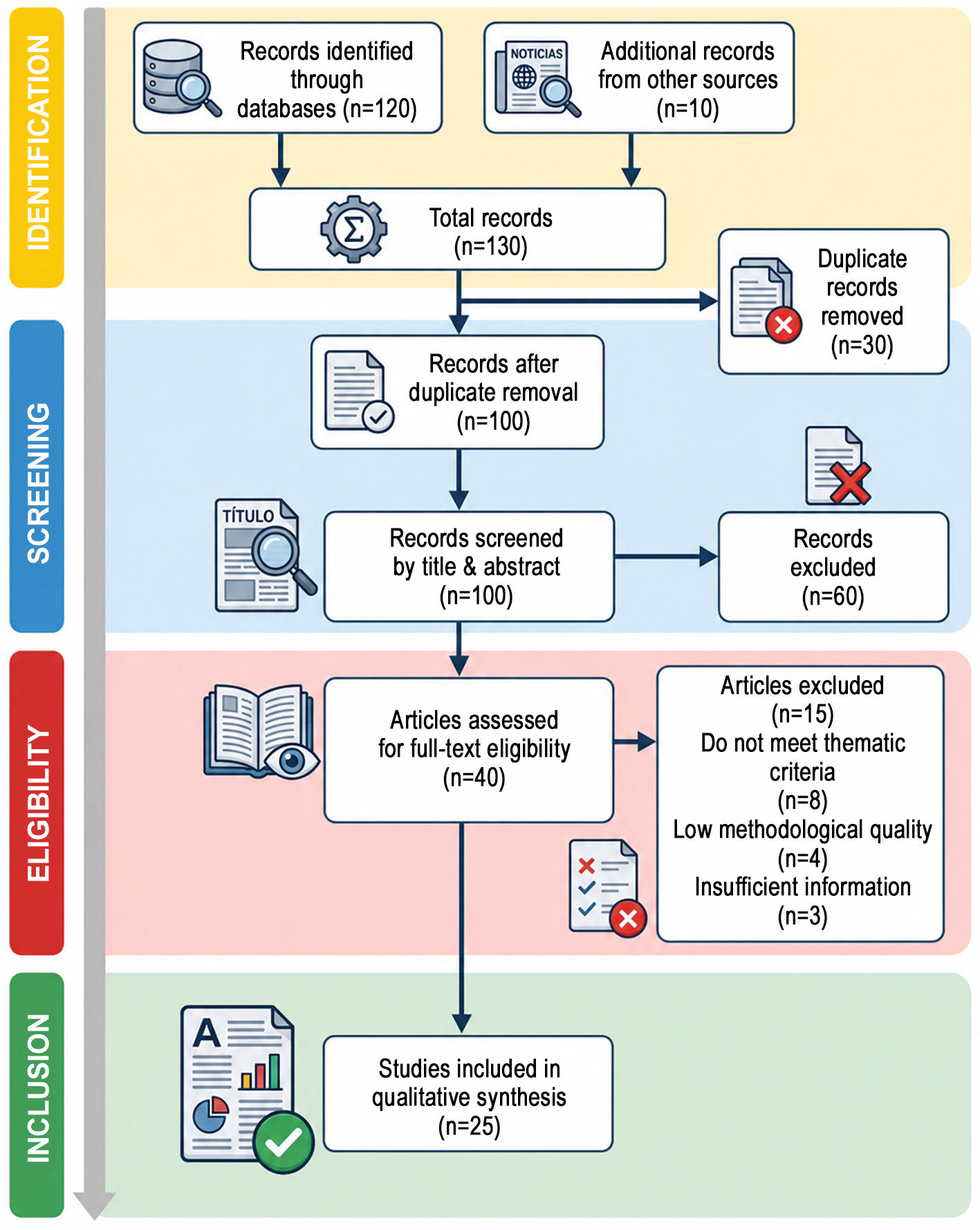
The study selection process comprised four phases (identification, screening, eligibility, and inclusion). A total of 130 records were identified, comprising studies from databases (n = 120) and supplementary sources (n = 10). After removing duplicates (n = 30), 100 records were evaluated based on their titles and abstracts, and 60 of these were excluded due to a lack of relevance. Subsequently, 40 articles were reviewed in full text, of which 15 were excluded based on methodological or quality criteria. This resulted in 25 studies included in the qualitative synthesis. The complete flowchart is presented in Fig. 1.
Flowchart of the study selection process. The study screening and selection process is detailed in accordance with the PRISMA statement. Of a total of 130 records initially identified, duplicates (n = 30) were removed, and records were excluded based on title and abstract (n = 60). After evaluating 40 full-text articles, 15 were excluded due to thematic or methodological criteria, resulting in 25 final studies included in the qualitative synthesis.
Preclinical and clinical studies, systematic reviews, and meta-analyses published in English or Spanish were included, provided that full-text access was available and they were directly relevant to the topic under review. Duplicates, non-peer-reviewed literature, conference abstracts, short communications without complete data, and studies unrelated to siderophore mechanisms were excluded.
The methodological quality of the studies was assessed qualitatively, considering the clarity of the design, internal validity, and relevance of the studies, with priority given to clinical evidence and recent systematic reviews. The manuscript included a total of 55 references, covering both the selected studies and supplementary literature.
ResultsThis review reveal that KPC-type carbapenemase-producing Enterobacterales resistance pose a significant public health risk. This issue is analyzed here in the context of bacterial iron acquisition mechanisms and novel siderophore conjugate-based therapeutic strategies.
Impact of KPC (Klebsiella pneumoniae Carbapenemase) on public healthKPC-type carbapenem-resistant Enterobacteriaceae (KPC-CRE) represent a global public health crisis of the first order, drastically curtailing therapeutic options in serious infections. This is reflected in an overall case fatality rate of 41%, rising to 56% among oncological patients and 51% in Brazil.15
This trend correlates with the approximately 800,000 deaths attributed to K. pneumoniae in 2019, disproportionately concentrated in resource-limited settings.7 At the same time, the emergence of hypervirulent and resistant strains (CR-hvKp) amplifies the threat, and their global spread is now well documented.16,17
In Europe, carbapenem resistance in K. pneumoniae exceeds 60% in tertiary care hospitals and is associated with treatment failure and a mortality rate of over 50%.18,19 Recognizing the severity of the situation, the World Health Organization (WHO) classifies these pathogens as “critical,” while projections estimate 10 million annual deaths and economic losses of more than 100 trillion USD by 2050.8,20
In Latin America, the endemicity of KPC leads to longer hospital stays and multiplies healthcare costs by two to four times. This phenomenon is particularly acute in ICUs, where patients with CRKP face nearly double the costs and longer hospitalizations (exceeding 13 days) compared to patients with antibiotic-susceptible infections. This pattern is replicated in Japan, where carbapenem-resistant infections have likewise been associated with significant economic and clinical burden.4,21–23 In addition to its inclusion in the ESKAPE group, 3 factors exacerbate the crisis: the rapid emergence of resistant clones; structural limitations in infection control; and unequal access to innovative antimicrobials in vulnerable settings.
Hence, understanding the iron acquisition system—a central mechanism of virulence and immune evasion in K. pneumoniae—provides the rational basis for developing therapies based on siderophores as targets of high strategic value.
The siderophore system as a virulence factorIron, an element essential for bacterial survival, is actively sequestered in the host by proteins such as transferrin and lactoferrin, constituting a nutritional immunity mechanism that drastically limits its bioavailability.24,25
Faced with this barrier, priority pathogens such as Klebsiella pneumoniae, Pseudomonas aeruginosa, and Acinetobacter baumannii have evolved high-affinity Fe3⁺ siderophore systems that are integrated into regulatory networks promoting tissue colonization, biofilm formation, and immune evasion.26,27 Notably, hypervirulent strains deploy a redundant siderophore arsenal, including enterobactin, aerobactin, yersiniabactin, and salmochelin, conferring them extreme adaptive plasticity. Genomic studies have shown that siderophore-encoding genes frequently co-localize with antimicrobial resistance determinants (e.g. β-lactamases and efflux pumps), facilitating the co-transfer of virulence and multidrug resistance. 28,29
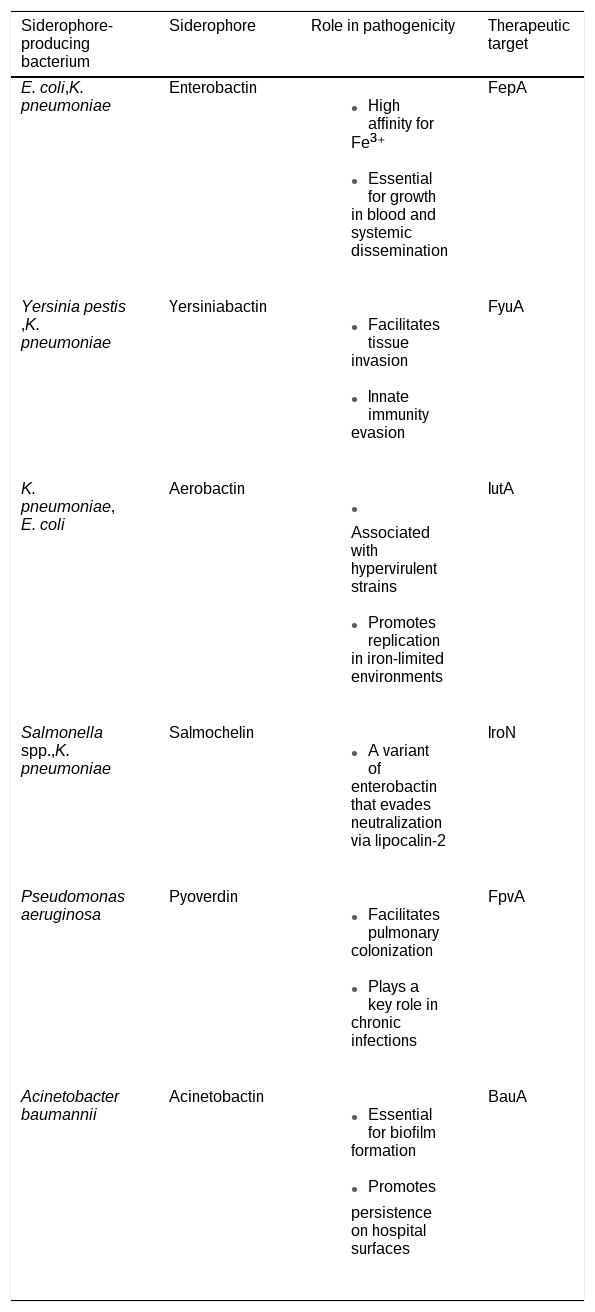
The specificity of outer membrane receptor binding and the efficiency of siderophore-mediated transport have enabled the exploitation of these systems as Trojan-horse vehicles for the targeted delivery of antibiotics or antimicrobial peptides. (Table 1).30 However, this strategy faces critical challenges: (1) strain- and environment-dependent variability in receptor expression; (2) hierarchical environmental regulation; and (3) compensatory mutations that impair siderophore uptake.31
Bacterial siderophores: pathogenicity and therapeutic applications.
| Siderophore-producing bacterium | Siderophore | Role in pathogenicity | Therapeutic target |
|---|---|---|---|
| E. coli,K. pneumoniae | Enterobactin |
| FepA |
| Yersinia pestis,K. pneumoniae | Yersiniabactin |
| FyuA |
| K. pneumoniae,E. coli | Aerobactin |
| IutA |
| Salmonella spp.,K. pneumoniae | Salmochelin |
| IroN |
| Pseudomonas aeruginosa | Pyoverdin |
| FpvA |
| Acinetobacter baumannii | Acinetobactin |
| BauA |
These findings place siderophore systems at a critical crossroads: they are key drivers of bacterial virulence, yet they also expose structural and regulatory vulnerabilities that can be therapeutically exploited. The absolute dependence on these mechanisms during infection, coupled with the accessibility of their membrane receptors, makes iron metabolism a particularly attractive target for intervention in the context of growing antimicrobial resistance. Building on this foundation, current therapeutic strategies have focused on two complementary fronts: the development of siderophore-antibiotic conjugates that exploit active transport as a “Trojan horse” mechanism, and the design of inhibitors that block bacterial iron uptake.
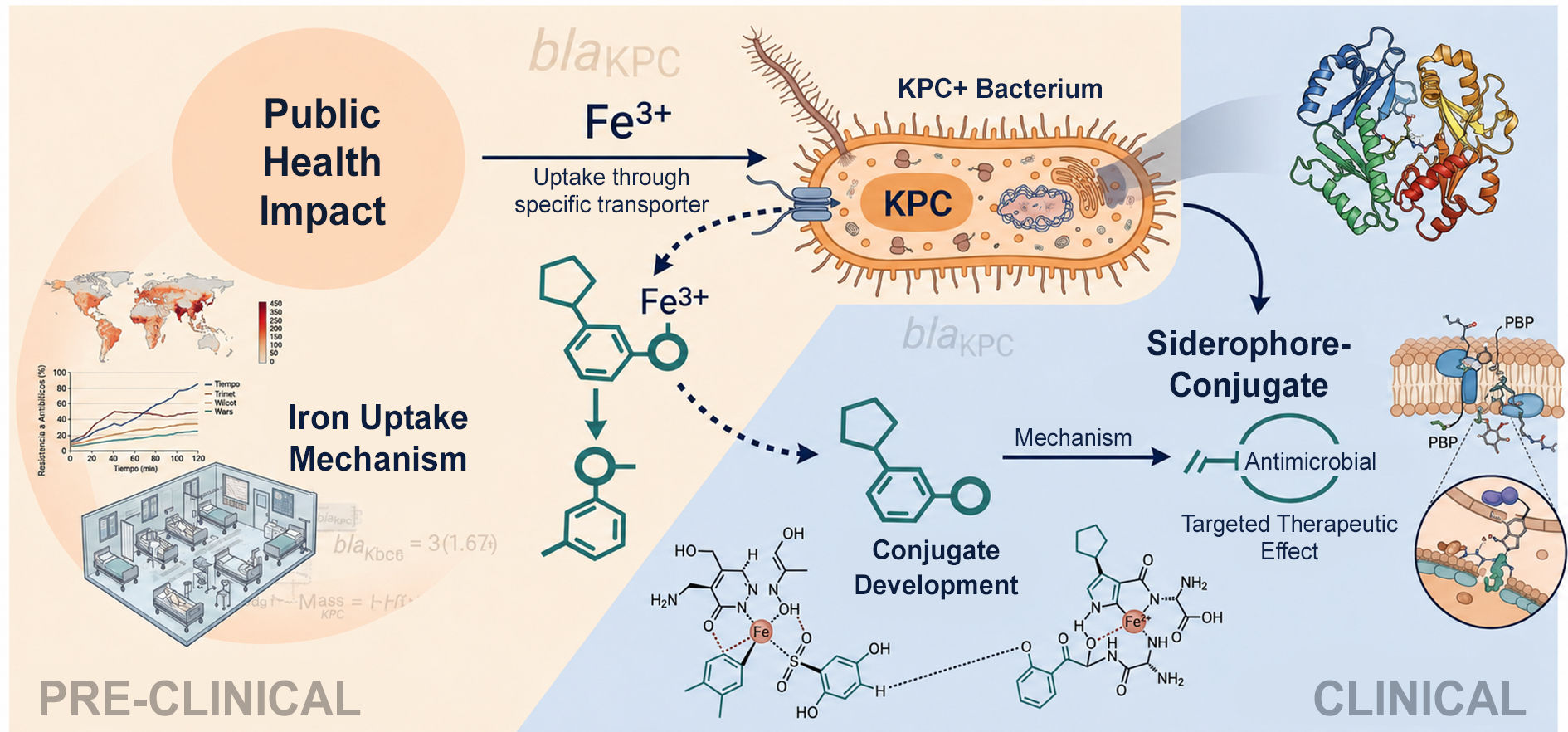
Siderophore-drug conjugatesSiderophore-drug conjugates are a bio-inspired strategy that exploits bacteria's dependence on iron to overcome resistance barriers. These hybrids use iron transport systems as “Trojan horses” to internalize antimicrobial agents, circumventing resistance mechanisms such as porin modifications or efflux pumps (Fig. 2).13,30
Schematic representation of the development of siderophore-drug conjugates for targeting KPC-producing bacteria. The diagram illustrates the integration of the public health impact, the bacterial iron uptake pathway, and the siderophore-drug conjugate strategy to achieve a targeted therapeutic effect.32
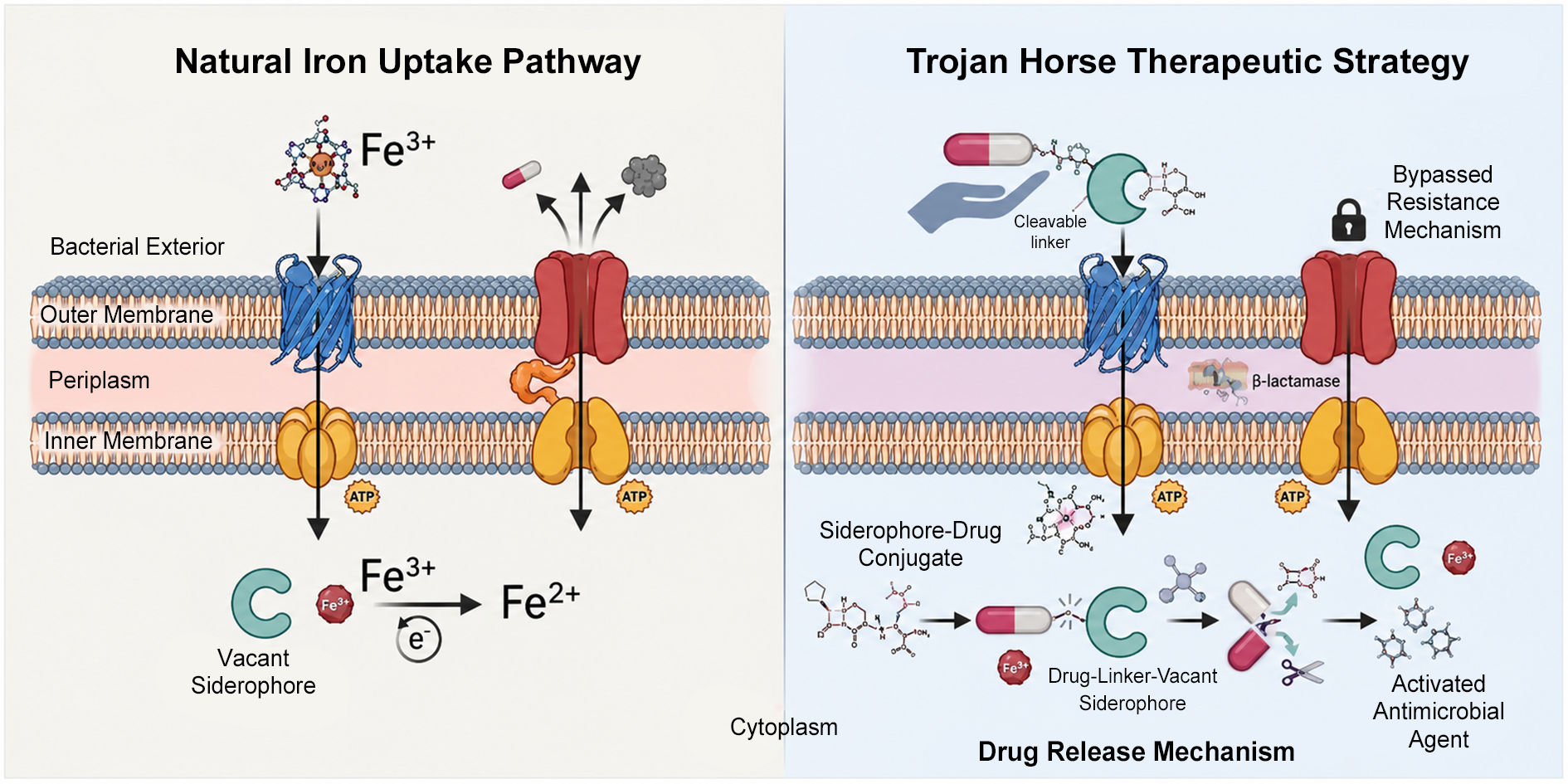
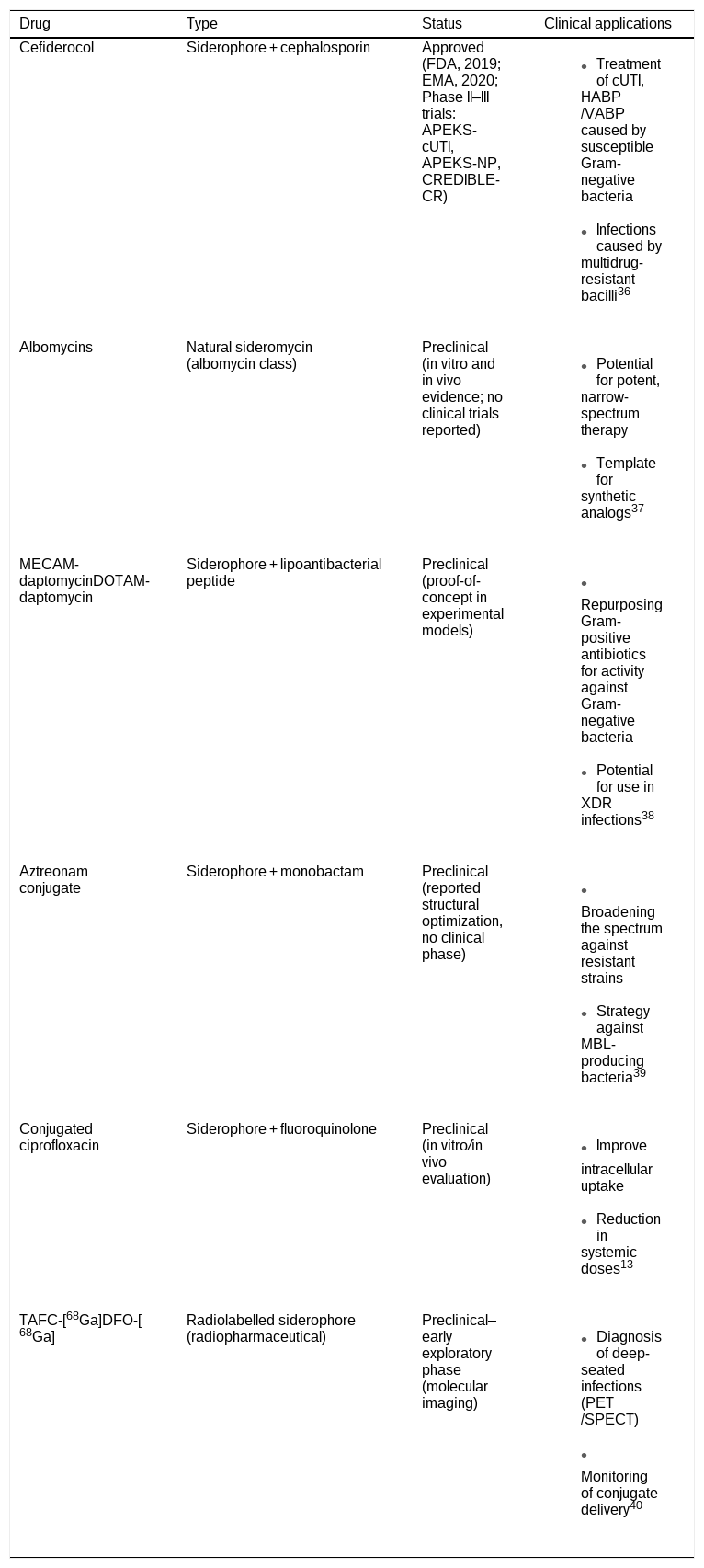
The clinical value of this strategy was demonstrated by cefiderocol. This is a siderophore cephalosporin that bears a catechol moiety that has shown efficacy against multidrug-resistant Enterobacterales, Pseudomonas, and Acinetobacter (Table 2). This molecule is highly stable against class A, B, and D β-lactamases, including carbapenemases such as KPC, NDM, and OXA-48.33,34 In clinical studies, cefiderocol has demonstrated efficacy in the treatment of complicated urinary tract infections (cUTI), hospital-acquired pneumonia (HABP), and bacteraemia caused by carbapenem-resistant Enterobacterales.35 Its iron receptor-mediated mechanism of entry allows it to bypass resistance mechanisms associated with porin loss and efflux pumps. (Fig. 3).10
Siderophore-drug conjugates and their clinical applications.
| Drug | Type | Status | Clinical applications |
|---|---|---|---|
| Cefiderocol | Siderophore + cephalosporin | Approved (FDA, 2019; EMA, 2020; Phase II–III trials: APEKS-cUTI, APEKS-NP, CREDIBLE-CR) |
|
| Albomycins | Natural sideromycin (albomycin class) | Preclinical (in vitro and in vivo evidence; no clinical trials reported) |
|
| MECAM-daptomycinDOTAM-daptomycin | Siderophore + lipoantibacterial peptide | Preclinical (proof-of-concept in experimental models) |
|
| Aztreonam conjugate | Siderophore + monobactam | Preclinical (reported structural optimization, no clinical phase) |
|
| Conjugated ciprofloxacin | Siderophore + fluoroquinolone | Preclinical (in vitro/in vivo evaluation) |
|
| TAFC-[68Ga]DFO-[68Ga] | Radiolabelled siderophore (radiopharmaceutical) | Preclinical–early exploratory phase (molecular imaging) |
|
Abbreviations: cUTI, complicated urinary tract infections; HABP/VABP, hospital-acquired pneumonia/ Ventilator-associated bacterial pneumonia; XDR, extensively drug-resistant; MBL, Metallo-Beta-Lactamase.
Iron uptake and the Trojan horse therapeutic strategy in bacteria. Left (natural pathway): the siderophore binds to a specific receptor and is internalized by active transport, releasing Fe3⁺, which is reduced to Fe2⁺ in the cytoplasm. Right (therapeutic strategy): a siderophore-drug conjugate exploits this transport system to enter the bacterial cell and evade resistance mechanisms. Following internalization, the active compound is released and exerts its antimicrobial action.32
However, the clinical profile of cefiderocol has been the subject of debate following the results of the phase III CREDIBLE-CR trial. This trial showed an increase in all-cause mortality in the cefiderocol treatment arm compared with the best available therapy arm, particularly in infections caused by Acinetobacter baumannii.41 This finding has been partly attributed to imbalances in patients' baseline disease severity and to the clinical heterogeneity of the study population. No direct causal relationship has been established between these factors and the efficacy of cefiderocol.42
In response to these limitations and the need to optimize the therapeutic use of iron-mediated transport, the field of siderophore conjugates has diversified into two complementary approaches: (a) the synthetic design of siderophores conjugated to different classes of antibiotics (e.g. monobactams, rifamycins, and fluoroquinolones), which requires optimization of the covalent linker to ensure extracellular stability and intracellular release; and (b) siderophore–peptide conjugates that deliver antimicrobial peptides (AMPs) to the periplasm, thereby enhancing their activity and reducing proteolytic degradation. These approaches have shown a significant reduction in the minimum inhibitory concentration (MIC) in preclinical models against extensively drug-resistant (XDR) strains.11,13 In addition, siderophores offer potential applications as diagnostic probes and as radionuclide or fluorophore labels for PET/SPECT imaging. This complements therapeutic strategies by enabling the localization of infectious foci and the monitoring of intracellular delivery.43,44
Siderophore-peptide conjugatesAnother compelling approach involves the use of siderophore–peptide conjugates, which combine active transport with the antimicrobial activity of antimicrobial peptides (AMPs). These conjugates represent a promising strategy against priority pathogens by combining selective internalization mediated by bacterial iron receptors with the membrane-lytic or immunomodulatory activity of AMPs. This synergistic approach enhances penetration into Gram-negative bacteria, protects against proteolytic degradation, increases bioavailability, and directs antimicrobial activity to the site of infection.11,45 However, it is important to note that most of these developments remain at the preclinical or proof-of-concept stage, with limited evidence from controlled clinical studies.
On the one hand, AMPs—which are cationic and amphipathic molecules—have demonstrated efficacy against polymicrobial biofilms and multidrug-resistant strains, as well as synergistic activity with conventional antibiotics. However, their progression from preclinical research to clinical application has been hampered by metabolic instability, hemolytic toxicity, and suboptimal systemic distribution.46
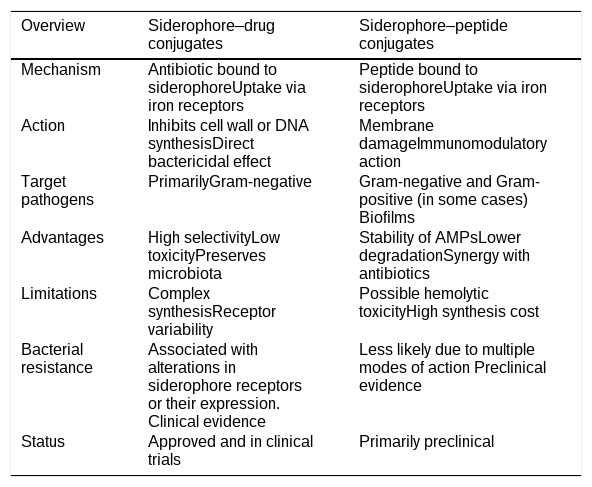
Covalent conjugation to siderophores (catecholates or hydroxamates) uses bacterial iron uptake pathways as a targeted entry mechanism, thus avoiding extracellular inactivation (Table 3). This principle is exemplified by natural systems such as the catecholate-modified microcins produced by Escherichia coli and Klebsiella pneumoniae. In the synthetic setting, conjugates such as FU002 (vancomycin–cationic peptide) have achieved up to a 1000-fold increase in activity against methicillin-resistant Staphylococcus aureus (MRSA).45,47 However, these results predominantly derived from in vitro or in vivo animal models, limiting their direct extrapolation to a clinical setting.
Siderophore–drug conjugates versus siderophore–peptide conjugates.
| Overview | Siderophore–drug conjugates | Siderophore–peptide conjugates |
|---|---|---|
| Mechanism | Antibiotic bound to siderophoreUptake via iron receptors | Peptide bound to siderophoreUptake via iron receptors |
| Action | Inhibits cell wall or DNA synthesisDirect bactericidal effect | Membrane damageImmunomodulatory action |
| Target pathogens | PrimarilyGram-negative | Gram-negative and Gram-positive (in some cases)Biofilms |
| Advantages | High selectivityLow toxicityPreserves microbiota | Stability of AMPsLower degradationSynergy with antibiotics |
| Limitations | Complex synthesisReceptor variability | Possible hemolytic toxicityHigh synthesis cost |
| Bacterial resistance | Associated with alterations in siderophore receptors or their expression.Clinical evidence | Less likely due to multiple modes of action Preclinical evidence |
| Status | Approved and in clinical trials | Primarily preclinical |
Furthermore, incorporating these conjugates into nanotechnology-based delivery systems (liposomes, polymeric nanoparticles, and hydrogels) is designed to improve molecular stability, enable controlled spatiotemporal release, and enhance their safety profile.48,49 Despite their potential, these approaches are in the early stages of experimentation and require validation in clinical studies before therapeutic implementation.
These targeted delivery systems are a promising therapeutic approach that could help reduce dysbiosis of the commensal microbiota, decrease selective pressure, and mitigate the emergence of antimicrobial resistance. To achieve this, three elements must be integrated: the molecular engineering of AMPs, the strategic exploitation of essential bacterial metabolic pathways, and the use of advanced controlled-release technologies.
DiscussionThe findings of this review indicate that, although preclinical results are promising, most of these strategies—particularly siderophore–peptide conjugates—remain at an early stage of development, limiting their immediate clinical applicability.
The path to the clinical application of siderophore-drug and siderophore-peptide conjugates is still hindered by significant technical, regulatory, logistical, and economic challenges. From a technical perspective, the design of the covalent linker must fulfil two key requirements: extracellular stability and selective drug release within the bacterial cell. An imbalance between these two requirements may result in loss of activity owing to premature degradation, elimination through siderophore recycling, or ineffective intracellular retention. This challenge is further compounded by the diversity of intracellular pathways associated with different siderophore types.50,51
The synthesis of these molecular conjugates presents significant challenges, including multi-step synthetic processes, low yields, and the need for specialized reagents. These factors increase manufacturing costs and hinder large-scale production under Good Manufacturing Practice (GMP) standards. One example is the mycobactin–artemisinin conjugate, developed for the treatment of Mycobacterium tuberculosis infection, which combines promising antimicrobial activity with low production efficiency.11 Viable alternatives include heterologous expression in non-pathogenic hosts and green chemistry approaches, both aimed at reducing production costs and environmental impact.52
The current regulatory framework lacks specific evaluation pathways for these conjugates, which do not quite fit into the existing categories of small-molecule drugs or biologics. This results in delays to regulatory approval and increased development costs.53 Furthermore, effective clinical adoption requires diagnostic infrastructure to identify siderophore receptors and stable supply chains—resources that are limited in vulnerable settings.54
Another important barrier is the historically low return on investment in antibiotic development, which has discouraged investment from the pharmaceutical industry. Several alternative funding models have been proposed, including subscription-based payment models, push–pull incentives, and public–private partnerships.55,56
In the face of these challenges, some technological solutions have proven useful. The combination of these conjugates with nanotechnology-based delivery systems, such as liposomal encapsulation and polymeric nanoparticles, improves molecular stability and tissue distribution, while genetic engineering of biosynthetic pathways facilitates sustainable large-scale production.30,48 Global initiatives such as CARB-X and GARDP have already advanced preclinical development, demonstrating that collaboration among academia, industry, and policymakers is essential to translate these therapies from the laboratory to clinical practice.54,57
Study limitationsThis narrative review, based on a systematic search, has inherent limitations, including the possible omission of relevant studies, heterogeneity among the sources analyzed, and the combined inclusion of preclinical and clinical evidence, which hinders the direct comparability of results. Furthermore, the absence of a formal quantitative analysis limits the ability to draw definitive conclusions regarding therapeutic efficacy.
In the face of antimicrobial resistance, conventional strategies prove to be insufficient, and biotechnology-based solutions are required. Siderophore–drug and siderophore–peptide conjugates exploit a mechanism essential to bacteria—iron uptake—as a selective entry pathway, with the potential to overcome permeability barriers, reduce systemic toxicity, and preserve commensal microbiota. The challenge extends beyond demonstrating clinical efficacy—already established for cefiderocol and increasingly supported by preclinical studies of other conjugates—to ensuring scalable manufacturing, appropriate regulatory frameworks, and equitable access. Achieving this will require close collaboration among academia, the pharmaceutical industry, and public health authorities. Siderophore conjugates provide a potential pathway for addressing the threat of a post-antibiotic era, and their clinical development requires a progressive, evidence-based approach.
Contribution to scientific literatureThis review updates and synthesizes the available evidence on siderophore conjugates as a therapeutic strategy against multidrug-resistant Gram-negative bacteria. Unlike previous studies, which focused exclusively on the chemical or microbiological aspects of siderophore conjugates, this review also examines the public health challenges associated with scalability, regulation, and equitable access. It also presents the clinical evidence for cefiderocol alongside promising preclinical developments in a structured manner and discusses the limitations that may hinder their progression to clinical application. The manuscript was prepared in accordance with the PRISMA reporting guidelines to ensure the transparency and reproducibility of the literature search.
Ethical responsibilitiesThis manuscript is a literature review and does not contain or report clinical data from studies involving human participants or animal subjects conducted by any of the authors. Consequently, institutional review board or Research Ethics Committee approval was not required.
The authors declare that this manuscript is original, has not been previously published in whole or in part, and is not currently under consideration for publication elsewhere. Furthermore, all figures and tables are original or have been reproduced with the appropriate copyright permissions.
Statement on the use of artificial intelligenceDuring the preparation of this paper, Gemini 3 Flash was used to create schematic figures. After its use, the authors reviewed and edited the visual content as needed, assuming full responsibility for the content of the publication.
FundingNone declared.
CRediT authorship contribution statementAlina Dammar Herrera-Callo: Writing – review & editing, Writing – original draft, Visualization, Validation, Supervision, Methodology, Investigation, Formal analysis, Data curation, Conceptualization. Marco Roberto Chávez-Morán: Conceptualization, Data curation, Formal analysis, Investigation, Methodology, Project administration, Resources, Software, Supervision, Validation, Visualization, Writing – original draft, Writing – review & editing.
Non declared.
The authors thank the Universidad Nacional de Frontera (Peru) for access to their bibliographic resources and the Central Library team for their support in retrieving scientific articles.